
If you’ve recently mastered the chain stitch and a couple of basic stitches, you might be itching to tackle your first full project—and a crochet blanket pattern is a classic next step. This guide compares the most popular crochet blanket patterns for beginners, clarifies the must-have skills, and outlines how to spot truly beginner-friendly PDF patterns (plus hidden pitfalls with free patterns). By the end, you’ll have a clear sense of which pattern type, yarn, and finishing technique fits your style and skill level, so you can start your first blanket with confidence—and actually finish it.
Key Takeaways
- Choosing the right beginner blanket pattern depends on your desired time, patience level, and the skills you’re comfortable practicing.
- Mastering a small set of stitches and techniques before starting greatly increases your chances of a satisfying finish.
- Free online patterns often skip vital explanation—downloadable PDFs typically offer clearer instructions, step visuals, and fewer surprises for beginners.
- Types of beginner-friendly crochet blanket patterns — complexity & time trade-offs
- Essential stitches and techniques every beginner should master first
- Common beginner mistakes — how to avoid and fix them
- How yarn weight, fiber type, and hook size affect look, feel, and difficulty
- Finishing and assembly methods beginners can manage
- How to evaluate free crochet blanket patterns for readability and beginner-friendliness
- Overlooked pattern features, common omissions, and why PDFs can help
- Quick project planning checklist before you start a beginner blanket
- Frequently Asked Questions
Types of beginner-friendly crochet blanket patterns — complexity & time trade-offs
The blanket pattern you choose will shape your entire crochet experience. It influences how quickly you see progress, what techniques you’ll learn, and how likely you are to finish your first project. Here’s how the main categories compare for beginner crocheters:
- One-stitch or two-stitch row blankets: These use just one or two basic stitches, like double crochet (DC) across long rows. Patterns often include stripes or color blocks for visual interest without adding complexity. Best for speed and simplicity.
- Granny-square or motif blankets: Instead of working back and forth on a large piece, you make smaller squares or motifs, then join them together. This approach breaks the project into bite-sized tasks and teaches joining and color-changing skills.
- Simple textured stitch blankets: Patterns such as moss, waffle, or basketweave stitches create extra texture but introduce more complicated stitch placement and slow progress. These look impressive but are best tackled after you’re comfortable with standard rows.
- Chunky/super-bulky yarn projects: Using thicker yarn and larger hooks speeds up blanket making without changing the stitches themselves. These are appealing for fast progress but can yield stiffer fabric and affect drape and softness, so check the recommended yarn in your pattern.
Most guides and pattern roundups recommend simple row repeats with double crochet for the fastest, most frustration-free beginner experience, with granny squares a close second for those who enjoy making small motifs and assembling them into a larger project.
Essential stitches and techniques every beginner should master first
While thousands of crochet blanket patterns exist, most for beginners rely on a small family of basic stitches. Focus your practice here:
- Chain stitch (ch): Forms the foundation of almost all crochet projects. Practice starting and maintaining a consistent chain.
- Single crochet (sc): The most basic building block for blankets and many other projects.
- Slip stitch (sl st): Key for joins, seam work, and working in rounds.
- Half-double crochet (hdc): Slightly taller stitch, gives more texture and is common in easy blanket patterns.
- Double crochet (dc): Tall stitch that makes for faster, lacier fabric—favored in many beginner blankets to minimize the number of rows.
- Treble crochet (tr): Used less often but helpful for more open or lacy patterns.
Before starting a full blanket, it’s wise to:
- Practice tension and strive for an even gauge—this helps avoid wonky edges and unwanted size surprises.
- Understand turning chains and whether they count as a stitch, since this impacts edge consistency and pattern accuracy.
- Read pattern notes carefully, especially to check if the pattern uses US or UK terminology—stitch names shift between these two systems (see Lion Brand’s stitch guide).
- Try key small techniques: starting a chain foundation, turning work at the end of rows, color changes, and securely weaving in tails.
If you’re brand new, smaller practice projects—a single granny square, a dishcloth, or a sample row—will let you test the stitches in “miniature” before committing to a blanket-sized effort.
Common beginner mistakes — how to avoid and fix them
Most beginner frustrations come not from the stitches themselves, but from tripping over easy-to-miss pattern details. Here are the most frequent pitfalls (and how to sidestep them):
- Misreading US and UK crochet terms: Always check the pattern header; the same stitch name can mean different actions. If the pattern doesn’t say, proceed with caution and cross-check with a stitch guide.
- Turning chain confusion: Some patterns count the turning chain as your first stitch in the row, others don’t. If your blanket edges start slanting or rippling, review the pattern notes for guidance.
- Skipping the gauge swatch: Even for blankets, it’s worth testing your stitch size with the suggested yarn and hook. This avoids accidentally ending up with a tiny or oversized blanket—or running out of yarn halfway.
- Inconsistent edge stitches and tension: Counting stitches at the start/end of each row, using stitch markers, and checking row counts can help keep sides straight and prevent blanket “shrinking” or “growing.”
- Overlooking finishing instructions: Free patterns often skip clear instructions on weaving in ends or blocking. Even simple projects look more polished if finished neatly.
Most of these errors are easy to fix early but become much harder the further you get. A little front-loaded attention will save hours of ripping and reworking.
How yarn weight, fiber type, and hook size affect look, feel, and difficulty
Your material choices affect speed, appearance, and usability as much as your crochet skills do. Here’s what beginners should know:
- Yarn weight: Lighter yarns (like DK) take more rows and stitches to cover an area; blankets take longer. Chunky or super-bulky yarn creates bigger stitches, covers ground quickly, and makes thick, cozy blankets—but can result in stiffer fabric and a heavier feel.
- Fiber type: Most sources recommend washable worsted acrylic for beginner blankets—easy to care for if the finished blanket needs regular washing, and widely available. Natural fibers (like wool or cotton) offer unique textures but may require special care or behave differently after washing.
- Hook size: Larger hooks yield a looser fabric (faster progress, more open look); smaller hooks make a denser, warmer, slower-to-make blanket. Always check your chosen pattern for recommendations.
Matching hook size, yarn weight, and pattern recommendations is key, especially if you want your blanket to turn out as expected. If a pattern doesn’t specify care instructions, assume acrylic can go in the machine, but double-check if you swap the fiber type.
Finishing and assembly methods beginners can manage
A neat finish elevates any handmade blanket. Here are beginner-friendly ways to assemble and complete your project:
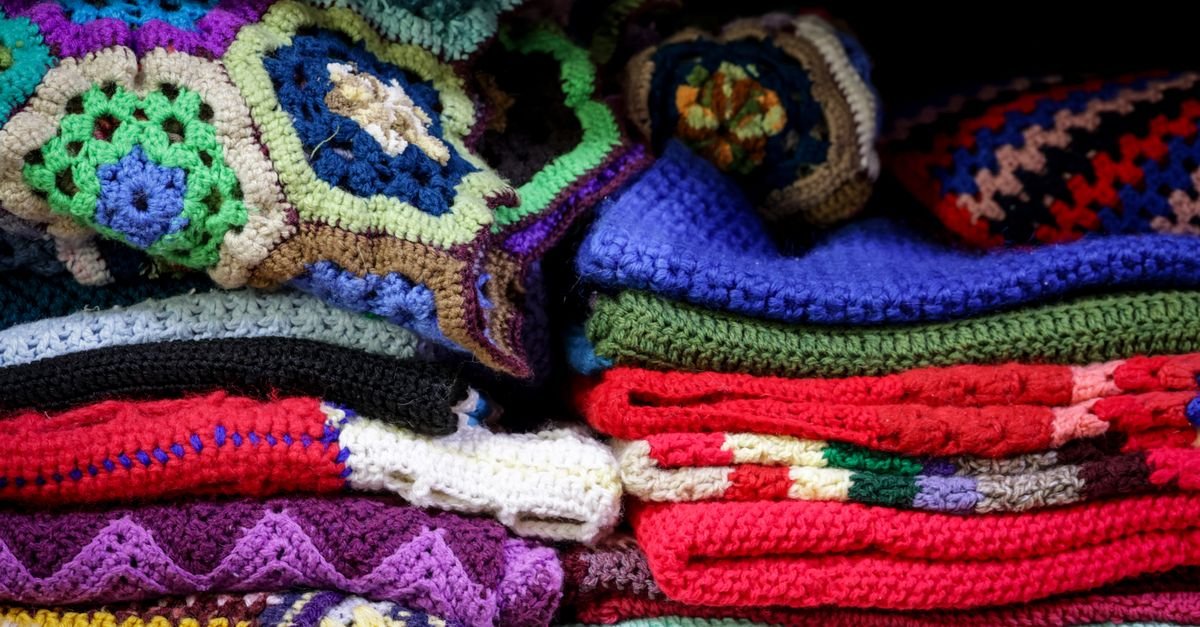
- Joining granny squares: Use basic whip stitch, slip stitch, or join-as-you-go methods—these do not require advanced seaming skills. Many beginners find joining squares at the end satisfying, while others prefer the tidy look of join-as-you-go.
- Borders: A round or two of single crochet, or a simple shell border, gives your blanket a finished look and can help disguise minor edge inconsistencies. Most beginner patterns offer straightforward border options without advanced shaping.
- Weaving in tails: Use a yarn needle (or hook) to neatly tuck away ends. This can be time-consuming if there are many color changes (common in motif blankets), but careful, secure finishing keeps the blanket tidy after washing.
- Blocking: If using natural fibers or for extra polish, lightly wet or steam and shape the blanket flat to even edges and stitch appearance—usually optional for beginner acrylic projects.
If you prefer to avoid assembly, opt for a blanket worked in plain rows all in one piece rather than joined squares or panels.
How to evaluate free crochet blanket patterns for readability and beginner-friendliness
Not all free crochet blanket patterns for beginners are created equal. Before you invest time (and yarn!), quickly assess patterns with this checklist:
- Pattern header: Does it list skill level, US/UK terminology, a clear materials list, and finished dimensions?
- Pattern structure: Are gauge, stitch abbreviations, and row/round numbering clearly included?
- Visual aids: Does it offer step-by-step photos, diagrams, or (ideally) downloadable PDF versions? These extras make a huge difference if you’re new to reading patterns.
- Red flags: Watch out for missing notes on whether turning chains count as stitches, ambiguous instructions (“repeat across”), or little to no finishing guidance. If you feel lost reading the instructions, it likely won’t get easier as you go.
For more practice with free beginner projects, browse collections on well-curated sites like LoveCrafts or explore starter-friendly guides such as 10 Easy Crochet Projects for Beginners.
Overlooked pattern features, common omissions, and why PDFs can help
Many popular free patterns—especially blog posts—skip essential guidance or formatting. Here’s why downloadable PDFs often make life easier for beginners:
- Clarity on technical details: PDFs are more likely to include explicit turning-chain notes, whether the turning chain counts as a stitch, finished dimensions, tips for yarn substitution, and care information.
- Visual consistency: PDFs usually retain row numbers, charts, and embedded photos at full resolution, making it easier to print and reference as you crochet.
- Reduced interruptions: Unlike free web tutorials that may break instructions across multiple web pages or include distracting ads, PDFs let you work at your own pace without scrolling through unrelated content.
If you’re new and feel overwhelmed by confusing free patterns, seeking out a downloadable crochet PDF pattern is often a much less frustrating way to complete your first blanket. You’ll also be able to print or annotate pattern pages as you work.
Looking for motif-based blankets? The Spectrum Granny Square Blanket Crochet Pattern PDF on TwirlBloom is an example of a PDF formatted pattern where visuals and clear steps take the guesswork out of construction.
Quick project planning checklist before you start a beginner blanket
- Read the pattern from top to bottom before starting—highlight US/UK terms, materials, and any stitch notes.
- If there’s a gauge instruction, make a test swatch. If not, practice the main stitch or motif a few times to preview size and comfort level.
- Count or estimate the amount of yarn needed and plan your color approach; self-striping yarns simplify color changes and reduce ends to weave in.
- Gather essentials: the right size hook, stitch markers for keeping row counts, a yarn needle for finishing, and a notebook or row counter to track progress.
- If you’re still building confidence, start with a single small square or dishcloth before launching into your whole blanket.
Frequently Asked Questions
What crochet blanket pattern is easiest for a complete beginner?
Row-based blankets using only one or two basic stitches—such as double crochet or single crochet—are widely regarded as the easiest for beginners. These repeat the same motion across each row, making it simple to learn and finish.
Do I need to make a gauge swatch for a baby blanket?
Making a gauge swatch helps ensure your finished blanket matches the expected size and you have enough yarn. While some beginners skip it for blankets, it’s recommended—especially if yarn usage or size matters.
How do I know if a free pattern uses US or UK terminology?
Check the pattern header or notes—most patterns specify which terms they use. If not, compare the stitch instructions to a trusted stitch guide as the names differ between US and UK systems.
What yarn type is best for a beginner blanket that will be machine-washed?
Washable worsted acrylic yarn is often recommended for beginners; it’s durable, soft, affordable, and easy to care for. Always check the yarn label and pattern recommendations for washing instructions.
How long does it usually take to make a simple beginner blanket?
The time to complete a beginner blanket varies by pattern size, stitch, yarn weight, and your pace. Simpler, larger-stitch patterns with chunky yarn work up faster, but personal pace and available time make each project unique.
Can I join granny squares with a simple seam if I’m still practicing basic stitches?
Yes, basic seams like whip stitch or slip stitch joins are easy for beginners and work well for assembling granny square blankets.
If you’re inspired to start your own project, browse TwirlBloom’s crochet PDF patterns to find downloadable, printer-friendly instructions for your next blanket or accessory.