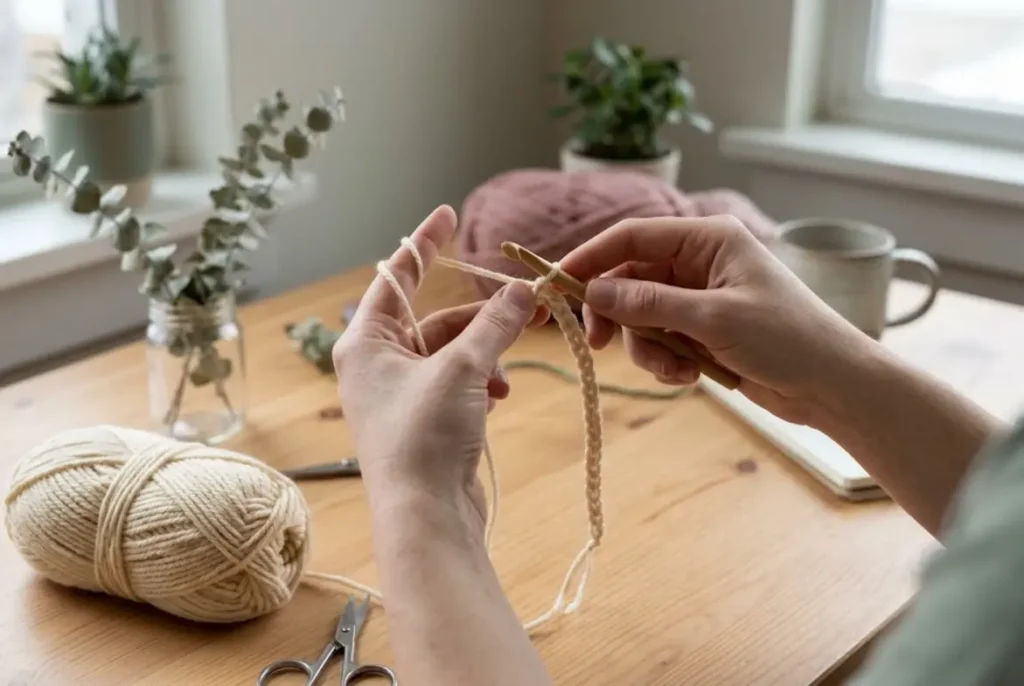
If you’re ready to move beyond foundation chains and master the building blocks of crochet, learning the core crochet stitches opens up nearly every beginner project and pattern available. This practical guide walks you through the single crochet, half double crochet, and double crochet step-by-step—including how to identify your stitches, avoid common mistakes, and pick the best practice projects. Build confidence as you learn exactly which crochet stitches to try first, how to spot and fix errors, and how to connect your new skills to downloadable PDF patterns used in real projects.
Key Takeaways
- For most beginners, learning single crochet, half double crochet, and double crochet—in that order—makes new stitches easier to master.
- Visual stitch cues, counting at row ends, and using medium-weight yarn help spot mistakes and see stitch details clearly.
- Small projects like dishcloths and squares reinforce new skills and connect practice directly to downloadable patterns.
- Which crochet stitches beginners should learn first (and the skill level for each)
- Step-by-step: how to make single crochet, half-double crochet, and double crochet
- Visual cues to identify stitches and common mistakes (how to read your work)
- Beginner-friendly practice projects that reinforce basic stitches
- Yarn weights and hook sizes best for learning basic stitches (what to choose and why)
- Tips and warnings to achieve consistent tension and stitch size
- How single, half-double, and double crochet compare: texture, drape, and appearance
- Where to find reliable downloadable crochet PDF patterns that use these basic stitches
- Further resources and next steps
- Frequently Asked Questions
Which crochet stitches beginners should learn first (and the skill level for each)
Most crochet patterns for beginners use a small set of core stitches, each building on the last. Learning these in a logical order ensures you develop confidence and skill before moving on to taller or more complex stitches.
- Foundation chain (ch): The absolute starting point for nearly every crochet project. If you can make a chain, you can start practicing other stitches.
- Single crochet (sc): The first real stitch to practice after chains. It creates a dense fabric and is typically the simplest stitch for absolute beginners.
- Slip stitch (sl st): Used for joining and edging; it’s very short and works as a transition, but isn’t often used for full rows in basic patterns. You’ll see it frequently as you start chaining and finishing objects.
- Half double crochet (hdc): Taller than single crochet and adds a touch of texture. It’s a manageable next step, recommended after mastering sc.
- Double crochet (dc): The tallest of the basic beginner stitches, giving a lighter and more open look. “Step by step double crochet” is generally best tackled after you can make consistent single and half-doubles.
Recommended order for beginners: Chain → Single crochet → Slip stitch → Half double crochet → Double crochet. [1] Each stitch builds on the hand position and movement of the previous one, so following this sequence helps you gradually add complexity.
Skill-level labels:
- Absolute beginner: Foundation chain, single crochet, slip stitch
- Confident beginner: Half double crochet, double crochet
Step-by-step: how to make single crochet, half-double crochet, and double crochet
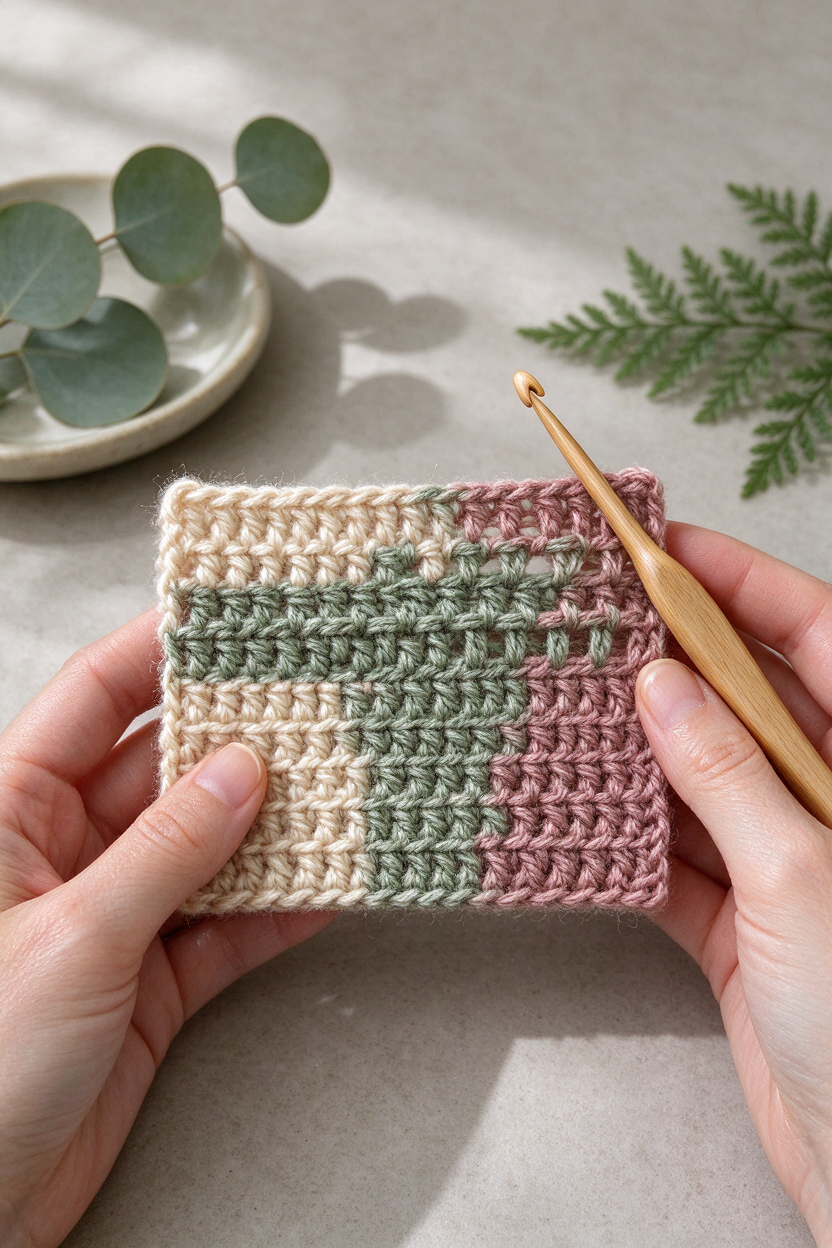
The three most used beginner stitches are all made by working into a foundation chain (or the previous row). Below are clear, source-supported crochet stitches step-by-step guides to each:
Foundation chain (ch): setting up
Before your first row, make a foundation chain using a slip knot and repeated yarn-overs pulled through the loop on your hook. Most beginner patterns begin rows by working into this chain.
Single crochet (sc)
- Insert the hook into the second chain from your hook (after skipping the first chain).
- Yarn over, pull up a loop (two loops now on hook).
- Yarn over again, pull through both loops on hook—one single crochet made.
Tip: Practice several straight rows of single crochet to get a feel for stitch height and rhythm. [5]
Half double crochet (hdc)
- Yarn over before inserting the hook.
- Insert hook into the next chain or stitch.
- Yarn over, pull up a loop (three loops on the hook).
- Yarn over again, pull through all three loops on hook.
Practice rows of hdc to notice the slightly taller and “tighter” look compared to single crochet. [6]
Double crochet (dc)
- Yarn over before inserting your hook.
- Insert hook into the next stitch or chain.
- Yarn over, pull up a loop (three loops on hook).
- Yarn over, pull through the first two loops (two loops remain).
- Yarn over once more, pull through the remaining two loops (stitch complete).
Noticing the taller, looser fabric will help you identify your double crochet rows. [7]
Short practice drill: Make 2–3 rows of each stitch before moving to the next, focusing on even tension and clear stitch definition.
Visual cues to identify stitches and common mistakes (how to read your work)
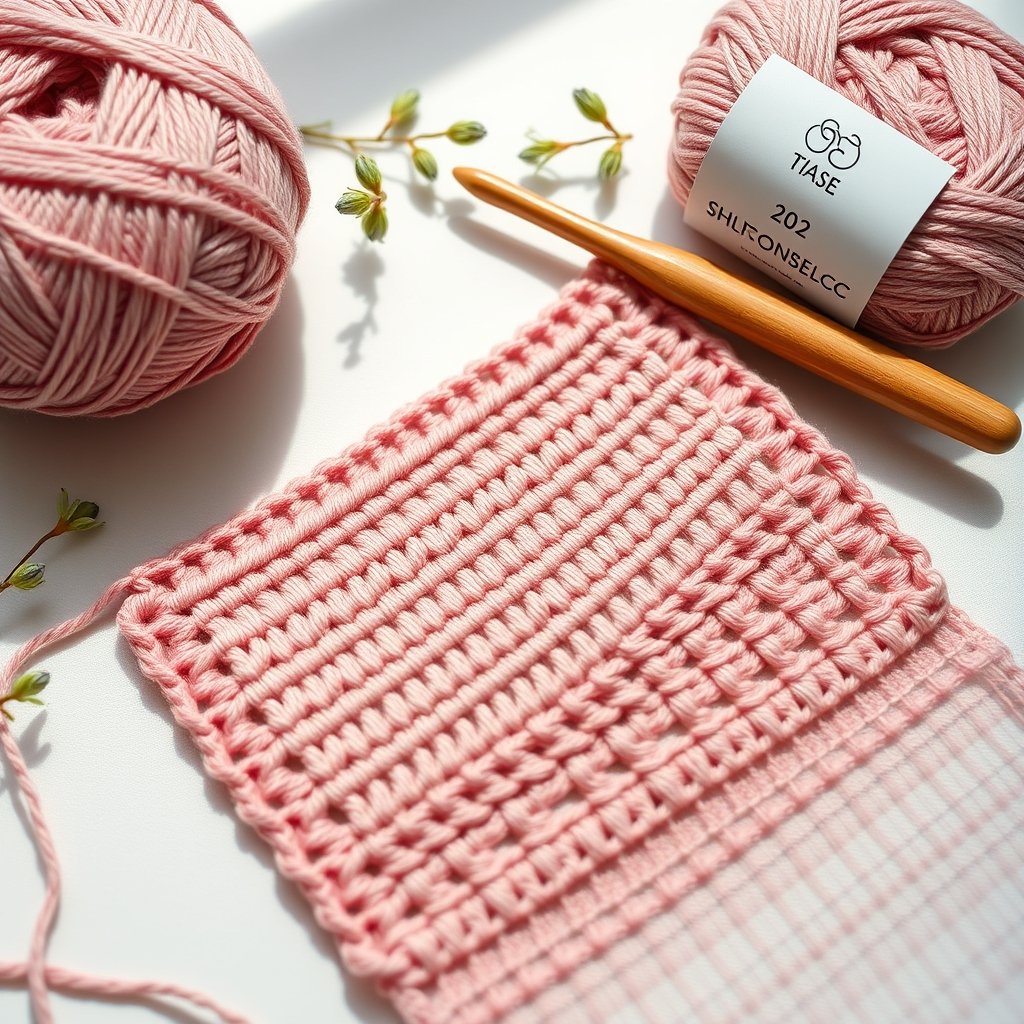
Being able to “read” the stitches you’ve made is essential for consistency and for following nearly any crochet pattern—even simple crochet stitches patterns for beginners.
How to recognize stitches by sight
- Single crochet (sc): Short, dense rows; small “V”-shaped tops; feels firm.
- Half double crochet (hdc): Medium height; “V” top with a horizontal bar across the stitch’s middle.
- Double crochet (dc): Tallest of the three; “V” top sits well above the row below and fabric drapes more loosely.
Visual stitch tips
- Look for the “V” shapes at the top of each stitch; these are where you insert your hook on the next row.
- The turning chain is often mistaken for a stitch—take care not to accidentally work into its side unless instructed.
- Consistent edges: Check both left and right ends of your rows to be sure you are not adding or missing stitches.
Common mistakes (and fixes):
- Skipping the first or last stitch in a row—causes ragged or uneven edges. To avoid this, count your stitches at the end of each row.
- Working into the wrong part of the turning chain—refer to pattern instructions for the correct place.
- Inconsistent tension—can cause some stitches to look taller or shorter than others. Try to keep your hands relaxed.
Beginner-friendly practice projects that reinforce basic stitches
Applying new skills to small, satisfying projects helps solidify muscle memory and makes your practice feel productive. Many crochet stitches patterns for beginners use only chains, single crochet, and half double crochet—sometimes with a few rows of double crochet for variety.
- Dishcloths: A classic first project, letting you practice straight rows and even edges. Their small size means you finish fast and can use them daily.
- Coasters: Tiny projects using just a handful of rows. Great for using up yarn and making small gifts.
- Small squares/patches: Use these as skill drills, combine them into blankets later, or keep as swatches.
What to look for in a practice pattern:
- Clear beginner label
- Simple row structure (numbered or step-by-step instructions)
- Minimal shaping
- Patterns that use only 1–2 stitch types
- Supportive visuals (step-by-step photos or diagrams)
For more project inspiration, you can find additional ideas in this guide to easy crochet projects for beginners.
Yarn weights and hook sizes best for learning basic stitches (what to choose and why)
Your choice of yarn weight and hook size can have a big impact on how easy it is to see, feel, and learn basic crochet stitches.
- Medium (worsted/aran) weight yarn: This is the most commonly recommended for beginners because it’s easy to see each stitch’s “V” shape, and it’s simple to manipulate. [2]
- Solid, light-to-medium colors: Multicolored or dark yarns can hide stitch details. Lighter shades make your work easier to inspect.
- Medium hook size (such as H-8/5.0mm): Frequently recommended as a good match for worsted-weight yarn when you want to focus on stitch clarity. Check your yarn label for the suggested hook size, and remember that looser, bigger hooks make learning and unpicking easier.
Steer away from very fine (thread-like) or very bulky yarn until you’re comfortable identifying and working basic stitches.
Tips and warnings to achieve consistent tension and stitch size
- Relaxed hand position: Keep a gentle but secure grip on hook and yarn—tense hands create tight, hard-to-work stitches.
- Develop a rhythm: Practice several complete rows at a time. Repetition builds evenness.
- Count stitches at every row end: This helps catch missed or extra stitches and keeps edges tidy.
- If you need to unravel (“frog”) rows: Some crafters find picking up unraveled stitches easier with a slightly larger hook; this is a common workaround, not a technical rule.
- If stitches are hard to see: Try switching to a smoother, lighter-colored yarn and a hook with a comfortable handle.
Consistency takes time—don’t be discouraged by wobbly edges or uneven stitches at first. Visual stitch counting and regular checking will build confidence.
How single, half-double, and double crochet compare: texture, drape, and appearance
Different crochet stitches create distinct textures and fabrics, affecting both the look and function of your finished project.
| Stitch | Height | Texture | Common Uses |
|---|---|---|---|
| Single crochet (sc) | Lowest | Dense, firm | Dishcloths, bags, toys, sturdy blankets |
| Half double crochet (hdc) | Medium | Moderately dense, slightly stretchy | Hats, simple garments, scarves, baby items |
| Double crochet (dc) | Tallest | Looser, airy, drapes easily | Blankets, shawls, lightweight garments |
Single crochet builds the most solid and less flexible fabric, half double crochet offers a balance, and double crochet gives speed and softness at the cost of some structure. Choose based on the feel and drape you want for your project. [6]
Where to find reliable downloadable crochet PDF patterns that use these basic stitches
Reliable practice patterns can accelerate your learning and make next projects enjoyable—not frustrating. Look for:
- Clear, step-by-step row instructions (ideally numbered)
- Stitch abbreviations and symbol keys
- Photos or stitch diagrams showing each stage
- Explicit “beginner” or “easy” label
Respected sources for beginner patterns include Lion Brand’s guides and Yarnspirations’ beginner section, as both provide free patterns and chart assistance.
If you’re looking for downloadable PDF crochet patterns, TwirlBloom offers a curated collection for a wide range of project types. You can browse crochet PDF patterns to find your next practice project and reinforce your knowledge of single, half-double, and double crochet.
Further resources and next steps
Once you’re comfortable with the core crochet stitches, you might enjoy expanding your skills or understanding of crochet:
- Try slip stitch techniques for joining and edge finishing.
- Experiment with foundation stitches (like foundation single crochet) as an alternative to chaining.
- Learn to read basic stitch charts—visual guides that unlock more pattern types. [10]
- Begin basic increases and decreases for shaping projects.
- For tricky stitch movements, supplement written guides with video demonstrations or step-by-step photo series.
Frequently Asked Questions
Which stitch should I learn first: single crochet, half-double, or double crochet?
Most sources recommend starting with single crochet (sc), as it’s the simplest and builds the hand rhythm needed for taller stitches like half double and double crochet.
How can I tell if I’m working into the correct chain or stitch at the end of a row?
Look for the “V” of the last stitch and count your stitches at the end of each row. Avoid working into the side of the turning chain unless your pattern specifies it.
What yarn weight and hook size should a beginner choose to practice basic stitches?
Worsted weight (medium/aran) yarn and a medium hook (such as H-8/5.0mm) are commonly recommended for clear stitch visibility and easy handling.
How many rows should I practice before moving from single crochet to half-double crochet?
There’s no fixed number, but practicing at least several rows of single crochet helps establish consistent tension and movement. Most sources suggest 3–5 full rows before shifting to the next stitch type.
Why do my stitches look different on the left and right edges of a row, and how do I fix it?
Uneven edges usually happen from skipping the first or last stitch or turning chain. Count your stitches at every row end and find the correct place to insert your hook to keep rows consistent.
Are there printable beginner patterns that use only sc, hdc, and dc?
Yes, many beginner patterns are intentionally written with just single crochet, half double crochet, and double crochet to help you practice and finish small projects. Look for clear instructions and a “beginner” label.
Conclusion: Learning the essential crochet stitches—single, half double, and double crochet—sets you up for countless creative projects and opens the full world of downloadable PDF patterns. With clear understanding, a few practice rows, and good visual habits, you’ll be able to read your work, fix mistakes, and enjoy making your first handmade pieces from your own stitches.
If you’d like to put your new skills into practice, browse crochet patterns at TwirlBloom and discover your next project.