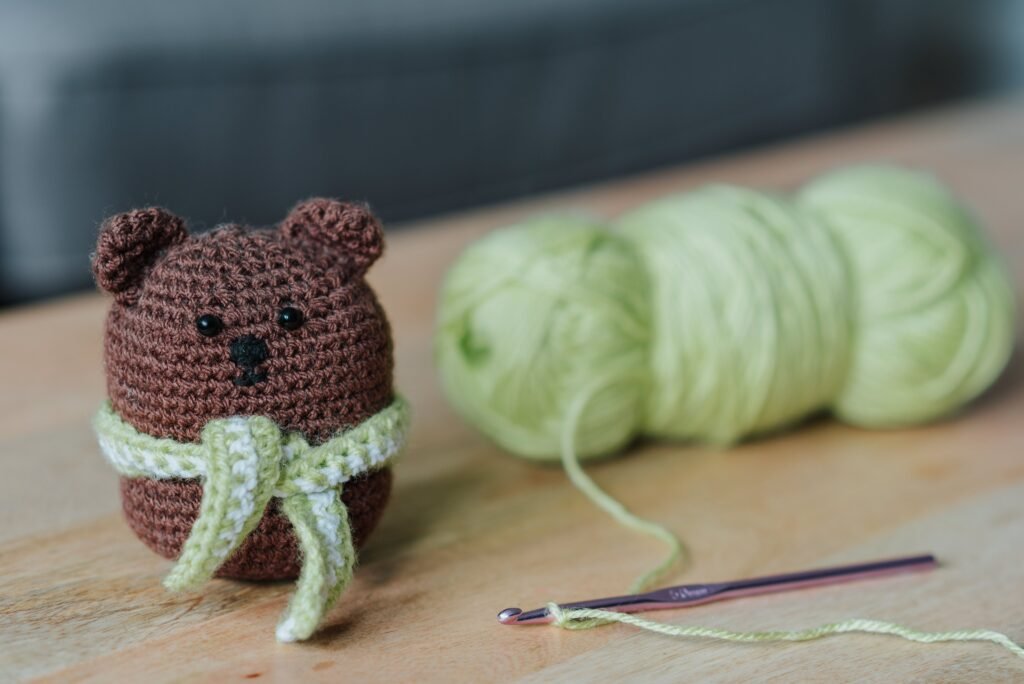
Learning crochet stitches step-by-step is the surest way to build confident, consistent skills as a beginner. This guide will show you the foundational stitches—single crochet, half-double crochet, and double crochet—in clear, verified steps. Along the way, you’ll learn how to recognize each stitch, avoid common mistakes, make smart choices about yarn and hooks, and find simple downloadable patterns to turn your practice into satisfying projects. By the end, you’ll have a reliable reference to begin your crochet journey the right way.
Key Takeaways
- Start with the three foundation stitches—single crochet, half-double crochet, and double crochet—in a proven step-by-step order designed for beginners.
- Recognize, practice, and troubleshoot each stitch using simple methods and effective visual aids to build control and consistency.
- Apply your skills with beginner-friendly projects and learn how to choose and download suitable crochet PDF patterns for continued practice.
- Which crochet stitches beginners should learn first (recommended order)
- Step-by-step: how to make a Single Crochet (SC)
- Step-by-step: how to make a Half-Double Crochet (HDC)
- Double Crochet (DC): verified steps, sourcing guidance, and common errors
- Visual aids and multimedia that most effectively teach stitches step-by-step
- How yarn type and hook size affect beginner learning and stitch appearance
- Simple, beginner-friendly practice patterns and project ideas
- Troubleshooting common problems when practicing stitches step-by-step
- How to use your new skills with downloadable PDF patterns — choosing beginner-appropriate patterns
- Frequently Asked Questions
Which crochet stitches beginners should learn first (recommended order)
The most effective way to learn crochet is by following a logical order, where each new technique builds on the last. Leading sources like Lion Brand and WeCrochet recommend this standard sequence for beginners:
- Chain stitch (ch): The starting point for nearly every project.
- Slip stitch (sl st): Used for joining and finishing edges.
- Single crochet (sc): The most fundamental stitch for building fabric (US terminology).
- Half-double crochet (hdc): Medium height, soft drape, useful for varied textures.
- Double crochet (dc): Taller stitch for speed and airy fabric.
- Treble (tr): Optional for beginners, used in lace or taller patterns.
This order is widely recommended because each stitch uses the basic skills (yarn over, hook insertion, pulling through loops) developed in the previous step. Beginners who follow this path build confidence and reduce the risk of confusion when starting real projects.
For the clearest practice experience, Lion Brand suggests pairing your learning with worsted weight yarn and an H-8/5.0mm crochet hook, as these make it easier to see each stitch (source: Lion Brand).
Step-by-step: how to make a Single Crochet (SC)
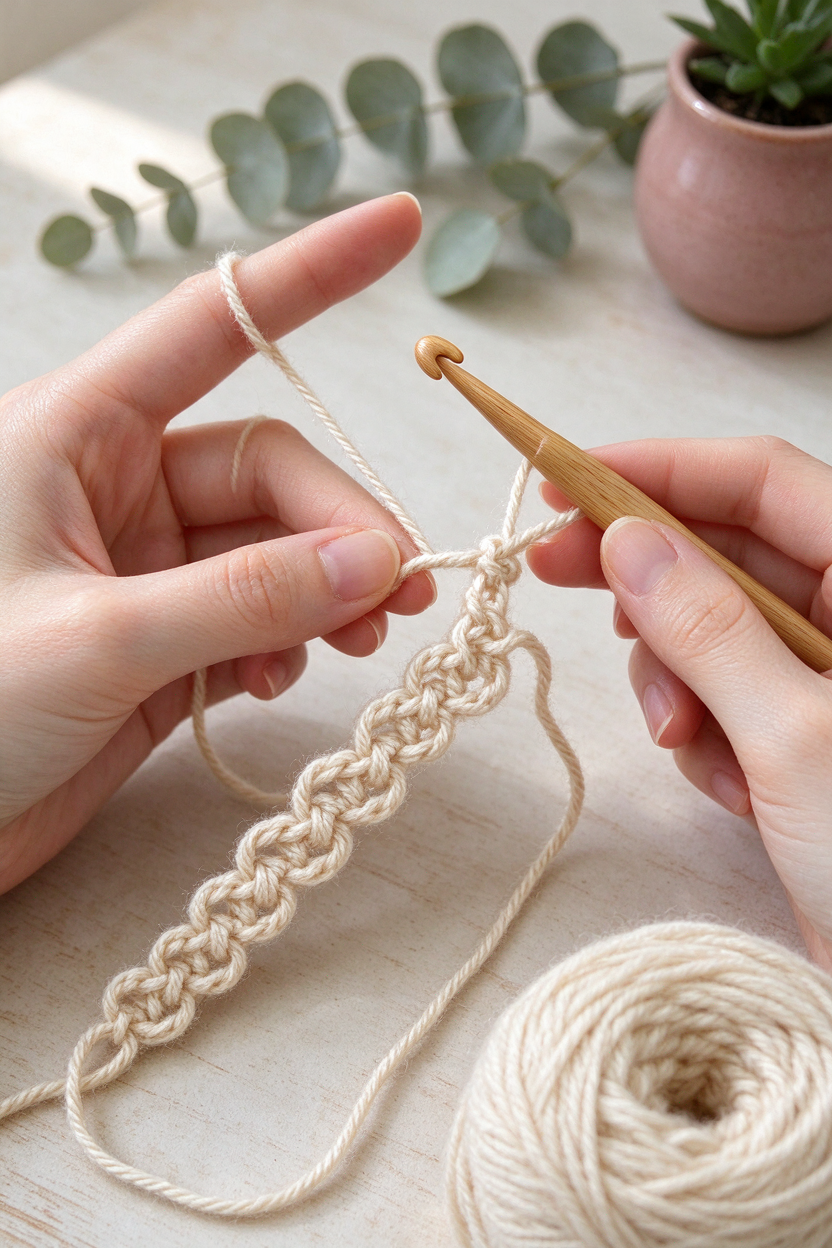
Single crochet (sc) is one of the most frequently used stitches in beginner crochet patterns, providing a dense fabric and teaching essential skills. Follow this source-verified sequence (US terminology):
- Create your foundation chain as instructed by your pattern.
- Insert the hook into the second chain from the hook on your starting chain.
- Yarn over (wrap the yarn over the hook from back to front).
- Draw the yarn through the chain: You now have two loops on your hook.
- Yarn over again.
- Pull the yarn through both loops on the hook. One single crochet completed.
- Repeat for each stitch across the row.
Reference: Yarnspirations
Beginner tips for single crochet
- How to hold your yarn and hook: Experiment with the position that feels most natural and gives you control—don’t worry about matching photos exactly.
- Avoid inserting the hook under just one loop of the chain; instead, go under the top two loops for a sturdier edge (unless your pattern says otherwise).
- Keep an even tension: If your stitches are too tight, relax your grip and move your hook gently; if too loose, try to keep your working yarn closer to your fingers.
Common mistakes (and how to fix them)
- Skipping the first chain: Double-check you’re working into the correct starting point to avoid a slanted edge.
- Inserting the hook in the wrong spot: Always count from your hook and start in the second chain for the first row. For later rows, insert into both top loops unless the pattern says differently.
- Turning chain confusion: In single crochet, you usually make one chain to begin the next row. Remember, this turning chain does not count as a stitch in most patterns.
Tip: If you’re ever uncertain, check a video or photo tutorial to see the movement and hook placement in action.
Step-by-step: how to make a Half-Double Crochet (HDC)
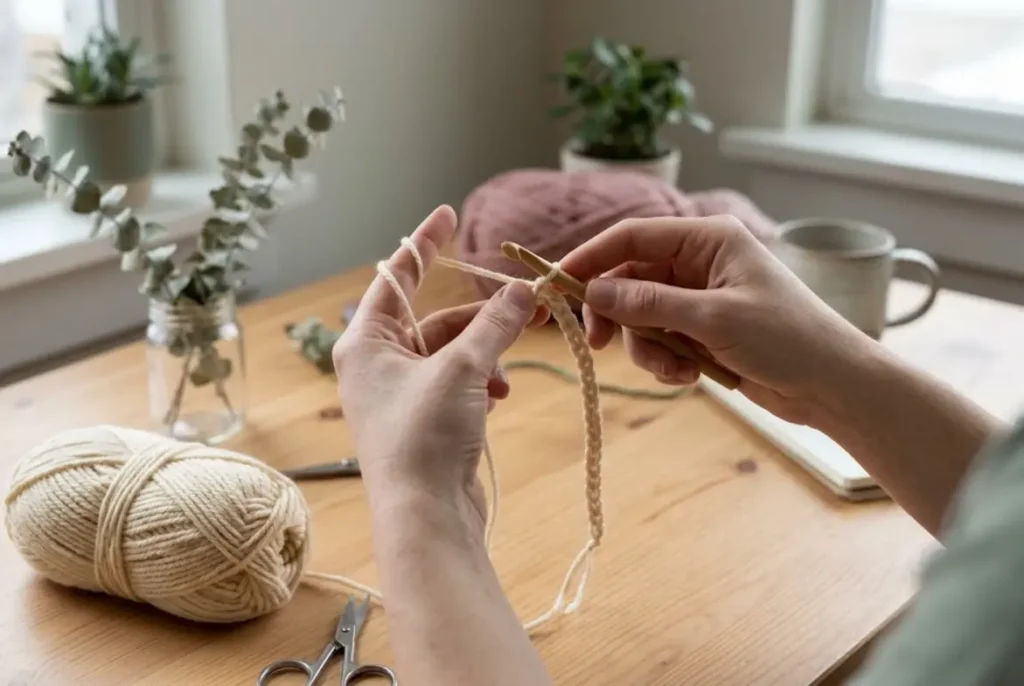
The half-double crochet (hdc) creates a fabric with more drape and height than single crochet, while remaining simple to learn. Here’s the source-verified step-by-step breakdown from Crochet.com and Yarnspirations:
- Yarn over (wrap yarn from back to front over your hook).
- Insert your hook into the indicated stitch (for the first row, usually the third chain from your hook).
- Yarn over again.
- Pull up a loop—now you have three loops on your hook.
- Yarn over one more time.
- Pull through all three loops on your hook to complete the hdc.
Half-double crochet is about halfway in height between single crochet and double crochet, making it a versatile choice for soft scarves, hats, and many beginner projects.
Tips and pitfalls for beginners
- Don’t forget the extra yarn over at the start: It distinguishes hdc from sc and creates the extra height.
- Be consistent with loop heights: Try to make all three loops about the same size to keep your stitches even.
- Avoid confusing HDC with SC or DC: Each has its own “rhythm”—hdc always includes three loops on the hook before finishing.
Double Crochet (DC): verified steps, sourcing guidance, and common errors
The double crochet (dc) is valued for its speed and open texture. It’s taller than the previous stitches and forms a key part of beginner progressions. Here’s a source-verified step-by-step DC sequence, following standard US terms. (Guidance based on authoritative tutorials from Lion Brand, Yarnspirations, and Crochet.com.)
- Yarn over (wrap yarn from back to front over your hook).
- Insert the hook into the stitch indicated (for the first row, usually the fourth chain from the hook).
- Yarn over again, and draw up a loop. (Three loops will be on the hook.)
- Yarn over and pull through the first two loops on the hook. (Two loops remain.)
- Yarn over once more and pull through the last two loops. (One loop remains—the dc is complete.)
This process is confirmed across essential tutorials, such as Lion Brand’s beginner stitch guide and the Crochet.com Learning Center.
Note on terminology: In US patterns, “double crochet” (dc) means this tall stitch; in UK patterns, the same stitch is called “treble crochet” (tr). Always check the abbreviation list in your pattern.
Common double crochet mistakes
- Missing yarn-overs: Forgetting one of the required yarn-overs results in a shorter or incomplete stitch.
- Turning chain confusion: The turning chain in dc is typically three chain stitches at the start of a new row; whether or not to count it as your first dc depends on the pattern. Always consult your pattern’s notes.
- Uneven stitch height causes wavy edges: Aim for consistent motion and loop size across the row.
Visual aids and multimedia that most effectively teach stitches step-by-step
Most new crocheters find progress much faster when they use visual learning tools alongside written instructions. Here’s what works best for learning crochet stitches step-by-step:
- Step-by-step close-up photos showing each movement; use well-lit images to clarify hook positioning and yarn movement.
- Short video clips (30–90 seconds): Pause-friendly, focused on hands and yarn movement; especially helpful for combining written and visual cues.
- Animated GIFs for repeated motions, like yarn-overs or pulling through loops.
- Annotated diagrams marking exactly where to insert the hook and how completed stitches should look.
- Comparison images to show correct vs. incorrect tension or edge shape.
For accessibility, always look for tutorials with descriptive alt text and captions guiding you on what to notice (e.g., “Hook enters through both top loops of the stitch”). Good examples include the photo tutorials in the WeCrochet Learning Center and the how-to videos at Lion Brand and Yarnspirations.
How yarn type and hook size affect beginner learning and stitch appearance
Choosing the right yarn and hook makes a big difference in how easily you can see and work your crochet stitches. Here’s expert advice, based on Lion Brand’s recommendations (source):
- Use worsted weight (medium) yarn and an H-8/5.0mm crochet hook when learning. This pairing gives stitches enough body to stay open so you can easily see where to insert your hook.
- Avoid hooks that are too small: They compress stitches, make them hard to work into, and can cause hand fatigue.
- Choose smooth, light-colored yarns: They’re the easiest for beginners to see, especially in low light. Fuzzy, slippery, or textured “novelty” yarns make learning much harder.
- Thicker yarn/larger hook = bigger, looser stitches (easier to see); smaller hook = tighter, denser stitches that are harder for beginners to control.
For more on yarn and hook choices, see Lion Brand’s beginner stitch guide.
Simple, beginner-friendly practice patterns and project ideas
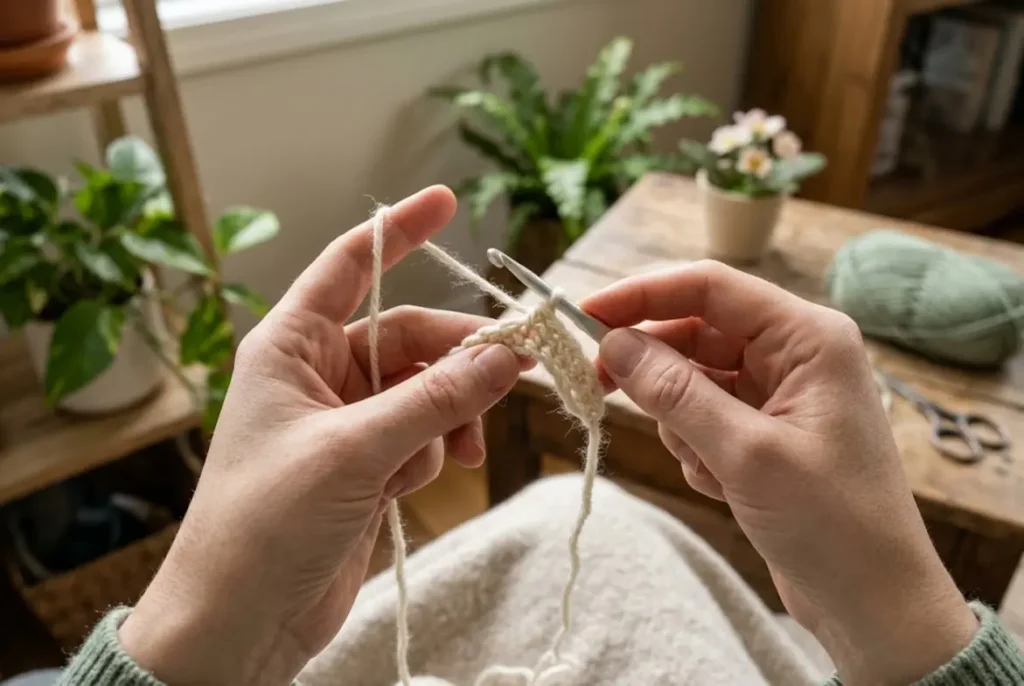
Once you’ve practiced single crochet, half-double crochet, and double crochet, you’re ready to combine them in small, safe projects. Here are some ideas, drawn from trusted crochet education sources:
- Flat rectangle “swatch”: Practice making neat rows using just one type of stitch, focusing on controlling your tension and counting your stitches.
- Washcloth or dishcloth: Typically made using single crochet for a dense, practical fabric.
- Simple scarf or cowl: Try half-double or double crochet to experiment with looser, drapier textures. (For more guidance, see crochet scarf patterns for beginners.)
- Granny-style square or flat strip: Practice double crochet, turning at the end of each row, or joining squares together (learn more at granny square crochet pattern).
How to structure your practice
- Work in short sessions (10–30 minutes) to avoid hand tension and fatigue.
- Focus on one stitch at a time for best results. Try adding stripes to practice changing colors with simple rows.
- Use stitch markers at the beginning of each row for easier counting.
Where to find simple patterns: Choose downloadable PDF patterns that are labeled as “beginner,” list all stitches used on the first page, and include step-by-step row instructions. See sites like LoveCrafts for clear beginner options.
Troubleshooting common problems when practicing stitches step-by-step
Learning crochet isn’t always perfectly smooth. Here are the most common issues—and how beginners can fix them safely:
- Tension too tight or loose: If your stitches are hard to insert the hook into, your tension may be too tight—try relaxing your grip and keeping your yarn flow easier. For stitches that look uneven or loose, gently adjust your tension by keeping the yarn in contact with your finger at all times. If a pattern’s notes (or trusted guides) recommend it, consider a larger or smaller hook only if you are struggling to control your stitches.
- Unintentionally gaining or losing stitches at the edge: This usually appears as a slanted or wobbly triangle after several rows. Use stitch markers at the ends, and count your stitches every row before advancing. (For more on this, see LoveCrafts beginner projects.)
- Turning chain confusion: The turning chain at the start of a row determines stitch height and sometimes counts as a stitch. Always check what your pattern specifies. Err on the side of making one too many rather than too few, if unsure.
- Not recognizing stitches: Refer to close-up photos or video pauses to compare your fabric with a standard example. Beginner-friendly tutorials often include clear images of “what to look for” at each row.
If persistent issues arise, seek out a targeted video or step-by-step tutorial to match your specific trouble area.
How to use your new skills with downloadable PDF patterns — choosing beginner-appropriate patterns
After practicing stitches on your own, the next natural step is applying your skills to real projects using downloadable crochet PDF patterns. Here’s how to choose a pattern you can confidently complete as a beginner:
- Look for the “beginner” label: Patterns states their skill level up front.
- Check the stitches list: The pattern should list all required stitches (SC, HDC, DC) on the first page—avoid patterns that assume unlisted techniques.
- Ensure row-by-row instructions are included: These step you through the project without expecting you to solve complicated stitch math on your own.
- Review included photos or diagrams: Good beginner patterns will have clear reference images for tricky areas.
- Downloadable PDF format: PDFs let you view, print, and mark up the instructions as you go—helpful for tracking rows and stitches.
Avoid patterns that:
- Assume advanced skills without explanation
- Do not spell out stitch terminology
- Use complex stitch combinations beyond basic SC, HDC, or DC without tutorials
If you’re looking for your next project, download a small PDF pattern that lets you practice the exact stitches you’ve learned. Patterns from the TwirlBloom homepage or those in the TwirlBloom shop are a convenient place to start.
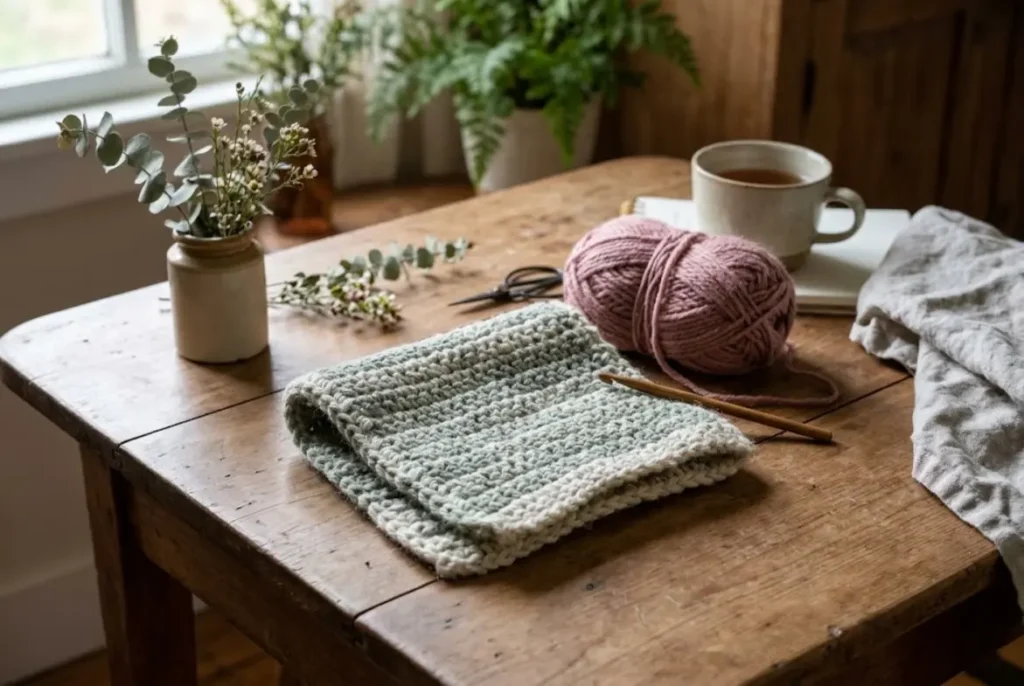
If you’re excited to turn your new skills into a finished project, browse TwirlBloom’s crochet PDF patterns and find inspiration for your next steps with easy-to-download instructions.
Frequently Asked Questions
Which crochet stitches should I learn first and why?
Most beginners start with the chain, slip stitch, single crochet, half-double crochet, and double crochet in that order. Each builds on the last, so you gain control and confidence one step at a time.
How do I fix tension that’s too tight or too loose when practicing stitches?
Try relaxing your grip, moving the hook more gently, and keeping the yarn running smoothly over your finger. For consistently tight stitches, use a slightly larger hook as recommended in trusted guides.
What is a turning chain — do I count it as a stitch?
The turning chain is a number of chains made at the start of a row to set stitch height. Whether you count it as the first stitch depends on your pattern; always check your pattern notes.
How do I read US vs UK stitch abbreviations and avoid confusion?
US and UK crochet terms differ: for example, US “single crochet” is called “double crochet” in the UK. Always refer to your pattern’s abbreviation list before starting.
What are the quickest ways to stop losing or gaining stitches at the edges?
Use stitch markers at row ends, count your stitches every row, and check whether you’re working into both top loops across. Consistent counting prevents slanted or uneven edges.
How do I choose a beginner PDF pattern that only requires basic stitches?
Look for patterns labeled “beginner,” with a list of stitches on the first page (such as SC, HDC, DC), and that include row-by-row instructions and clear photos or diagrams.