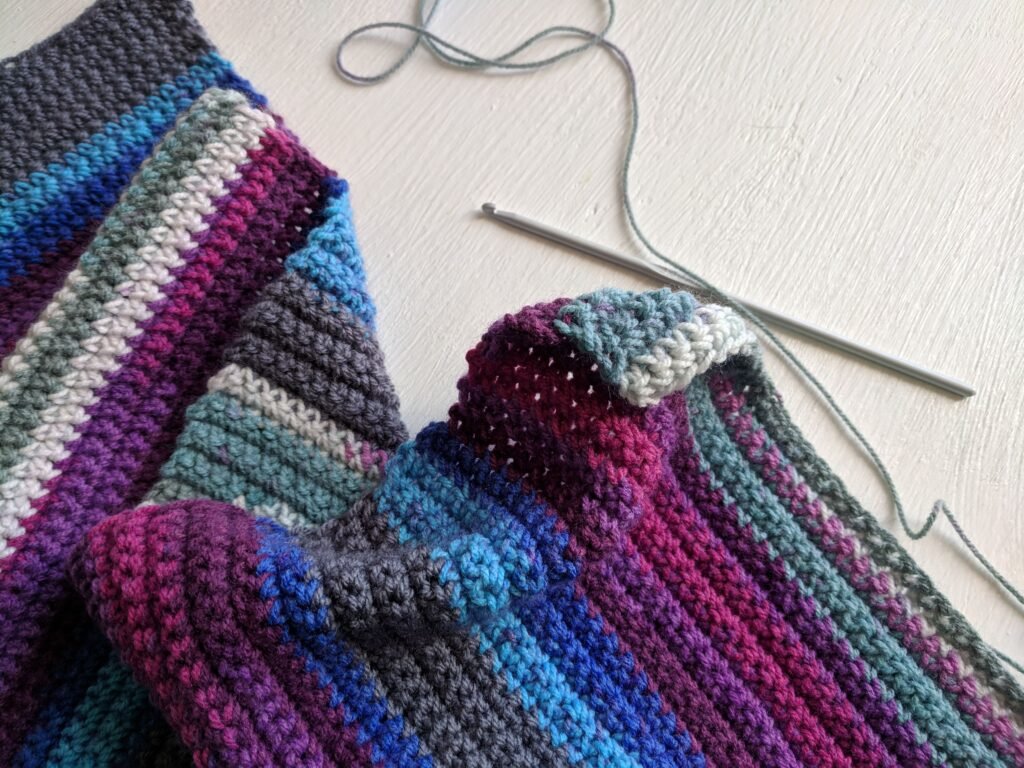
Crocheting your first scarf is a rewarding way to start building confidence with crochet. If you’re searching for the best crochet scarf patterns for beginners, you’ll find there’s more to success than just picking a pretty pattern. This guide focuses on realistic, beginner-first advice: which stitches to learn, what yarns and tools minimize frustration, how to spot a genuinely beginner-friendly downloadable PDF pattern, and how to set expectations so you’re likely to finish—and enjoy—your first scarf project.
Key Takeaways
- Beginner crocheters should master a short list of foundational stitches—especially the chain and single crochet—before starting a scarf pattern.
- Light-colored, smooth worsted-weight yarn with an appropriate hook makes learning easier and reduces mistakes.
- Choose downloadable PDF patterns with clear instructions, few stitch types, and photo support for the best beginner experience.
- Which basic crochet stitches to learn first
- Best yarn types and weights for beginner scarves
- Essential tools and notions for your first scarf
- Typical beginner mistakes and how to avoid them
- How long will my first scarf take? Realistic time expectations
- Most popular beginner scarf pattern types and what makes a pattern “beginner-friendly”
- Simple construction and finishing methods for scarves
- What to look for in a downloadable PDF pattern (and how paid PDFs compare to free patterns)
- Quick starter pattern suggestions and next steps (non-instructional)
- Frequently Asked Questions
Which basic crochet stitches to learn first
Before choosing from the many crochet scarf patterns for beginners, take a little time to get comfortable with the basic crochet stitches. Mastering this minimal set will make following most beginner scarf patterns much easier and more enjoyable:
- Chain stitch (ch): This is the foundation of every crochet project and the very first thing every crocheter should learn. Nearly all scarf patterns begin with a length of foundation chain.
- Single crochet (sc): The simplest stitch to work after the chain, single crochet is praised as easiest to learn and builds steady hand rhythm. Many beginner scarf patterns use only this stitch.
- Slip stitch (sl st): Used mainly for joining and finishing edges. It’s helpful, but not always essential for a simple scarf.
- Half-double crochet (hdc): Adds a little height and drape while still being very manageable for new hands.
- Double crochet (dc): Taller and creates a looser fabric—good for progressing, but optional for your first try.
- Treble crochet (tr): Used occasionally on scarves for extra openness or lacy effects, but not usually required in starter patterns.
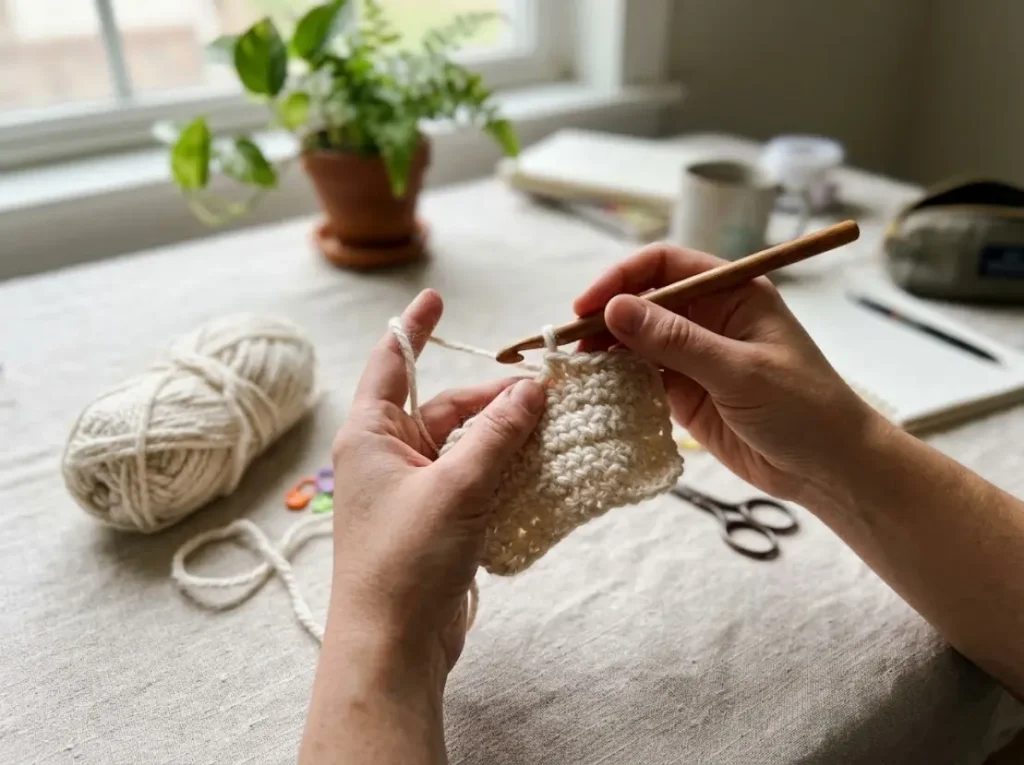
For absolute beginners, working a few rows of single crochet back and forth in a small swatch is an ideal practice exercise. Aim simply to make the rows line up evenly—don’t worry about perfect tension. Once you’re comfortable with the chain and single crochet, moving to half-double or double crochet will feel more intuitive.
If you’d like even more detail about each stitch and when to use it, consider checking TwirlBloom’s future stitch tutorial or crochet stitches guide for step-by-step explanations and photos.
Best yarn types and weights for beginner scarves
Your yarn choice for a first scarf can make the difference between a fun learning experience and a frustrating one. Here’s what experienced crocheters and major yarn companies recommend for beginners:
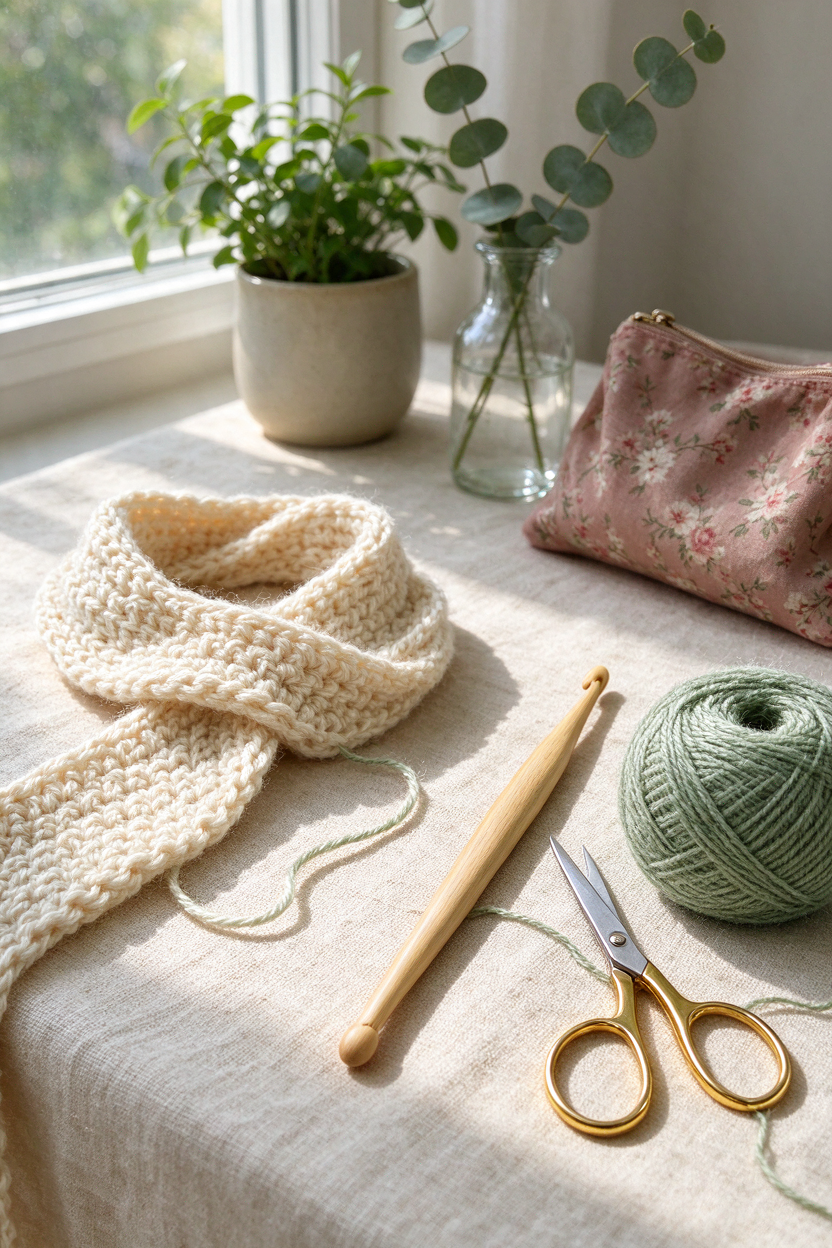
- Choose light-colored, smooth worsted-weight yarn (category 4 on yarn labels) for best stitch visibility and ease of handling. Yarn of this type makes it easy to see each loop and fix mistakes if they happen. Acrylic yarn is an especially friendly choice for its affordability, durability, and washability.[2]
- Chunky (bulky) yarn will work up faster and make a thick, cozy scarf—good for quick wins, but can feel large in smaller hands. Use only if you enjoy bigger stitches and a thicker finish.
- DK (double knitting) or lighter yarn produces a thinner, drapier scarf. This can look elegant, but may take longer and be a bit harder to learn on.
Avoid for your first scarf: dark shades (which make stitches hard to see), fluffy/mohair-style yarns, or highly textured novelty yarns. These can make it very hard to spot stitches, causing mistakes and discouragement.[2]
If TwirlBloom releases beginner yarn bundles or recommends starter yarns within specific scarf PDF patterns, those are often selected for these same beginner-friendly qualities.
Learn more about recommended yarns for new crocheters and simple project ideas with our beginner crochet projects guide.
Essential tools and notions for your first scarf
You don’t need a crowded toolkit to complete most beginner crochet scarf patterns. Here’s a short checklist for getting started:
- Crochet hook: Choose the size recommended on your yarn’s label. For worsted acrylic, this is often a 5 mm to 5.5 mm (US H–I), but always double check the yarn band for guidance. (If you want more on tools, see our planned “how to read a crochet pattern” and stitch tutorials.)
- Yarn or tapestry needle: For weaving in ends when you’re done.
- Scissors: Any small, sharp scissors will do.
- Stitch markers: Especially useful for tracking the first and last stitch of each row or marking chain counts.
Optional helpers:
- Manual row counter or notebook—keeps track of completed rows
- Blocking mats (optional finishing step for neater edges, can be skipped for first project)
- Ergonomic or comfort-grip hook if hand fatigue is an issue
Avoid over-purchasing specialty tools until you’ve completed a scarf; you may find you only want a few favorites. Many beginners buy sets or gadgets that sit unused. Start with this core list and see what feels most helpful as you go.[3]
Typical beginner mistakes and how to avoid them
Knowing what often trips up new crocheters can help you sidestep frustration and finish your scarf. Here are the most common beginner slip-ups (and quick fixes):
- Picking hard-to-see yarn: Dark, fuzzy, or very textured yarns hide your stitches. Pick a light, smooth yarn and you’ll spend less time searching for “where to put the hook.”
- Losing count on a long foundation chain: Counting chains out loud or placing markers every 10–20 chains can help prevent unraveling or missed stitches.
- Inconsistent tension: Most beginners have bumpy, wobbly edges at first. This is normal! Simply finish the scarf instead of starting over—your tension will improve faster that way.
- Switching hook sizes mid-project: Keep the same hook throughout, unless the pattern says otherwise.
- Starting with a complex or overlong pattern: Begin with a straightforward, one-ball scarf pattern so you can finish quickly and feel accomplished.
Most importantly: finish your scarf, even if the edges aren’t perfect. A finished first project builds far more skill and confidence than endlessly starting over.[1]
How long will my first scarf take? Realistic time expectations
Every beginner wants to know: how much time will I really need? The honest answer is, it depends on your chosen pattern and how much you practice. Here are the factors that make a difference:
- Scarf length/width: Longer and wider scarves require more rows and take more time.
- Stitch complexity: Simple single crochet rows move faster than intricate textures or frequent stitch changes.
- Yarn weight: Chunky yarn on a larger hook produces quick, thick scarves; finer yarn and smaller stitches add hours.
- Your pace: Most new crocheters work more slowly at first, often in short sessions of 10–30 minutes.
Realistically, with focused practice, many beginners complete a simple, single-crochet scarf after a few hours of crochet time, often spread across several days or evenings.[3] (If you enjoy the process, don’t worry if it takes longer!) Chunkier yarn patterns are excellent for quicker results. Aim for finishing a basic scarf rather than perfecting every stitch or taking on a huge project right away.
Most popular beginner scarf pattern types and what makes a pattern “beginner-friendly”
The best crochet scarf patterns for beginners share certain qualities that make them realistic starter projects. Below are common beginner scarf types and tips for spotting a truly supportive pattern:
- One-stitch scarves: Made with just chain and single crochet (or all half-double crochet), these are easy to memorize and repetitive, which makes them less intimidating for newcomers.
- Knit-look ribbed scarves: Often worked in back loops only or using half-double/double crochet for a stretchy, squishy texture. Clear, repetitive rows are a hallmark.[4]
- Moss or linen stitch scarves: Alternate double crochet and chain stitches for a dense, drapey fabric with no “wrong” side.[5]
- Textured or chunky scarves: Use a simple stitch like half-double or double crochet on chunky yarn for fast, tactile results.
Look for these features in a beginner-friendly pattern:
- Uses only 1–2 basic stitches (often chain + single or half-double crochet)
- Clear row-by-row instructions—no complicated charts required
- Materials list including yarn weight/type and hook size
- Photos showing progress (optional but ideal), or a video tutorial for extra support
- Easy to adjust length or width if desired
- Labels itself as “beginner” or “easy” skill level
Free online patterns vs downloadable PDF patterns:
- Free patterns found on blogs are useful for quick browsing, but may split instructions across multiple pages or lack printable formatting.
- Downloadable PDF patterns often offer step-by-step photos, consolidated printable instructions, and sometimes bonus support like video links or progress checklists. For many beginners, having a single, clear PDF to reference (even offline) prevents confusion.
Simple construction and finishing methods for scarves
The simplest beginner scarf patterns are worked flat in rows—you crochet a rectangular strip, then finish off and add optional decorative touches. Here’s how scarf construction usually looks for beginners:
- Start with a foundation chain.
- Crochet back and forth in rows using 1–2 basic stitches.
- Finish by cutting the yarn and weaving in both ends using your tapestry needle—no fancy techniques necessary.
- Optional: add fringe or tassels by looping extra yarn through row ends for a decorative effect.
Most first scarf projects do not require seaming or joining pieces together (unlike cowls or infinity scarves, which sometimes need a simple join).
Blocking your scarf—that is, gently washing and shaping it to even the edges—is nice but not required for your first project. You can always experiment with this finishing step later if you want extra polish.
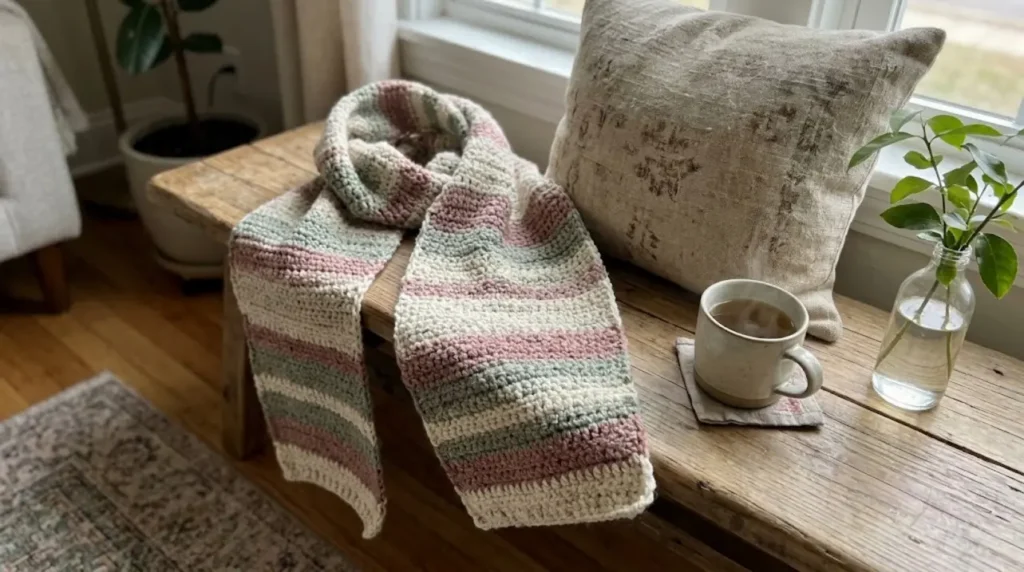
What to look for in a downloadable PDF pattern (and how paid PDFs compare to free patterns)
For beginners, having a clear, well-formatted pattern can make all the difference. Use this checklist to evaluate PDF patterns—whether from TwirlBloom’s shop or another trusted designer:
- Materials list with suggested yarn type, yardage, and hook size
- Skill level label, e.g., “Beginner” or “Easy”
- Clear, step-by-step written instructions (not just a diagram or brief notes)
- Stitch abbreviation key
- Several progress photos or at least images of the finished scarf
- Optional: video tutorial or link to supporting resources
- Notes about how to adjust length and width
- Printer-friendly layout
While free patterns are a great way to browse and experiment, downloadable PDF patterns are usually cleaner to print, easier to follow offline, and sometimes include exclusive tips or high-resolution photos. Choose whichever style matches your learning preference—just be sure your chosen pattern passes the beginner-friendliness test above.[10]
Quick starter pattern suggestions and next steps (non-instructional)
Ready to choose your first project? Here’s how to set yourself up for the best chance of finishing your first crochet scarf:
- Pick a one-stitch scarf (single crochet or half-double crochet throughout) for straightforward, steady progress.
- Practice on a small swatch—chain, single crochet, and turn rows—before starting your real scarf. This builds muscle memory and confidence.
- Look for downloadable PDF scarf patterns that include the checklist above and match your skills and preferred yarn weight.
- Use the yarn and hook size recommended in your chosen pattern, sticking with smooth, light-colored yarn for ease.
- Finish your first simple scarf—uneven edges are normal! You can always try more advanced stitches and yarn types on project two.
- Avoid buying large sets of specialty yarns or advanced tools until you know your preferences.
Once you’ve completed your first scarf, you’ll have built the basic skills to explore a huge variety of beginner projects: from simple hats to cozy blankets. For more inspiration and practical tips, see our beginner crochet projects guide and look for detailed tutorials in the TwirlBloom blog or shop.
Frequently Asked Questions
What are the easiest stitches to learn for a crochet scarf?
The chain and single crochet stitches are the simplest and most recommended for beginners. Many beginner scarf patterns use only these two stitches, making them ideal for learning basic technique.
Which yarn should I choose for my first scarf and why?
Select a light-colored, smooth worsted-weight yarn (often labeled as category 4) for your first scarf. This type is easy to see and work with, making it easier to spot mistakes and achieve consistent stitches.
How long will a simple beginner scarf take to make?
Most beginners can complete a simple, single-crochet scarf with worsted-weight yarn in a few hours of crochet time, spread over several days. Actual time depends on scarf size, stitch complexity, and your practice pace.
What common mistakes should I watch for on my first scarf project?
Avoid dark or fuzzy yarns, losing count on the foundation chain, inconsistent tension, switching hook sizes, and picking an overly complex pattern. Focus on finishing, even if your stitches aren’t perfect.
Are free online patterns as good as downloadable PDF patterns for beginners?
Free patterns are helpful for getting started. However, downloadable PDF patterns usually offer clearer formatting, consolidated instructions, and often include photos or extra support, making them more user-friendly for beginners.
What basic tools do I absolutely need to finish a scarf?
You need a suitable crochet hook for your yarn, a yarn needle for weaving in ends, scissors, and stitch markers. Other tools, like row counters or blocking mats, are optional but can make the process easier.
Choosing the right scarf pattern and supplies doesn’t have to be overwhelming. With the right foundation skills and realistic expectations, your first crochet scarf project can be a positive, achievable experience. If you’re inspired to start, explore Crochet PDF Patterns from TwirlBloom—you may find your next cozy project just a click away.