A crochet advent calendar is a creative and festive way to count down to Christmas with handmade charm. This guide will help you compare simple pattern types, understand the skills and materials needed, avoid common beginner mistakes, and find free pattern sources—so you can choose or start an easy, reusable crochet advent calendar that suits your skill level and family traditions.
Key Takeaways
- A crochet advent calendar holds 24 pockets or ornaments, opened daily from December 1–24, and can be reused for many holiday seasons.
- Pocket panels and repeat motifs are beginner-friendly; amigurumi versions are more advanced and time-consuming.
- Choosing the right yarn (cotton DK or worsted acrylic) and practicing core stitches ensures your calendar keeps its shape and lasts for years.
- What is a crochet advent calendar and how it works throughout the season
- Essential skills and stitches beginners should know before starting
- Simple pocket and motif pattern types suitable for beginners
- Yarn, hooks and tools best suited for a reusable advent calendar
- Practical construction and assembly methods
- Common mistakes beginners make and how to avoid them
- Where to find reputable free patterns and how they differ in complexity
- Choosing the right pattern for your skill level, display method and family tradition
- Customization and personalization ideas for gifting or family use
- Planning timeline and quick project checklist
- Frequently Asked Questions
What is a crochet advent calendar and how it works throughout the season
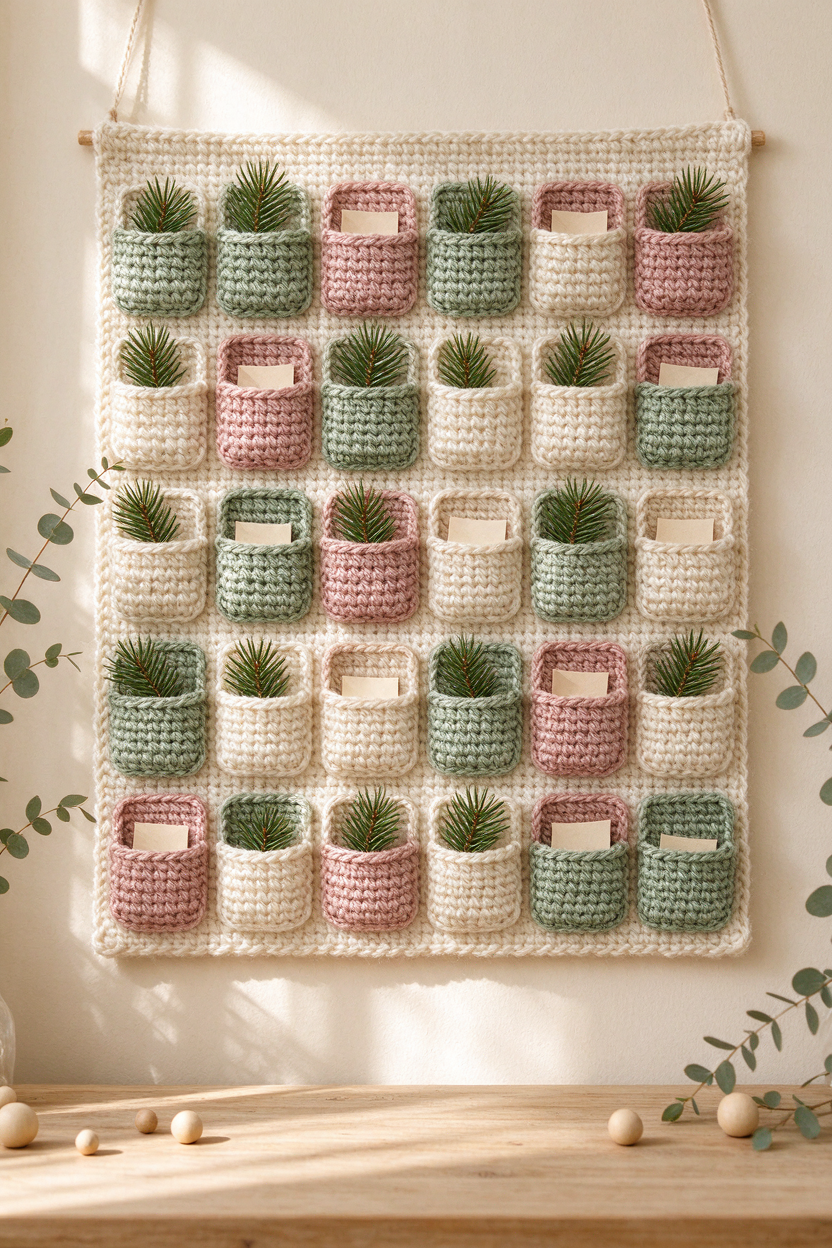
A crochet advent calendar is a handmade holiday organizer with 24 small pockets or ornaments—one for each day in December until Christmas. Each pocket can be filled with a treat, folded note, tiny toy, or craft supply, and families open or reveal a new one daily as they countdown to Christmas [source].
Traditionally, commercial advent calendars hold chocolates, but crocheted versions are designed to be reusable every year, making them a lasting part of the household’s December routine. For best results, fill pockets with lightweight items—since the fabric is flexible and overfilling can distort shapes. Some families use activity notes or small messages for a clutter-free alternative.
- Display styles: Wall-hanging panels, garlands/bunting, tree shapes, or individual ornaments
- Reusability perks: Store flat or rolled (not folded sharply), and hand wash gently if needed after heavy use—especially when handled by children
- Main advantage: A handmade, reusable project that adds tradition and reduces annual waste
Essential skills and stitches beginners should know before starting
Most crochet pattern advent calendars for beginners rely on basic stitches and simple assembly techniques. If you can already create a foundation chain and work single crochet (sc), you are well on your way to completing a simple advent calendar project. Here are the core skills to practice first:
- Beginner stitches:
- Chain (ch)
- Single crochet (sc)
- Slip stitch (sl st)
- Half double crochet (hdc)
- Double crochet (dc)
- Treble crochet (tr)
- Joining pieces (sewing pockets or motifs onto panels/garland)
- Sewing on simple numbers for dates (using a needle and yarn or tags)
- Easy finishing: Edging, light blocking, and weaving in ends
Amigurumi-style calendars (with 24 mini figures or stuffed motifs) introduce slightly more advanced skills such as starting with a magic ring and making invisible decreases—these are best for crafters who are already comfortable with shaping and working in the round [source].
For a skills refresher, see TwirlBloom’s guide to foundational crochet stitches (if you are still practicing the basics).
Simple pocket and motif pattern types suitable for beginners
If you’re new to seasonal projects, the easiest way to create an easy crochet advent calendar for beginners is to choose a style that repeats a basic shape across all 24 days. Here are common beginner-friendly types and what makes each manageable:
- Pocket panels/strips: Rows or blocks of identical rectangles/squares sewn to a background; the most straightforward style, great for assembly-line progress.
- Mini gift bags or stockings: Slightly more involved but still manageable; each bag can be worked in the round and then attached to a display.
Example: Little Doolally’s free crochet mini gift bag pattern [source]. - Garland of motifs: Chains of individual pockets or small decorations (like mittens or boots) fastened to string or ribbon for hanging across a mantel or wall.
- Amigurumi motif sets: Although delightful, these demand more technique (magic ring, working in the round, stuffing) and significantly more time. Beginner crafters often choose a partial amigurumi calendar (such as 12 instead of 24 figures), or supplement with simple bags.
Many free crochet advent calendar patterns focus on these pocket, bag, or bunting structures for maximum beginner accessibility.

Yarn, hooks and tools best suited for a reusable advent calendar
Your yarn and hook choices make a big difference in the feel, durability, and reusability of a crochet advent calendar. Here’s what reputable sources recommend:
- Cotton DK yarn: Holds structure well and gives crisp pocket edges, which helps if your pockets will be hung upright or handled often [source].
- Worsted weight acrylic: Offers softness, faster results, and good washability; a popular option for speed and for using up scrap yarn.
- Amigurumi figures: Typically require denser fabric, so pattern writers often advise a smaller hook (relative to the yarn label) to help prevent stuffing from showing—but always defer to your specific pattern for hook size.
Other helpful tools and supplies:
- Tapestry needle: For sewing on pockets and weaving in loose ends
- Stitch markers: Especially for marking rounds or repeats
- Simple numbering materials: Crochet numbers, sewn tags, or buttons
- Optional for amigurumi styles: Stuffing for small figures, and possibly safety eyes (for those who want to add character motifs)
For yarn selection guidance and how it affects project success, you may also find TwirlBloom’s beginner pattern selection guide helpful.
Practical construction and assembly methods
Your preferred display style influences how you attach pockets or motifs and the finishing touches you should use for durability. Here are the most common assembly approaches:
- Sew pockets onto a background: The classic way—work all 24 pockets (rectangle, square, or bag), then attach to a flat panel or tree silhouette.
- String motifs as a garland: Chain together mini stockings, mittens, or bags using ribbon, yarn, or crocheted chains. Each pocket can be looped on or sewn securely.
- Panel strips: Make strips of pockets joined side-by-side or in rows, then sew or crochet together as a wall hanging.
- Anchor with buttons or loops: For removable pockets, secure with button loops or ties so ornaments come off one by one for daily reveals.
Durability tips: Use denser stitches or edging to help pockets hold their contents; reinforce joins (especially at the top) to prevent sagging. After each season, store your finished calendar flat or gently rolled, with number tags or ornaments kept in a labeled bag or box. Hand wash only if needed, and dry flat for best longevity [source].
Common mistakes beginners make and how to avoid them
- Making pockets too large or overfilling them: Keep goodies light—chocolate coins, stickers, or mini notes work well. Too much weight in each pocket causes drooping or stretching.
- Picking yarn that is too soft or floppy: Sturdy cotton DK or acrylic yarn, plus simple tight stitches, create pockets that keep their shape.
- Underestimating timeline: Even easy pocket patterns add up, especially if you want to decorate or number each one. Amigurumi sets are especially time-intensive; plan and start early.
- Skipping reinforcement at joins: Take a few extra minutes to sew pockets or motifs securely. Add simple edging for extra strength and neatness.
A little planning and realistic expectations help prevent frustration and ensure your reusable crochet advent calendar pockets last through many family holidays.
Where to find reputable free patterns and how they differ in complexity
There are many free crochet advent calendar pattern options available online. The best sources offer a spectrum of styles and explain required skills and materials clearly:
- LoveCrafts: Features curated collections of pocket and motif advent calendar patterns, with skill level and material details.
- LoveCrafts blog roundups: List pocket panels, garlands, and gift-bag patterns such as Little Doolally’s bags or Kippers Ning’s bootie motif.
- Yarnspirations: Provides both free Red Heart advent calendar kits (with ready-made and DIY amigurumi) and downloadable instructions for seasonal motifs.
Pattern complexity ranges from:
- Very easy: Pocket panels or repeat squares—ideal for beginners
- Intermediate: Mini bags, stockings, or small motif garlands
- Advanced: Full amigurumi calendars with intricate mini figures
When choosing a free pattern, look for:
- A clear list of stitches used
- Explicit skill level and materials list
- Helpful photos or diagrams for assembly
Choosing the right pattern for your skill level, display method and family tradition
Picking a suitable advent calendar project is about more than just looks. Consider these points for a successful and enjoyable experience:
- Number of repeats: Patterns requiring the same motif 24 times can become tedious; sample one pocket or motif first, and estimate your comfort with repetition.
- Display preference: Decide early if you want a wall panel, garland, or tree-shaped calendar. This choice affects pocket shape, size, and assembly.
- Intended users: If young children will use the calendar, select patterns with firmly attached pockets and no choking hazards (skip small buttons for little hands).
- Washability and storage: If you want a calendar you can wash and store easily each year, prioritize sturdy yarn (cotton DK or acrylic) over novelty fibres.
- Time constraints: Pocket calendars can usually be finished starting in early November, but if you want to tackle a full amigurumi set, beginning in late summer or earlier is wise [source].
Customization and personalization ideas for gifting or family use
Making your own crochet advent calendar means every part can be personal—even if you use the simplest construction methods:
- Numbers: Use contrasting yarn to embroider, crochet, or sew felt digits onto each pocket. Attach tags, buttons, or tiny wooden numerals from craft shops as an alternative.
- Color-coding: Alternate colors or themes (winter blues, classic reds and greens, or even a rainbow palette). Color-coding can make the calendar feel unique to your family.
- Meaningful fillings: Instead of (or alongside) candy, try activity notes, jokes, small holiday wishes, or even mini crochet baubles (perfect for scrap yarn).
- Simple embellishments: Add a metallic or sparkly trim to the border or a few mini stars—just keep additional decoration light so the calendar remains practical and not easily snagged [source].
If you’re ready to browse more options, explore crochet PDF patterns at TwirlBloom—fresh ideas are added regularly and downloadable files let you start your project on your own timeline.
Planning timeline and quick project checklist
Even the easiest crochet advent calendar is made up of 24 motifs, so a little planning goes a long way. Here’s how to keep your project on track:
- Timeline by style:
- Pocket/motif calendars: Starting in early November is fine for many crafters.
- Amigurumi figures: For 24 pieces, plan to start in summer or early autumn to finish comfortably [source].
- Checklist:
- Choose your pattern style and source (download/print pattern—kits can help streamline supply gathering).
- Test one pocket or motif for speed and comfort level.
- Set weekly milestones if you plan to make a full set (e.g., 6 pockets per week for 4 weeks).
- Designate time for assembly and numbering—even quick pockets take extra time for joining and details.
- Decide storage/packaging plan at the start so finished pieces stay organized until December.
- Optional: Use downloadable PDF patterns or curated pattern bundles to save time on planning and materials selection. A pattern kit with pre-chosen materials can also help streamline the process.
Frequently Asked Questions
What is the easiest type of crochet advent calendar for a beginner?
The easiest type is a pocket-panel or repeat square calendar, where you make the same simple shape 24 times and attach them to a background or string. These use basic stitches and are easier to finish on a holiday schedule.
Which stitches should I learn first to make an advent calendar?
Practice these beginner-friendly stitches: chain (ch), single crochet (sc), slip stitch (sl st), half-double crochet (hdc), double crochet (dc), and treble crochet (tr). These form the foundation of most simple advent calendar patterns.
What yarn is best for a reusable crochet advent calendar?
Cotton DK yarn provides sturdy, crisp pockets, while worsted acrylic is popular for speed, softness, and durability. Both are good choices for calendars meant to last over many holiday seasons.
Can I make 24 pockets quickly, or should I start earlier?
Even quick pockets add up, so starting in early November is recommended if you want your calendar complete for December 1. Amigurumi versions should be started much earlier due to additional time required for shaping and assembly.
Where can I find reputable free crochet advent calendar patterns?
Reliable sources include LoveCrafts’ curated pattern collections, Yarnspirations’ advent calendar patterns, and blog roundups highlighting beginner and intermediate designs.
How should I store and care for a crocheted advent calendar between seasons?
Store your calendar flat or rolled to avoid creases, keep ornaments or pockets in a labeled bag, and hand wash gently if it shows signs of wear after the holidays.
Conclusion: Handmade holiday traditions start with approachable projects. With the right materials, repeatable pattern types, and a bit of planning, any confident beginner can create a durable, reusable crochet advent calendar. This project adds joy to December and becomes a meaningful part of your family’s celebrations for years to come.
If you’re inspired and ready for your next seasonal project, browse crochet PDF patterns at TwirlBloom for more creative holiday ideas.