If you’re looking for a sustainable and creative way to celebrate December, a crochet advent calendar is a rewarding project that makes each holiday season feel extra special. This guide will help you confidently choose a reusable design, understand beginner and material considerations, avoid common pitfalls, and find a crochet pattern that fits your skills, time, and personalization goals. Whether you want a simple pocket panel or a set of mini crochet stockings, you’ll find practical advice and research-backed tips for a functional, festive, and long-lasting calendar.
Key Takeaways
- The fastest and most reusable designs use flat panels or pockets, but amigurumi and bunting styles offer more room for creativity.
- Look for cotton DK or worsted acrylic yarns for sturdy, washable pockets and follow beginner-friendly patterns with clear instructions.
- Careful assembly, light fillings, and reinforced hanging methods make your crochet advent calendar last year after year.
- Popular reusable crochet advent calendar designs
- What skill level is really required — easiest approaches for beginners
- Yarn and hook choices for durable, attractive reusable pockets
- Construction methods — single panels, join‑as‑you‑go, or attaching individual pockets
- Common beginner mistakes and how to avoid or fix them
- How free crochet advent calendar patterns compare to paid options
- Finishing, hanging and display techniques to keep calendars tidy and functional
- Easy personalization ideas and missing beginner tips
- Quick tools and checklist before you start
- Frequently Asked Questions
Popular reusable crochet advent calendar designs
The most popular and practical crochet advent calendar styles focus on reusability and can be adapted to a range of skill levels and crafting time. Here’s how the three main designs compare:
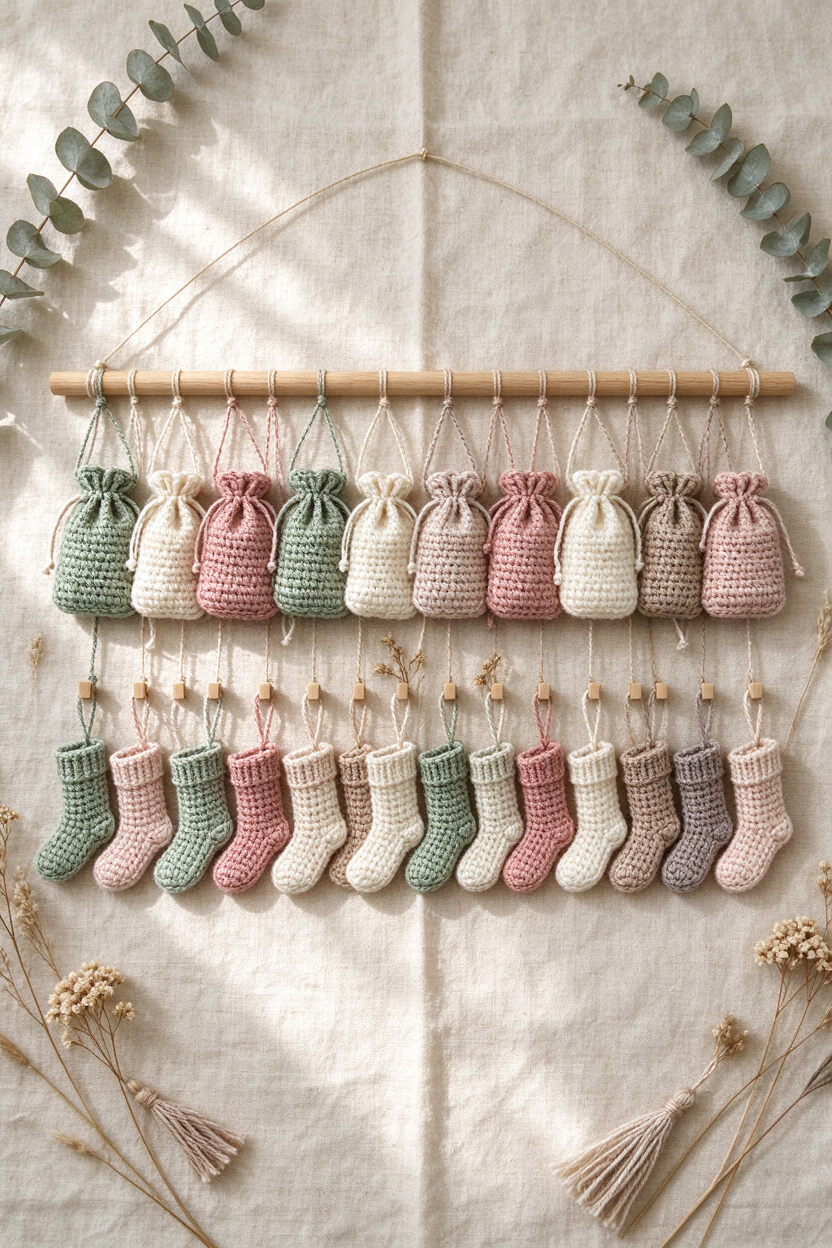
- Pocket panels and pouches: These calendars use a flat crocheted background with small pockets or pouches attached. They are typically the fastest style to finish, allow for creative personalization, and can be folded or rolled for storage. Reusable crochet advent calendar pockets are well-suited for handling repeated advent seasons and can be filled with lightweight notes, mini toys, or craft bits. [Source]
- Mini stockings or bunting: This design features 24 (or fewer, for a faster project) small stockings, mittens, or shapes hung on a cord or ribbon. Each is crocheted individually and can be removed or filled each day. Bunting calendars store flat, and are friendly for stash-busting and color play.
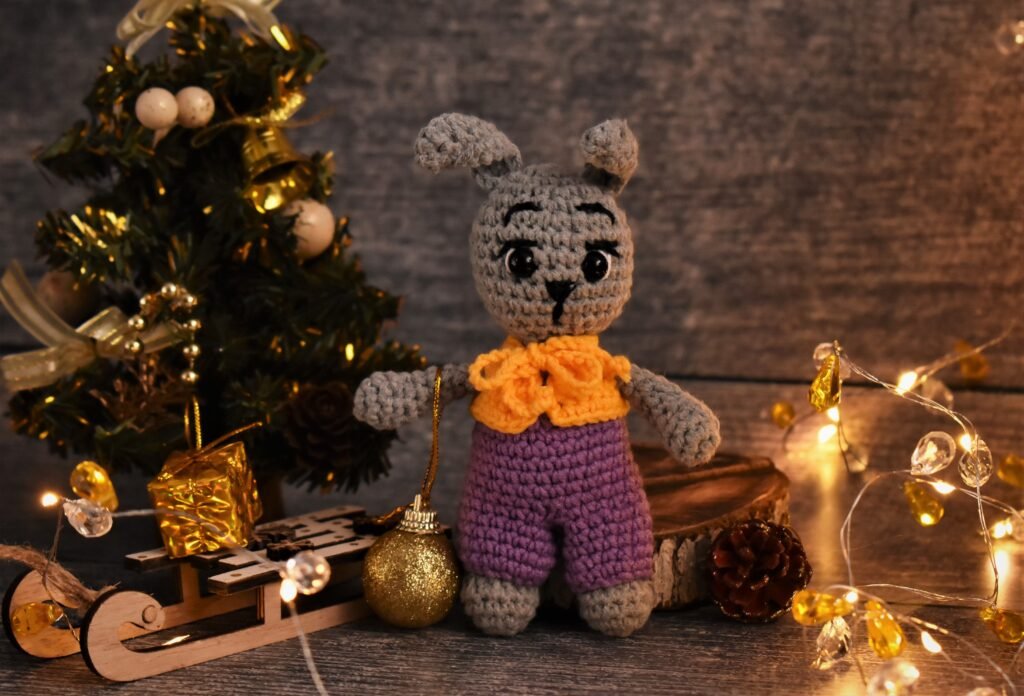
- Amigurumi/countdown ornaments: The most ambitious option features crocheted mini-figures or motifs—such as trees, animals, or a nativity—assembled over the month. While enchanting, these require more time and skill and are less beginner-oriented, but they do become heirlooms.
For durability and longevity, fill pockets or stockings with lightweight items only. Folded notes, stickers, small crafts, or fabric tags work well—traditional chocolate can be used, but avoid heavy or bulky treats so the calendar keeps its shape.
What skill level is really required — easiest approaches for beginners
Many crochet advent calendar projects are manageable for confident beginners—especially with pocket panel or pouch designs. Here’s how to identify the easiest route:
- Beginner-friendly approaches: The simplest patterns use flat panels with rows of single crochet and chains. Pockets or pouches are made as simple rectangles and attached with slip stitch or sewing. Projects labeled “easy” or “beginner” are most likely to have clear step-by-step instructions and minimal shaping.
- What to look for in a pattern:
- Explicit “beginner” or “easy” label in the title or description
- Stitch abbreviation key or glossary
- Photos or tutorial links (especially useful if you’re unsure how to attach pockets or add numbers)
- Quick alternatives to big builds: Make a “12-pocket” version first or use pre-made wooden number tags to reduce sewing or embroidery work. Fewer pockets still make a festive countdown.
If you’re comfortable chaining and single crocheting, you can complete most beginner patterns. For more help on starting out, explore TwirlBloom’s crochet patterns for beginners and step-by-step stitch guides.
Yarn and hook choices for durable, attractive reusable pockets
Picking the right yarn and hook keeps your calendar neat and functional for seasons to come. Research from LoveCrafts and Lion Brand recommends:
- Cotton DK (double knitting weight): Ideal for crisp, structured pockets that don’t stretch. Cotton stands up to repeated use and helps pockets hold their shape.
- Aran or worsted acrylic: Great for quick crocheting, easy washing, and using up leftover yarn. Slightly softer edges, but still handles repeated use with minimal stretching.
- Accent yarns: Add a touch of sparkle using small amounts of metallic or glitter yarn for details like stars and borders.
- Hook choices: Always check your chosen crochet pattern for its recommended hook size. For amigurumi, use a hook one size smaller than what is suggested on the yarn label—this closes gaps so stuffing does not show. Beginners may find “tapered” hooks easier to manage, as the yarn doesn’t slip off as easily. [Source]
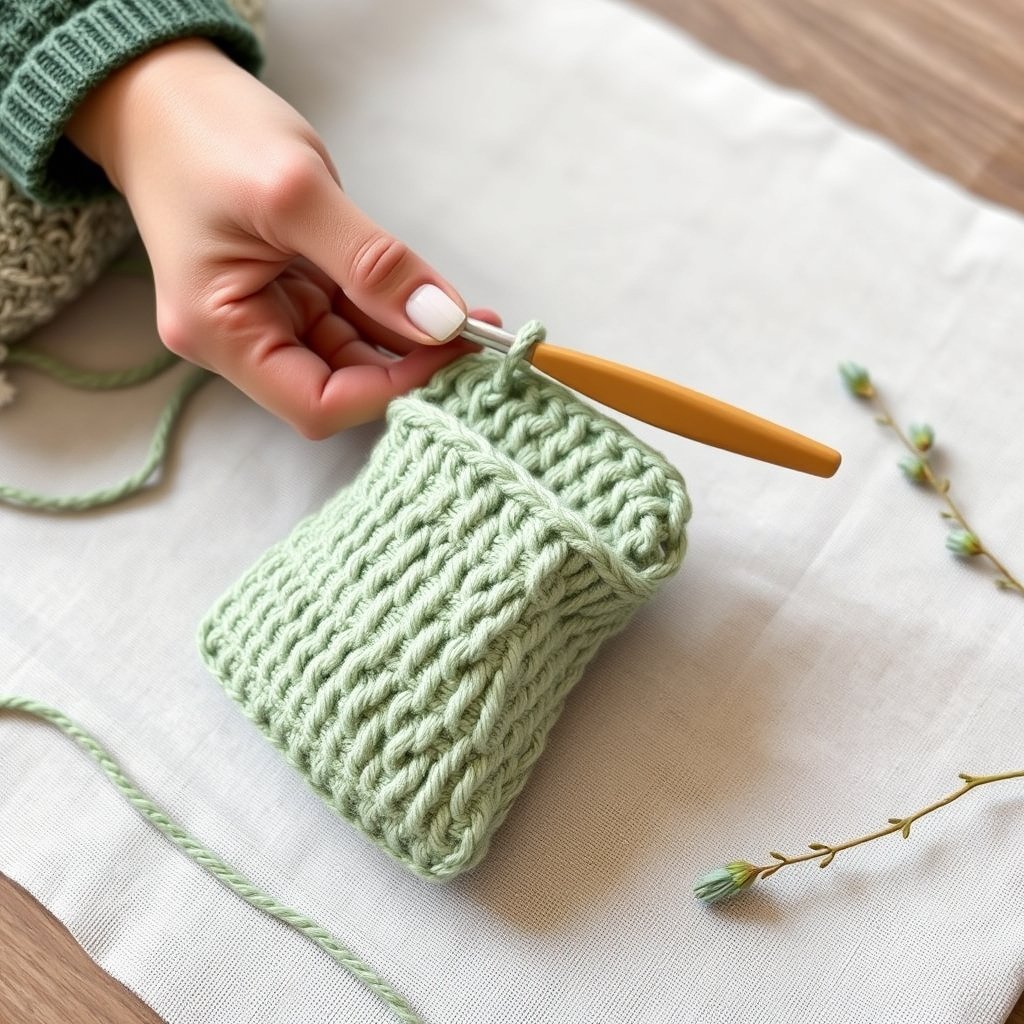
Sturdy, easy-care yarns help your calendar survive many December celebrations without losing their shape or color. For more tips on yarn selection, see our beginner blanket yarn guide.
Construction methods — single panels, join‑as‑you‑go, or attaching individual pockets
There is no single “right” way to assemble a crochet advent calendar, but your choice of method affects the ease of making, personalizing, and repairing the calendar over time:
- Single-panel construction: Crochet a background with pockets worked in or attached to the same piece. This is the quickest and most stable approach, making it a top choice for beginners.
- Join-as-you-go modular builds: Create pockets, pouches, or shapes separately and join them as you finish. This method is useful if you want to adjust the size, colors, or fix parts later.
- Individual pocket attachment: Make each pocket or stocking individually, then sew or crochet them onto a prepared backing or string. This provides maximum customization and can be done over several weeks.
If you love flexibility and modular projects, consider attachable pockets or bunting. If you want a faster, stable project, go with a single panel. You can find more about crochet construction methods in beginner guides like this post on simple patterns.
Common beginner mistakes and how to avoid or fix them
Even simple advent calendar projects include learning curves. Here’s how to avoid—or quickly fix—the most common beginner pitfalls:
- Uneven gauge and sizing: Not all yarns or hooks give the same results. Always check pattern notes for gauge and whether a turning chain counts as a stitch. Swatch before starting, and measure to avoid wonky pockets. For more on gauge, see Lion Brand’s pattern checklist.
- Weak seams and loose attachments: Pockets and hanging edges can come loose if not secured. Use a strong joining stitch or sew twice at stress points. Reinforced loops or tabs help with sturdy hanging.
- Stretching or sagging: Overfilling pockets with heavy treats will distort even the best-made panel. Stick to lightweight contents and sturdier yarn for the background.
- Messy finishing: Take time to weave in yarn ends and block your calendar if needed. This helps maintain shape and gives a more finished look.
How free crochet advent calendar patterns compare to paid options
You’ll find both free and paid crochet advent calendar patterns online, but choosing the right type depends on your needs and experience:
| Feature | Free Pattern | Paid PDF Pattern |
|---|---|---|
| Pattern Length | Often abbreviated or web-only | Usually full-length downloadable PDF |
| Photo Support | May include some images, but not always step-by-step | Often includes detailed step-by-step photos, charts, and alternate views |
| Layout & Sizing | Basic, sometimes missing multiple size options | Usually includes multiple sizes or layout variations |
| Skill Level Guidance | Varies; sometimes assumes prior knowledge | Typically clear instructions for every step |
Free patterns work well for simple pocket panels or confident beginners. Paid PDFs are more useful if you choose a complex amigurumi scene, want a fully printable pattern, or appreciate full process images. Before starting, review any free pattern for a gauge guide, a stitch glossary, and clear finishing instructions. Both Lion Brand and LoveCrafts curate extensive pattern libraries with search filters for skill level.
Finishing, hanging and display techniques to keep calendars tidy and functional
A beautiful calendar deserves a sturdy and practical display. Here are proven strategies for finishing and hanging your project:
- Hanging ideas:
- Add a reinforced top edge by crocheting a firm final row or sewing a strip of felt.
- Insert a wooden dowel, strong twig, or ribbon along the top; hang from sturdy loops or tabs.
- For bunting, use twine or ribbon that can take the calendar’s weight and recover easily.
- Numbering solutions: Crochet numbers onto each pocket, sew on fabric or paper tags, or use removable wooden discs for a completely reusable option. Pre-made tags reduce finishing time.
- Care and storage: For best results, use yarn blends that can be machine-washed or hand-washed gently. Store flat or rolled (not folded across pockets) to keep the piece in good shape between seasons.
Easy personalization ideas and missing beginner tips
Part of the handmade holiday fun is making your calendar unique. Here are simple ways to customize your project, plus practical advice often skipped in quick guides:
- Personalization:
- Use color blocks, stripes, or a different color for each pocket
- Add simple appliqué shapes (stars, trees, initials) to personalize for kids or family
- Change the number of pockets—pick 12, 18, or another count that fits your timeline
- Mix yarn types and textures for visual and tactile interest
- Real-world beginner tips:
- Always swatch first, especially if using stash yarns
- Test your hanging method on a door before attaching all pockets
- Make one pocket completely as a prototype to check sizing and technique
- Keep a small repair kit—matching yarn, needle, scissors—for quick fixes on loose seams
- Try removable number tags or ribbons so the numbers don’t need to be stitched forever
Quick tools and checklist before you start
Gathering a simple toolkit sets your project up for success. Before starting your crochet advent calendar, use this checklist:
- Essential tools:
- 1–2 medium-sized crochet hooks (check pattern or yarn for specific sizes)
- Tapestry (yarn) needle
- Small scissors
- Stitch markers (helpful for tracking pocket placement)
- Measuring tape or ruler
- Pre-start checklist:
- Read the complete crochet pattern (not just the materials section)
- Crochet a test swatch and compare gauge with pattern notes
- Decide your hanging method (dowel, string, loops)
- Choose your style of numbers (crochet, tags, wooden discs)
- Tool upgrades: Once you know your preferred hook, consider ergonomic handles for comfort on larger projects.
Frequently Asked Questions
Can a complete beginner make a reusable crochet advent calendar?
Yes, confident beginners who can chain and single crochet can make most simple pocket panel advent calendars, especially when using a clear pattern and basic yarns.
What yarn is best for crochet advent calendar pockets that will be handled often?
Cotton DK yarn is recommended for crisp, non-stretchy pockets. Aran or worsted weight acrylic is also a popular choice for speed and durability.
How should I hang a pocket panel so it doesn’t stretch or sag?
Reinforce the top edge with extra rows, felt backing, or insert a dowel. Use strong loops or tabs for hanging and keep the advent pockets lightweight.
Are free crochet advent calendar patterns as reliable as paid PDFs?
Free patterns are usually reliable for simple projects but may have less detailed guidance. Paid PDFs often include step-by-step photos and additional help.
How much stuffing or weight can a small crocheted pocket hold?
To keep the calendar in good shape, fill pockets with lightweight items like notes, stickers, or small toys. Avoid heavy or bulky items to prevent stretching.
Which construction method is easiest to fix if I make a mistake?
Join-as-you-go or individually attached pockets are easiest to repair or replace. Single panels are fastest, but fixing individual pockets may be trickier once attached.
Your crochet advent calendar can be as simple or detailed as you like, but choosing beginner-appropriate materials, practical construction, and gentle finishing methods ensures it will bring holiday joy for years. If you’re looking to try your first or next advent calendar project, browse TwirlBloom’s crochet PDF patterns for inspiration and well-structured options.