Choosing truly simple crochet patterns for beginners is the difference between a satisfying first project and a frustrating experience. This guide cuts through confusing lists by highlighting which projects, stitches, and pattern formats lead to early success—supported by research and practical experience. You’ll learn how to spot patterns designed for real beginners, which stitches and materials to use first, how to avoid common mistakes with the help of step-by-step resources, and where to find clear PDF patterns so your first make feels as good as it looks.
Key Takeaways
- Dishcloths, straight scarves, and granny squares are proven beginner projects that build confidence fast.
- Practicing the six fundamental stitches and core techniques sets you up to finish early patterns successfully.
- Patterns with clear step-by-step PDFs or videos help prevent mistakes and make learning smoother for first-timers.
- Best first projects: truly beginner-friendly simple crochet patterns
- Essential stitches and techniques to learn first
- Stitch patterns that make fast progress for beginners
- Common beginner mistakes — and how step-by-step or visual aids prevent them
- Choosing yarn, weight and hook size for a smooth first project
- How to tell if a pattern is genuinely beginner-friendly (assessment checklist)
- Practical pattern-reading tips, stitch counting, and finishing help
- Downloadable PDFs vs video and blog tutorials — which is best for beginners?
- Managing expectations: time, learning curve and avoiding frustration
- Resources and next steps (where to find clear beginner PDF patterns)
- Frequently Asked Questions
Best first projects: truly beginner-friendly simple crochet patterns
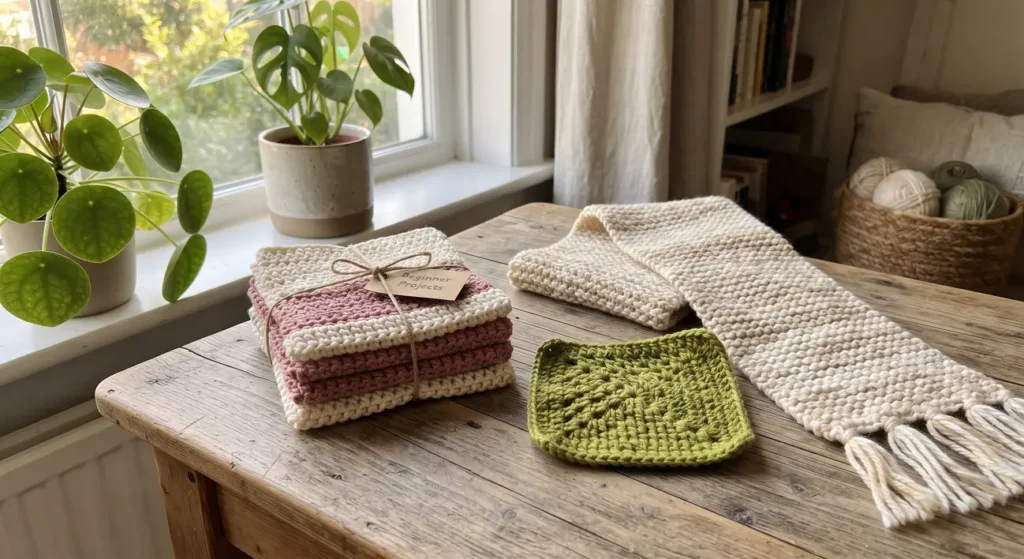
Not all crochet patterns for beginners are created equal. Some beginner patterns still leave new makers tangled up or overwhelmed. According to Lion Brand and LoveCrafts research, the projects that consistently set up beginners for success are:
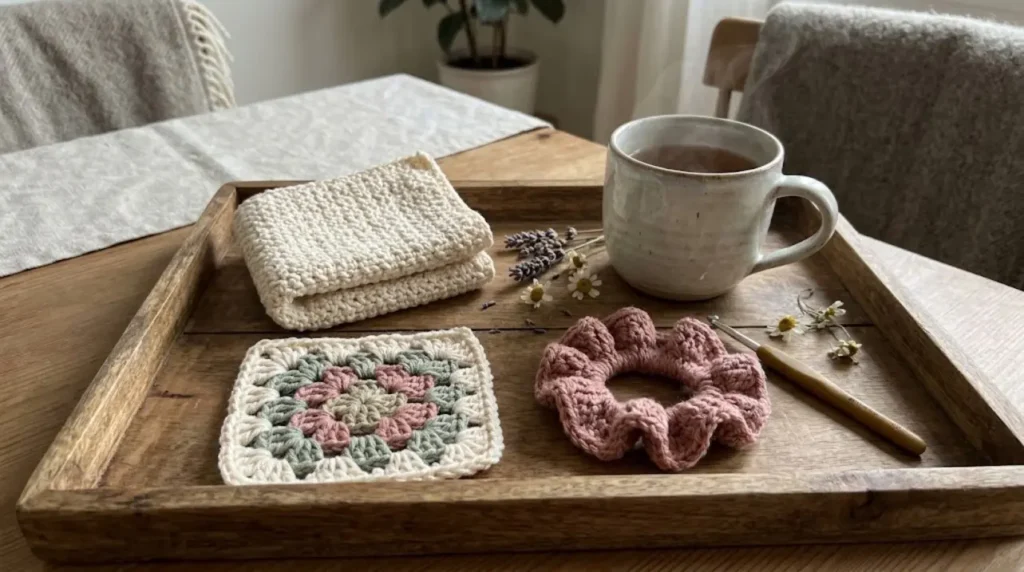
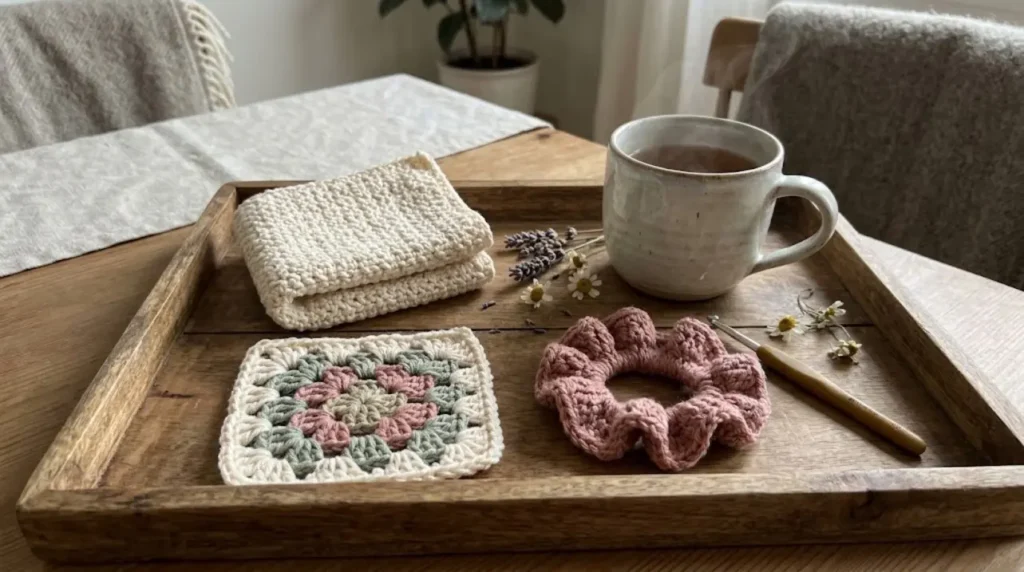
- Dishcloths and washcloths: Flat, small, and repetitive—these use mostly the single crochet stitch (sc) in rows. They’re quick to finish and perfect for practicing even tension (Lion Brand).
- Straight scarves (including infinity scarves): Worked in long, straight rows (usually all single crochet or double crochet). Scarves help beginners build muscle memory and improve tension, especially with no increases or decreases (Lion Brand).
- Granny squares and single-square panels: Small squares worked in rounds with easy stitch repeats. They teach you how to turn corners, join with slip stitch, and experiment with colors in a forgiving format (source).
- Quick-win alternatives: Ear warmers, single-square blanket panels, or simple rectangles—projects you can finish in an evening to build confidence.
Choosing one of these “first project” types helps ensure you finish something useful, avoid shape confusion, and get valuable practice before advancing to larger or shaped items.
Why these projects work for absolute beginners
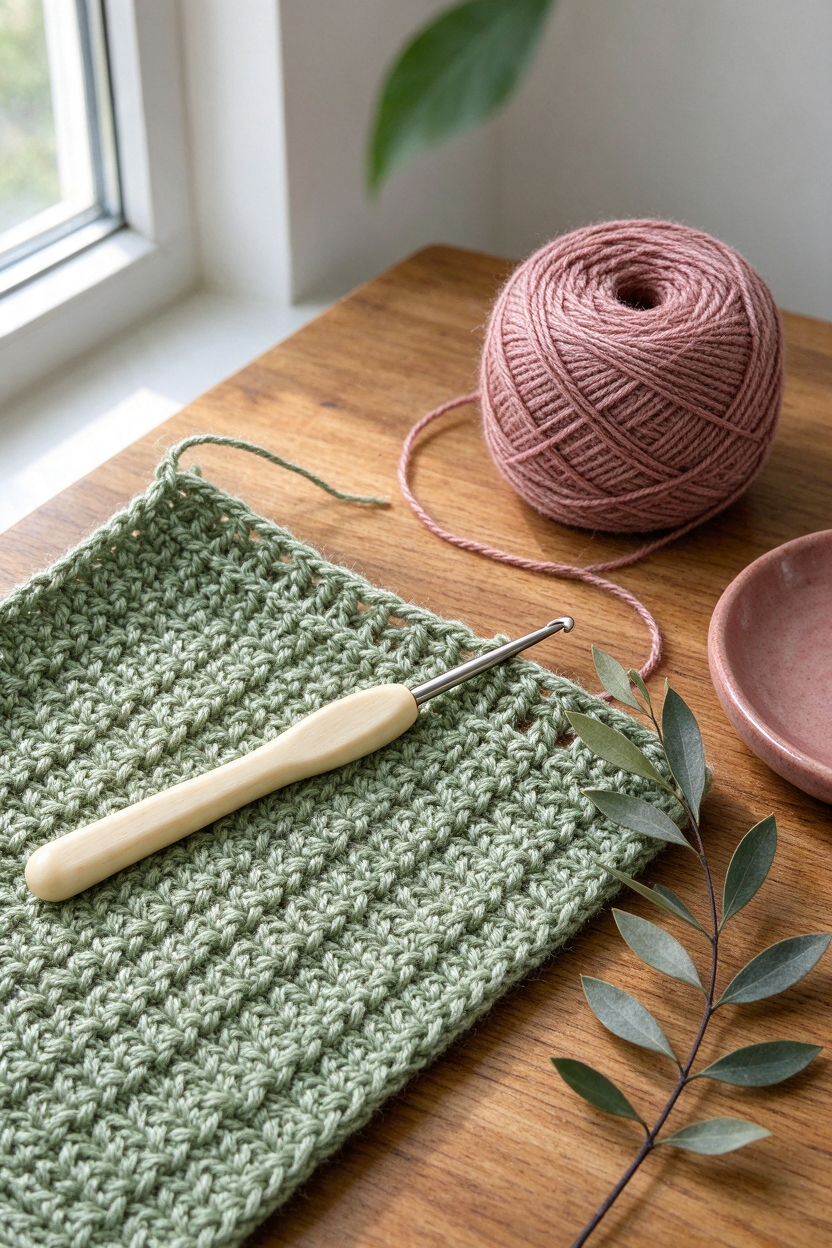
- Minimal shaping: No need to follow complicated increases or decreases—it’s all about straight rows or rounds.
- Repetition: Doing the same motion builds skill and comfort with the hook, which is crucial in early projects.
- Instant wins: You see visible progress, keeping you motivated (LoveCrafts).
For more ideas, see TwirlBloom’s beginner crochet projects guide or browse downloadable crochet PDF patterns.
Essential stitches and techniques to learn first
Before starting your first beginner crochet projects, practicing the right foundational stitches makes following any beginner pattern much less intimidating. The six core stitches, as identified by Lion Brand, are:
- Chain stitch (ch): The base of almost every project.
- Slip stitch (sl st): Used for joining, finishing, or moving yarn without adding height.
- Single crochet (sc): The simplest full stitch, most common in dishcloths and first scarves.
- Half-double crochet (hdc): Slightly taller, simple to learn.
- Double crochet (dc): Used in straight scarves, basic blankets, and many granny squares.
- Treble/triple crochet (tr): Less common in the very first project, but covers nearly all starter patterns (Lion Brand).
Key beginner techniques to practice
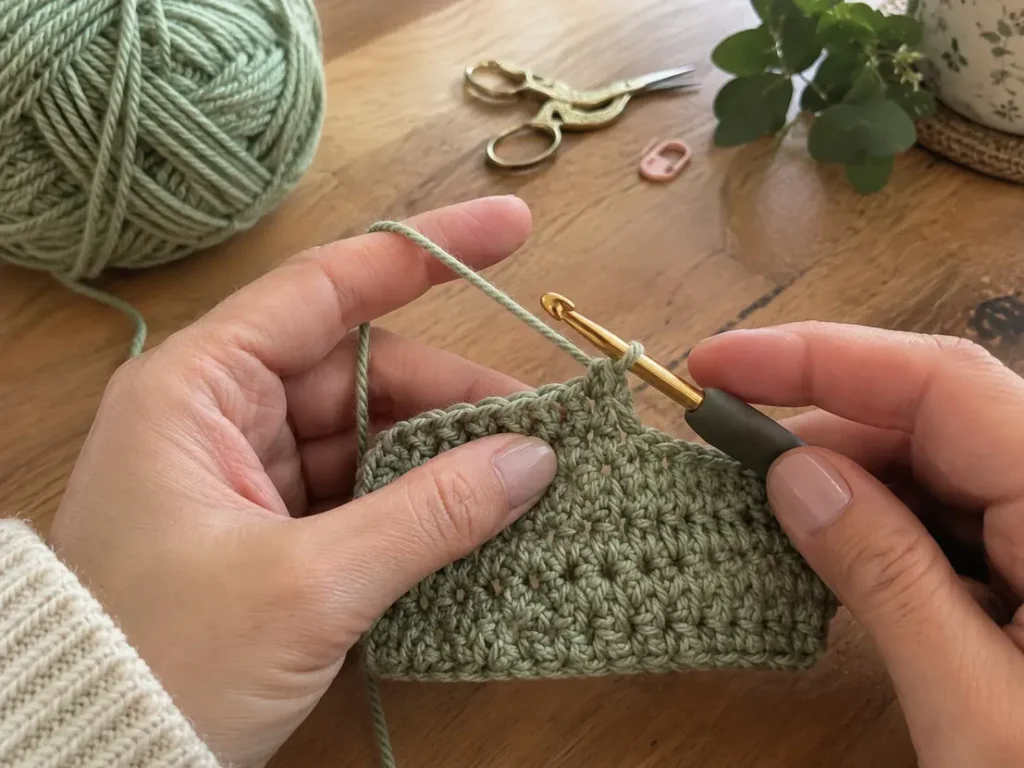
- Tension control: Keeping stitches even and not too tight or loose.
- Turning chains: How to start each new row at the correct height.
- Rows vs rounds: Practicing flat (rows) and round (granny squares) construction.
- Simple color changes: Especially for granny square projects.
- Basic joining with slip stitch: Needed for granny-type projects or ear warmers.
Learn more about these stitches in TwirlBloom’s crochet stitches guide for beginners.
Stitch patterns that make fast progress for beginners
Certain crochet stitches patterns for beginners help you see results quickly and reinforce muscle memory. The most beginner-friendly stitch patterns highlighted by the research include:
- Single-stitch row repeats: Projects that use the same stitch (sc or dc) across every row make for smooth, predictable progress—scarf and dishcloth patterns often use this.
- Basic granny square repeats: Motif-style projects let you focus on small squares, joining, and color changes in short rounds.
- Simple textures: If you want variety, look for patterns that use single-row textures (like ribbing with slip stitch) instead of multiple complex stitches.
These patterns avoid frequent stitch changes or shaping instructions, giving you room to master the basics before advancing.
Common beginner mistakes — and how step-by-step or visual aids prevent them
Beginners often run into a few predictable hurdles in their first patterns. According to LoveCrafts and Lion Brand, these errors are most common:
- Uneven tension (stitches look too tight or loose)
- Accidentally adding or dropping stitches at the row ends
- Incorrect turning chain use (skipping or making extra chains)
- Getting lost in abbreviations or pattern jargon
Step-by-step patterns (especially those in PDF form with photos and stitch explanations) help by:
- Providing a row-by-row checklist to catch mistakes early
- Including images or diagrams that show exactly where your hook goes
- Explaining abbreviations and counting out stitches
- Supporting video links (when available) that let you see the motion and pace in real time
Checklist for picking beginner-focused patterns
- All abbreviations and stitches are explained
- Stitch counts given for every row/round
- Step-by-step photos or diagrams included
- Project is small, flat, and uses a single core stitch
Choosing yarn, weight and hook size for a smooth first project
Your experience with easy crochet patterns depends as much on yarn and hook choices as on pattern choice. Beginner-friendly advice from Lion Brand and LoveCrafts emphasizes:
- Choose worsted-weight yarn for most beginner projects—the stitches are large and easy to see (Lion Brand).
- Cotton yarn is recommended for dishcloths and washcloths—it’s firm and holds its shape.
- Acrylic yarns are forgiving and budget-friendly for scarves and most practice swatches.
- Hook size: Use the hook size recommended on your yarn label, and avoid small/fine yarns for first makes.
Materials that make stitches “pop” and don’t split easily will help you recognize mistakes and fix them before they become discouraging.
How to tell if a pattern is genuinely beginner-friendly (assessment checklist)
If you want to avoid biting off more than you can chew, use these evidence-backed criteria to screen any pattern before starting:
- Skill level clearly labeled (ideally “beginner” or “easy”)
- Lists all stitches used upfront—no surprises partway in
- Small project size (dishcloth, scarf, granny square, ear warmer)
- Single-stitch repeats or single motif without complicated shaping
- Step-by-step instructions and row/round counts provided
- Photos/diagrams included, or an available PDF with those visuals
Warning signs a pattern may be too advanced
- Multiple new stitch types combined
- Unexplained abbreviations or terms
- Complicated charts as the only visual aid
- Large or shaped pieces requiring lots of counting or seaming
You can find additional tips for selecting patterns on the crochet patterns for beginners page.
Practical pattern-reading tips, stitch counting, and finishing help
- Use stitch markers or row counters to track rows and identify the row’s starting stitch (especially in scarves or dishcloths).
- Count stitches at the end of each row to catch mistakes early—habits like this save hours later.
- Read all abbreviations and notes in the pattern before starting, and mark any that seem unfamiliar to look up quickly.
- Take breaks after small sections—breaking projects into “chunks” avoids fatigue and mistakes.
- Weave in yarn ends as you finish sections rather than waiting to the very end for a less tangled finish.
- Follow basic joining tips for granny squares and scarf ends, usually described in your pattern.
If you need extra pattern-reading guidance, see TwirlBloom’s forthcoming post on How to read crochet pattern abbreviations (available soon).
Downloadable PDFs vs video and blog tutorials — which is best for beginners?
| Format | Strengths | Considerations |
|---|---|---|
| PDF patterns | Printable, portable, usually include step-by-step photos, clear stitch lists. Easy to check off rows (LoveCrafts). | Cannot show real-time motion. Some PDFs may lack photos or clear explanations—look for ones labeled “step-by-step”. |
| Video tutorials | Show how stitches and hands move, great for learning the feel of crochet. Pause and replay as needed. | May be harder to jump to a specific row or instruction. Not all videos provide downloadable materials. |
| Blog tutorials | Mix step-by-step photos and written instructions. Comments and troubleshooting from other makers. | Not always portable. Some blogs may not provide structured, downloadable instructions. |
For your first few projects, try matching the format to your learning style: use a download-friendly PDF for checklist structure, and supplement with video for motion or troubleshooting as needed.
Managing expectations: time, learning curve and avoiding frustration
It’s easy to feel overwhelmed if your first project doesn’t look perfect or takes longer than expected. Research from Lion Brand and LoveCrafts highlights a few motivation-boosting truths:
- Start with very small projects—a dishcloth or single granny square can often be completed in one or two short sessions, building early achievement (Lion Brand).
- Practice core stitches repeatedly before switching to more complex patterns; early repetition is the secret to improvement.
- Don’t worry if edges are crooked or you make a few mistakes. Every finished project brings you closer to larger, more advanced makes later.
Celebrate each completed square, dishcloth, or scarf—each one is a milestone on your crochet journey.
Resources and next steps (where to find clear beginner PDF patterns)
For the easiest start, look for downloadable beginner PDF patterns that:
- Are labeled “beginner” or “easy”
- Include step-by-step photos and clear stitch lists
- Focus on a single small project: dishcloth, scarf, or granny square
Try pairing one downloadable PDF with a video version if you struggle with a particular stitch motion—many pattern listings include both formats or recommend helpful video resources.
When you’re ready to begin, you can browse TwirlBloom’s crochet PDF patterns for new projects that fit your skill level and style.
For more learning, check out TwirlBloom’s guides like crochet for beginners, beginner crochet projects, and crochet scarf patterns for beginners.
Frequently Asked Questions
What are the easiest crochet projects for absolute beginners?
The most recommended easy projects for beginners are dishcloths, straight scarves, and granny squares. These use basic stitches and simple construction, making them ideal first projects.
Which basic crochet stitches should I learn first before trying a pattern?
The essential stitches to learn are chain, slip stitch, single crochet, half-double crochet, double crochet, and treble crochet. Mastering these covers most beginner patterns.
How do I choose the best yarn and hook for a beginner project?
For most beginner patterns, a worsted-weight cotton or acrylic yarn and a hook size recommended on the yarn label are ideal, as they make stitches easier to see and handle.
How long does a simple beginner project usually take?
Small projects like dishcloths or granny squares can often be completed in one to two short sessions, but the time varies depending on your pace and practice.
How can I fix uneven tension or a crooked edge in my first project?
Regularly checking your stitch count at the end of each row and practicing core stitches helps. Don’t worry if the first projects aren’t perfect—practice improves results over time.
Are downloadable PDF patterns better than video tutorials for beginners?
It depends on your learning style. PDFs provide structured step-by-step instructions you can print or check off, while videos show hand movements and stitch action for clearer understanding.
Starting with simple crochet patterns for beginners—like dishcloths, scarves, and granny squares—supported by clear step-by-step resources helps ensure your early crochet journey is enjoyable and frustration-free. When you’re ready for your next project, explore crochet PDF patterns at TwirlBloom for inspiration to keep you moving forward.