Finding truly easy crochet patterns can make the difference between finishing your first handmade project and giving up halfway. This guide breaks down which projects are ideal for total beginners, what makes a PDF pattern genuinely simple, and how to spot those clues before you buy or start. You’ll also find beginner stitch checklists, advice on yarn and hooks, typical project timeframes, and a free printable checklist to help you pick the right downloadable pattern for your next crochet success.
Key Takeaways
- Small, quick projects (dishcloths, coasters, scrunchies) are the best starting points for easy wins and skill-building.
- Mastering five basic stitches—chain, single crochet, slip stitch, half-double crochet, double crochet—will unlock most beginner crochet patterns.
- Always check the Notes, stitch list, and visuals in a PDF pattern before you start to avoid surprises and frustration.
- Which easy crochet projects are best for absolute beginners?
- Basic stitches to learn first (and how they appear in beginner patterns)
- Common beginner mistakes and practical fixes
- Yarn weights and fiber types recommended for beginners (and why)
- How long beginner-friendly projects typically take
- Essential techniques and finishing steps beginners should know
- How to identify a beginner-friendly downloadable PDF pattern (checklist)
- Quick start checklist (before you begin)
- Frequently Asked Questions
Which easy crochet projects are best for absolute beginners?
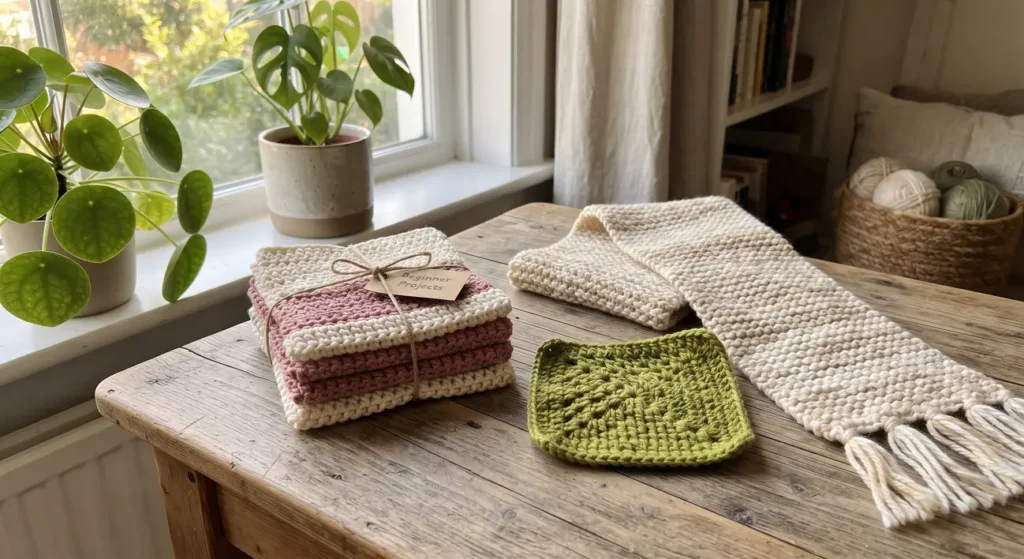
The most popular projects for first-time crocheters are small, quick-to-finish pieces that use only a couple of basic stitches and don’t require advanced techniques. According to multiple crochet guides, these projects build confidence, teach essential skills, and are naturally forgiving if your tension isn’t perfect yet.
- Dishcloths – Simple rectangles or squares, usually in single crochet or half-double crochet. Quick to finish and useful as practice.
- Coasters – Tiny circles or squares, often less than 20 cm. Fastest finish for skill-building and trying different stitches.
- Scrunchies – Work up quickly in the round and require only basic stitch knowledge.
- Simple scarves – Long rectangles made with rows of the same stitch; teach counting, turning, and working with even tension.
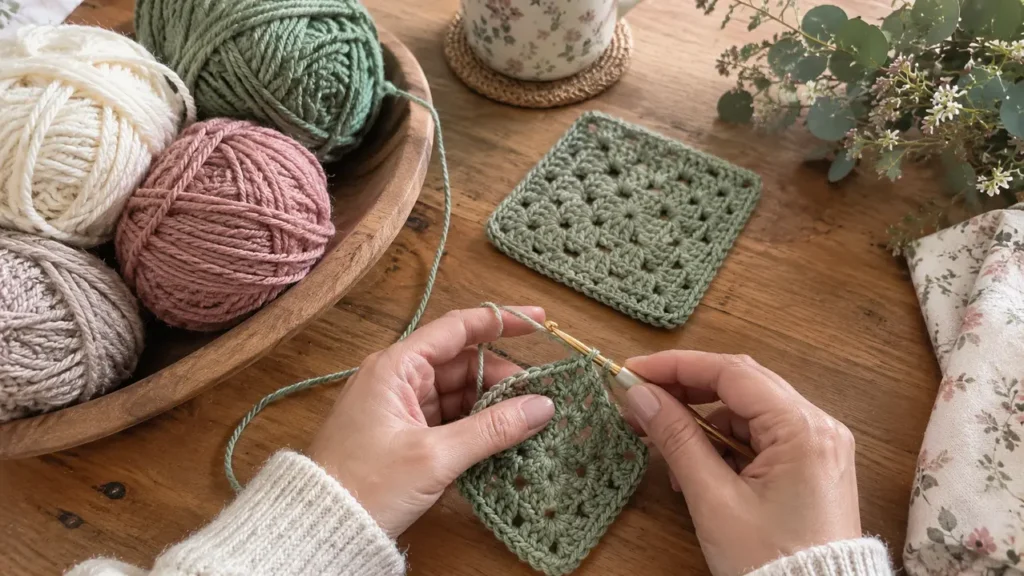
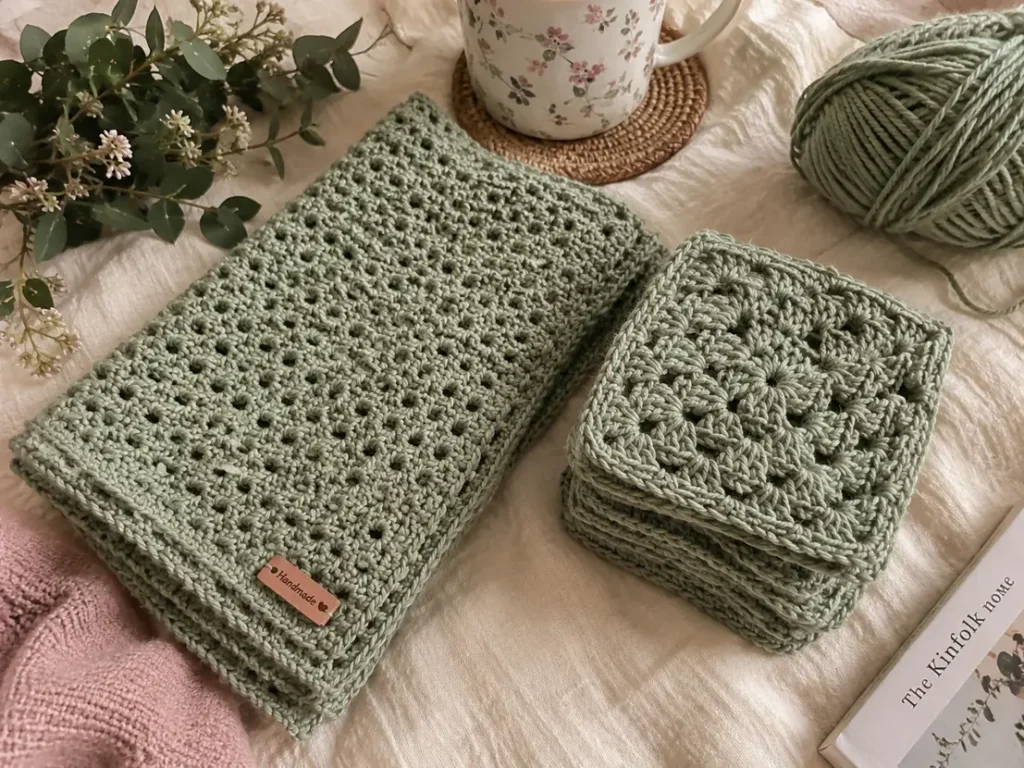
- Granny squares – Classic blocks worked in rounds; ideal for learning how to join rounds and understand pattern structure.
- Basic tote bags – Rectangular or square panels, sometimes worked flat and seamed, using double crochet or half-double crochet.
- Beginner beanies – Simple hats, usually worked in rows or basic rounds, with limited shaping and clear instructions.
All these projects are highlighted in reputable crochet sources as ideal for new makers because:
- They use only two or three basic stitches.
- They require minimal shaping or none at all.
- Most fit within a single session or a few evenings (source).
- They’re great for practicing counting, maintaining even rows, and learning to read a basic pattern.
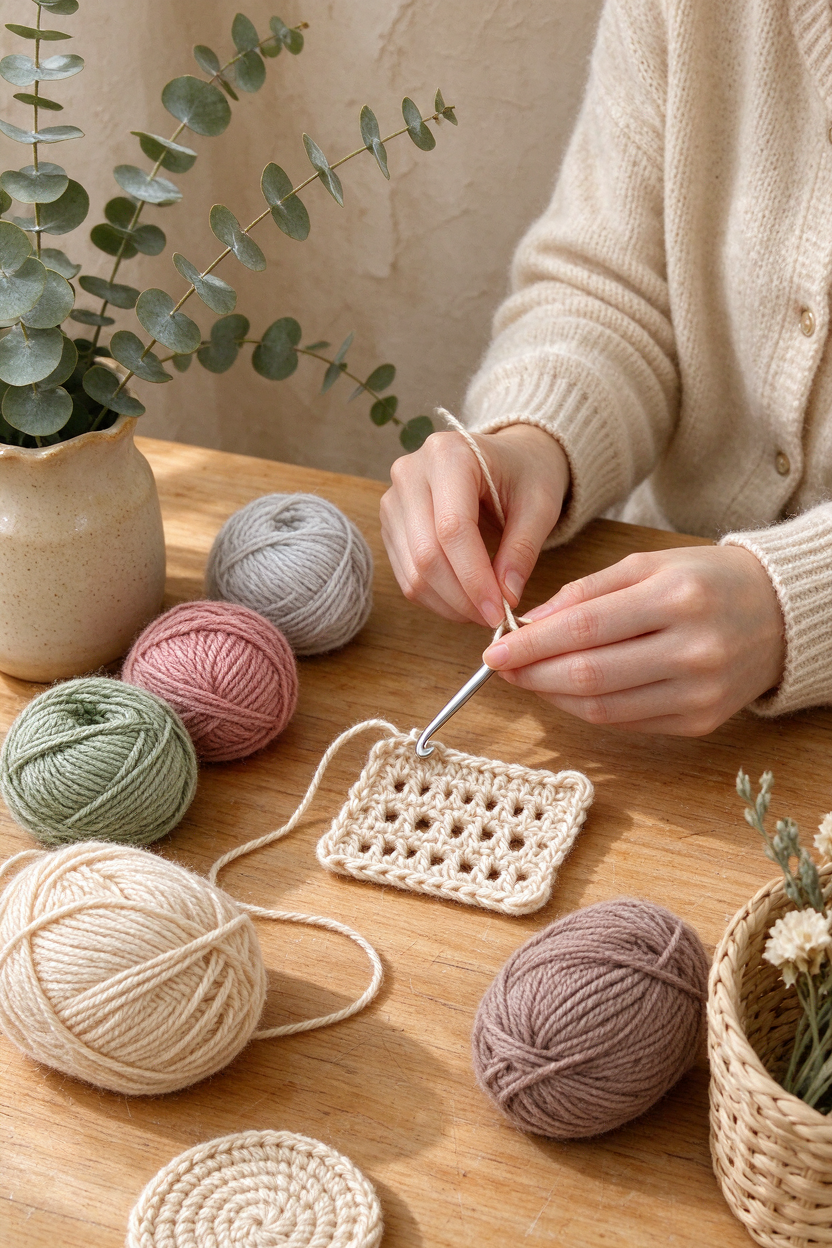
Need more inspiration? Check out our guide to simple crochet patterns for beginners and browse ideas organized by skill level and time commitment.
Basic stitches to learn first (and how they appear in beginner patterns)
Nearly all easy crochet patterns rely on the same set of foundational stitches. According to Lion Brand and leading guides, you’ll unlock over 90% of beginner PDFs just by learning these five:
- Chain stitch (ch): The backbone of all crochet—used to create a foundation row (straight projects) or to join rounds (granny squares, scrunchies).
- Single crochet (sc): The shortest, densest stitch, great for dishcloths and coasters.
- Slip stitch (sl st): Used for joining rounds (like finishing a granny square) and for smooth edges or decorative finishes.
- Half-double crochet (hdc): Taller than single crochet but not as tall as double crochet; creates fabric with some drape.
- Double crochet (dc): The go-to for scarves, blankets, and bags—creates flexible, openwork fabric and is common in many step-by-step patterns.
Most sources recommend learning these stitches in this order: chain → single crochet → half-double crochet → double crochet. This order helps your hands get comfortable as each stitch adds a bit more height and complexity.
When you read beginner patterns, you’ll typically see:
- A foundation chain to start.
- Rows of the same stitch for easy-to-count progress (e.g., “Work 20 rows of sc”).
- A turning chain at the end of each row, letting you begin the next row at the right height.
- Slip stitches for joining or finishing.
For more detail on these stitches and their uses, see our full crochet stitch guide.
Common beginner mistakes and practical fixes
Knowing what trips most crocheters up will help you avoid common frustrations. According to research from multiple sources, frequent problems in beginner crochet projects include:
- Misreading the turning chain as a stitch: This accidentally adds or misses stitches each row, creating a lopsided project.
- Skipping the Notes section: Critical details about finished size, yarn/hook requirements, and construction are often at the top of a pattern.
- Miscalculating stitch counts: Not counting at the end of every row can lead to uneven edges or too many/few stitches.
- Choosing misleading patterns: Some patterns called “easy” actually introduce advanced elements like post stitches, magic rings, or difficult shaping, which can overwhelm beginners.
- Skipping gauge checks: Not making a test square (swatch) can result in a project that’s too large, small, or uneven.
- Mismatching yarn and hook: Using a hook that’s too small or large for the chosen yarn impacts comfort and fabric appearance.
Simple fixes that work:
- Always read the Notes section first before starting. This tells you what you’ll need, what to expect, and if you’re comfortable with the required skills (see evidence).
- Count your stitches at the end of every row or round to keep your edges straight and match the pattern’s expectations.
- Select genuinely easy patterns—look for those that list only chain, sc, hdc, or dc in the instructions and have no unexplained “special techniques.”
- Make a small swatch to check your tension, especially for scarves and blankets.
- Pick a smooth, light-colored yarn paired with a recommended hook size for good stitch visibility.
- Use stitch markers to mark your first and last stitch of each row—this makes it easier to spot mistakes before they snowball.
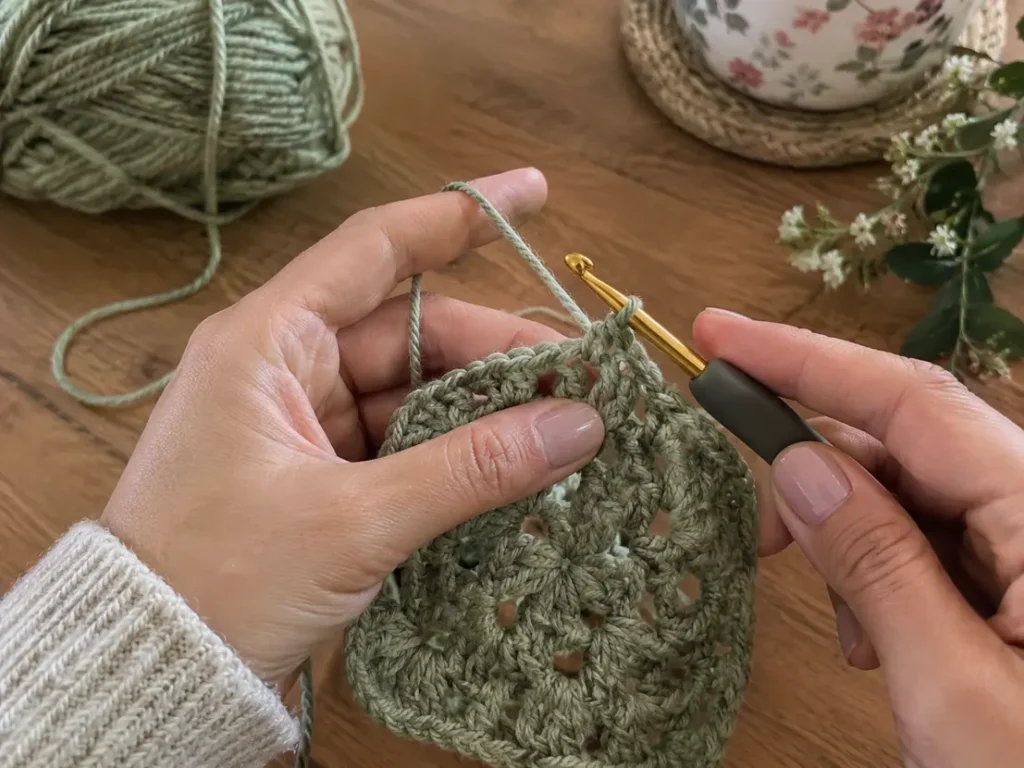
Find more troubleshooting and inspiration in our beginner project guide, which breaks down beginner challenges and how to overcome them.
Yarn weights and fiber types recommended for beginners (and why)
Your yarn and hook choice affects everything from stitch visibility to project comfort—so it matters for easy crochet patterns. Multiple references, including Lion Brand’s starter tips, recommend:
- Worsted weight yarn (category 4), paired with a 5.0 – 5.5 mm hook for most beginners. This combination creates visible stitches, is easy on your hands, and works for almost every simple project (source).
- Fiber blends: Smooth acrylic or wool blends give the clearest stitch definition and are easier to unravel if you need to fix mistakes. They’re also durable and easy to wash.
- Avoid novelty or textured yarns (like eyelash yarn or heavily variegated fibers) for your first projects. They can hide stitches, making mistakes harder to spot and correct.
How yarn choice changes the crochet experience:
- Thicker yarns (bulky or super bulky) can work up quickly, but may be tiring on hands and less forgiving for learning tension.
- Smooth, light-colored yarns make it easier to see what you’re doing—especially while learning new stitches.
- The fabric’s denseness or drape is affected by both your stitch type and the yarn/hook combo. Worsted weight produces a mid-density, all-purpose fabric that suits most crochet blanket patterns for beginners.
How long beginner-friendly projects typically take
It’s helpful to have a sense of how much time a new crochet project might take—so you can set realistic expectations and feel good about progress. Research and pattern guidance from reputable sources suggest:
- Small projects (dishcloths, coasters, scrunchies, granny squares): Often finished in a single sitting. Sources cite ranges between 30 to 90 minutes for many first items (source).
- Medium projects (simple scarf, basic tote bag): Portions may take 2-4 short sessions or evenings, especially for longer scarves or assembling totes.
- Larger projects (baby blankets or simple blankets): Typically spread over several sessions, possibly days or even weeks depending on your speed and available time. Finish in manageable portions—think of them as shorter crochet “blocks” rather than all at once.
What influences completion time?
- Your personal crochet speed and previous practice
- The height of stitches (taller stitches like dc grow projects faster than sc)
- Complexity and pattern style (more counting, shaping, or color changes slow things down)
- Yarn and hook size (thicker yarn means faster progress per row)
Instead of aiming for exact hours, plan your project in “sessions”—this reduces stress and matches the advice from experienced designers.
For detailed project-by-project time expectations, see this beginner projects overview.
Essential techniques and finishing steps beginners should know
Finishing steps are easy to overlook, but they make the difference between a project that looks “made at home” and a piece you’re proud to give or use. Leading beginner guides stress:
- Weaving in ends: Use a blunt tapestry needle to hide yarn tails neatly in the fabric.
- Seaming panels or pieces together: For items like bags, granny square blankets, or some beanies, basic whip stitch or mattress stitch is enough to join panels invisibly.
- Simple blocking or shaping: Sometimes, gently stretching and drying your finished piece (blocking) helps even out the stitches and makes the project lie flat, especially for squares and scarves. Many beginner guides mention this as optional, but it improves presentation.
- Carefully reading the Notes and gauge section: These sections explain any special finishing, the intended look, or if reshaping is needed after crocheting.
Some techniques—like increasing or decreasing stitches (to shape hats or add texture), or “working in back loop only” for ribbing— are flagged by expert sources as slightly more advanced. Wait until you’re comfortable with flat panels before trying these.
Most high-quality beginner PDFs offer either photo instructions or link to tutorials for these finishing steps. If you need a primer on finishing, see our beginner stitch and finishing guide.
How to identify a beginner-friendly downloadable PDF pattern (checklist)
It’s easy to be lured by cute project photos—only to find the pattern has advanced techniques or confusing instructions. Here’s an evidence-backed checklist for spotting simple crochet patterns for beginners before downloading or buying:
- Clearly labeled as “Beginner” or “Easy”—avoid “intermediate” or unlabeled patterns.
- Small finished size (often under 20 cm for first projects) or short dimension sections in the description.
- Only the basic stitches: chain, single crochet, slip stitch, half-double crochet, double crochet—listed explicitly.
- Explicit Notes section: covering yarn, hook, gauge, finished size, and any special supplies.
- Row-by-row numbered instructions: Each row broken down as a new line or step, not combined in long paragraphs.
- Supportive visuals: Photos at each stage or a clear stitch diagram; best if video tutorial link is included.
- No unexplained special techniques: If terms like “magic ring,” “post stitch,” or “complex shaping” appear, check that they’re explained or linked to a demo.
- Detailed materials list: Includes yarn weight, hook size, and any tools beyond hook and yarn.
Red flags: Avoid PDFs with:
- Long instructions combining multiple rows in one block
- No gauge/finished size information
- No stitch list or Notes
- Unexpected advanced stitches without explanations
Want a detailed breakdown? Read our beginner crochet pattern guide for more on what to look for in downloadable PDFs.
Quick start checklist (before you begin)
Get set up for success with this one-page plan. Print, screenshot, or save before you start any beginner crochet project:
- Pick a small project (dishcloth, coaster, scrunchie, granny square, or scarf).
- Learn these core stitches: chain, single crochet, slip stitch, half-double crochet, double crochet.
- Buy a smooth, medium-weight yarn (like worsted/category 4) in a solid color, and the recommended hook size from your pattern.
- Read the Notes and gauge section before you begin.
- Gather basic tools: hook, yarn, tapestry needle, stitch marker, scissors.
- Make a small practice swatch in your chosen stitch to check tension and comfort.
- Block out short, regular crochet sessions—don’t feel you must finish in one go.
Ready for more ideas or want to download curated patterns? Explore Crochet PDF Patterns in the TwirlBloom shop—with options for every experience level and project style.
Frequently Asked Questions
What stitches should I learn first to complete most beginner patterns?
The core beginner stitches are chain (ch), slip stitch (sl st), single crochet (sc), half-double crochet (hdc), and double crochet (dc). These cover most foundation chains, rows, and simple textures found in easy crochet patterns.
What yarn weight and fibers are easiest for a first crochet project?
Worsted weight (category 4) yarns in a smooth acrylic or wool blend are recommended for beginners. These yarns show stitches clearly and are comfortable to work with using a medium-size hook.
How long does it usually take to finish a beginner dishcloth, scarf, or baby blanket?
Small projects like dishcloths and coasters are often finished in 30–90 minutes. Simple scarves and baby blankets may take multiple short sessions over several days, depending on your pace.
How can I tell if a PDF crochet pattern is truly beginner-friendly before I download it?
Check for clear skill-level labeling, a short materials and stitch list, supportive visuals, row-by-row instructions, and a complete Notes section. Avoid patterns introducing complex techniques or missing these essential elements.
Do I have to make a gauge swatch for a beginner project?
While not always required for tiny projects, making a small swatch helps ensure your final piece matches the pattern’s size and prevents disappointment, especially with wearables and blankets.
What are the quickest fixes for uneven edges or wrong stitch counts?
Count your stitches at each row’s end, use stitch markers for row ends, and check pattern photos or diagrams. If errors appear, gently unravel to the last correct row and try again.
Easy crochet patterns are meant to set you up for genuine progress and creative joy. With a careful project pick and the tips above, you’ll finish your first piece with confidence—and know how to select your next project wisely. When you’re ready for more, browse Crochet PDF Patterns at TwirlBloom to find your next handmade success.