
If you’re searching for beginner crochet projects you can actually finish—without frustration or excessive materials—you’re in the right place. This guide breaks down a short list of small, confidence-building projects, the must-know stitches for beginners, and the exact steps to choose the right yarn, hook, and first patterns. You’ll leave with not just ideas, but a clear starting path and the tools to avoid common beginner mistakes—so you can move from practicing swatches to making real handmade pieces.
Key Takeaways
- Start with small projects, using only basic stitches and easy-to-see yarn, for the fastest and most satisfying results.
- Learn the essential beginner stitches—chain, single crochet, half-double, double, and slip stitch—and match your project choice to the skills you practice.
- Check your materials, pattern clarity, and sizing before you start to avoid the top reasons beginners abandon crochet projects.
- Best beginner crochet projects that actually finish
- Essential stitches beginners should learn first (and how to practice them)
- Choosing yarn and hook for your first projects
- Common beginner mistakes and how to avoid them
- Simple pattern types that give quick satisfaction and build skills
- How to choose your first crochet pattern — a step-by-step decision checklist
- When and why downloadable PDF patterns help beginners
- Quick finishing and troubleshooting checklist beginners often miss
- Resources and next steps (recommended patterns, kits and tutorials)
- Frequently Asked Questions
Best beginner crochet projects that actually finish
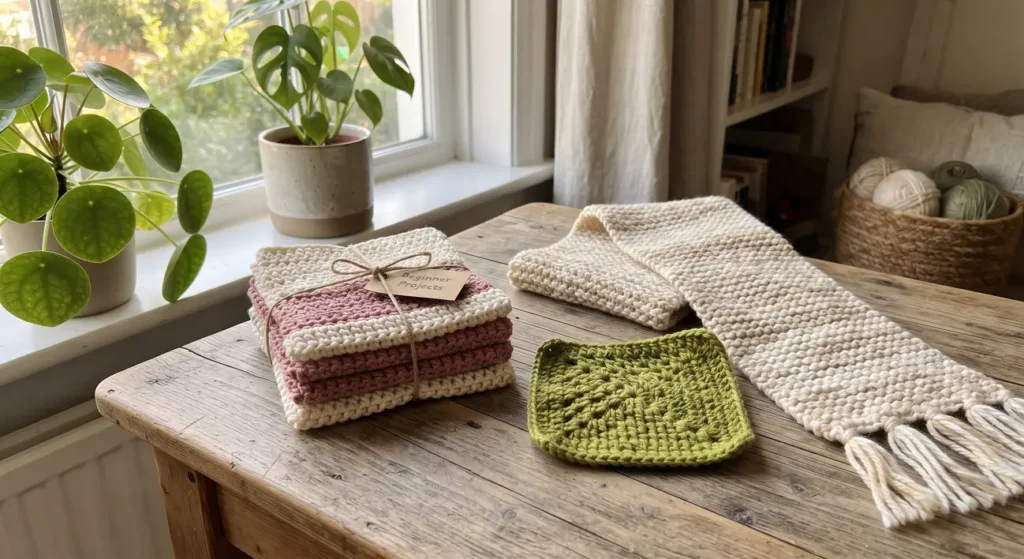
Getting started with beginner crochet projects is about choosing truly achievable pieces. Aim for projects you can start and finish in a single session (or a weekend), using only the most basic stitches. Here’s a short list of classic small projects, why they work for beginners, and which stitches you’ll practice:
-
Dishcloths.
- Why beginner-friendly? Rectangular, quick to make, useful, and forgiving of uneven tension.
- Stitches: Single crochet (sc), half-double crochet (hdc), or double crochet (dc), plus chain (ch).
-
Coasters.
- Why beginner-friendly? Tiny size, easily completed in one sitting, and a good way to practice working flat or in the round.
- Stitches: Single crochet (sc), double crochet (dc), sometimes slip stitch (sl st).
-
Scrunchies.
- Why beginner-friendly? Small and repetitive, great for practicing tension and crocheting in the round.
- Stitches: Single crochet (sc) or double crochet (dc) around a hair elastic.
-
Simple scarves.
- Why beginner-friendly? Rows of repeated stitches give visible progress, and it’s easy to spot mistakes and practice your edges.
- Stitches: Usually double crochet (dc), but any main stitch can be used.
-
Granny squares or baby-blanket squares.
- Why beginner-friendly? Classic way to practice working in the round, color changes, and joining techniques; small scale adds satisfaction.
- Stitches: Double crochet (dc), treble crochet (tr), chain (ch), slip stitch (sl st).
-
Basic hats (beanie as a next step).
- Why beginner-friendly? Good after you’re comfortable with rounds and increases. Projects like the Dalton Hat (see Lion Brand) use only basic stitches.
- Stitches: Single crochet (sc), half double (hdc) or double crochet (dc), magic ring or chain start.
Choosing smaller projects with simple shapes (rectangles, squares, small circles) is the single best way to build confidence and create finished objects you’ll be proud to use or gift.
Essential stitches beginners should learn first (and how to practice them)
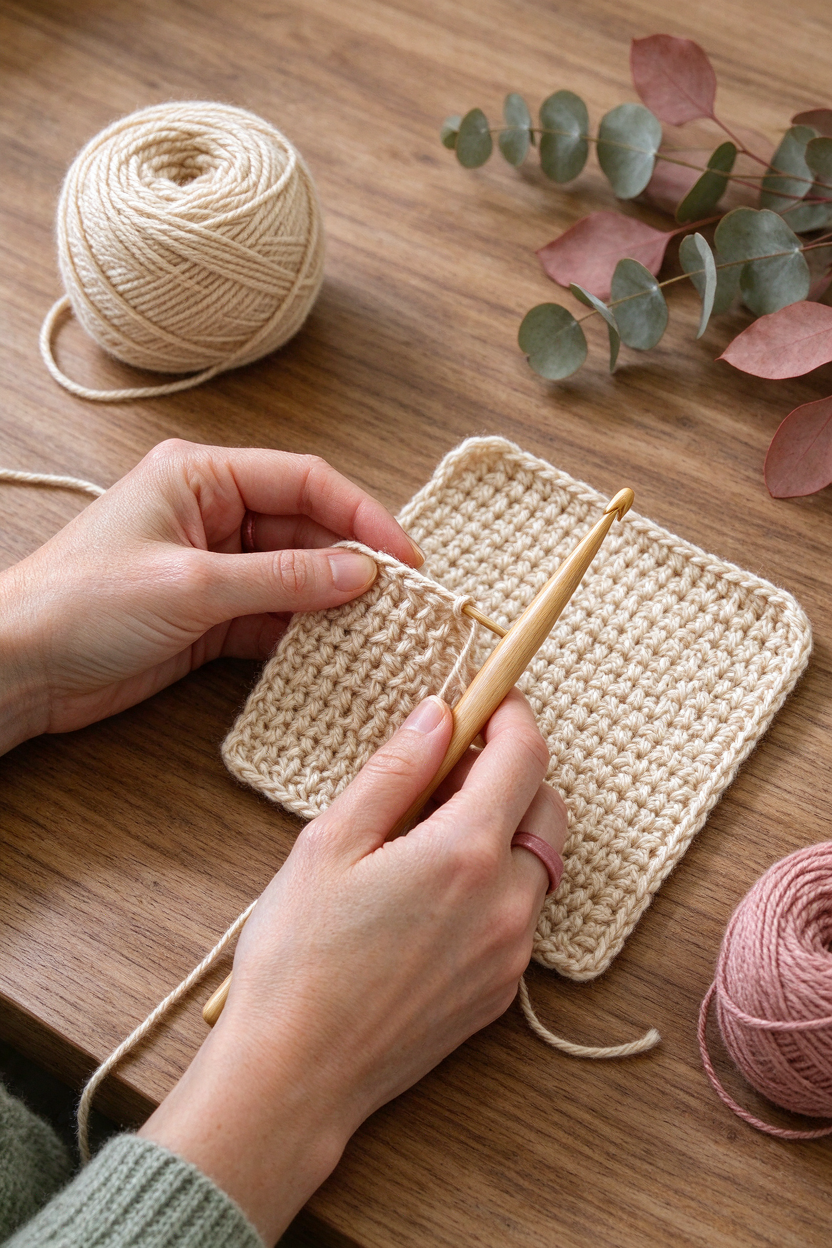
Focusing on a core group of stitches gives you the foundation for almost all easy crochet projects for beginners. According to Lion Brand and other major sources, these are the must-learn stitches:
- Chain stitch (ch): Forms the base of almost every project.
- Slip stitch (sl st): Joins pieces, closes rounds, and moves your starting point.
- Single crochet (sc): Short, dense stitch; perfect for learning tension and even rows.
- Half-double crochet (hdc): Slightly taller, adds drape while remaining simple.
- Double crochet (dc): Most commonly used for scarves, blankets, and granny squares.
- Treble crochet (tr): Taller stitch used in some decorative or lacy beginner patterns.
For a true beginner, concentrating on single crochet (sc), half-double crochet (hdc), double crochet (dc), and slip stitch (sl st) is usually enough to cover most beginner patterns (source).
How to practice each stitch in context
- Dishcloths and coasters: Practice single crochet (sc) or half-double crochet (hdc) in repeat rows. Work to keep your edges neat and stitch sizes even.
- Simple scarf: Practice double crochet (dc) across rows for long, repetitive motion and visible progress.
- Granny squares: Combine double crochet (dc) and treble crochet (tr) to build confidence joining new rounds and following a repeat.
- Basic hat (next step): Once you are comfortable with rounds and increases, practice starting with a magic ring or chaining, and shaping increases using single or double crochet.
Stitch repetition, clear edges, and small format projects provide the quickest way to develop muscle memory and confidence. For a detailed breakdown of each stitch, see our crochet stitches guide.
Choosing yarn and hook for your first projects
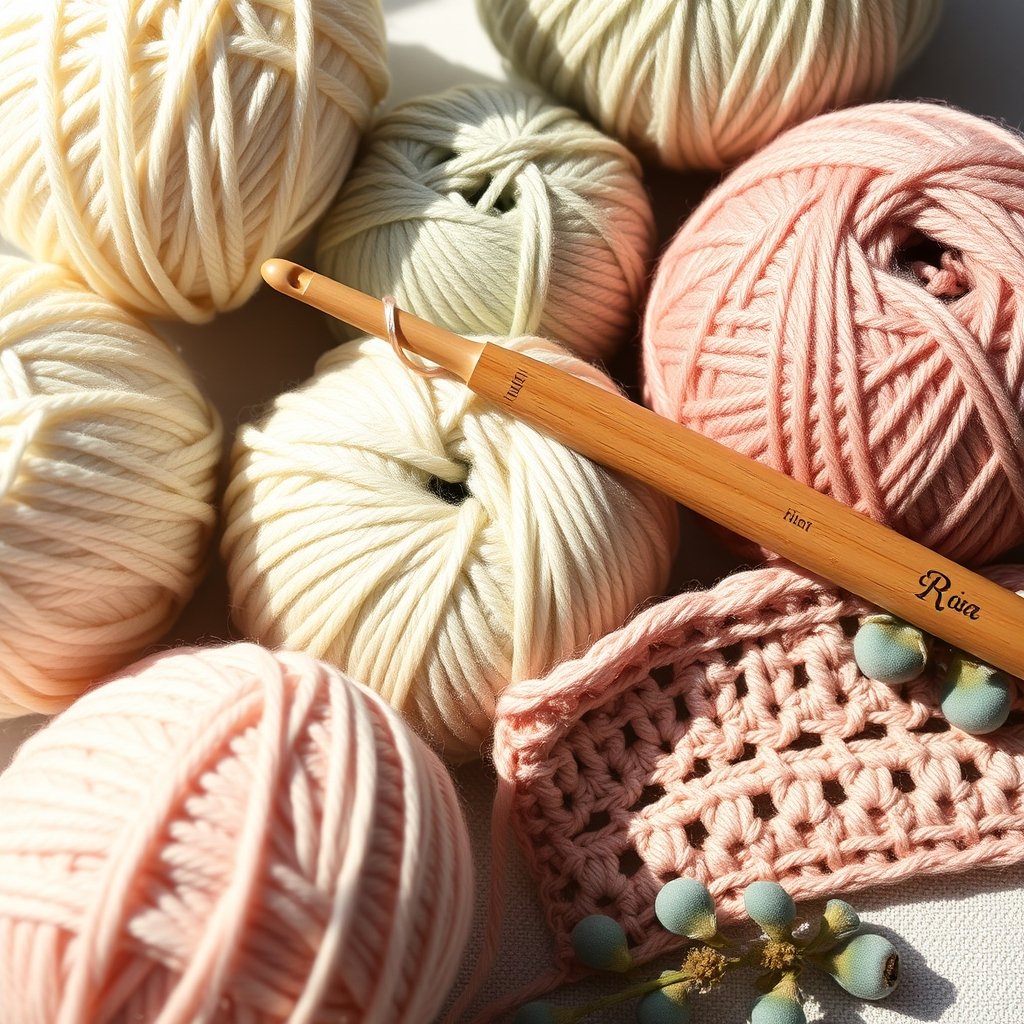
The yarn and hook you start with can make or break your early crochet experience. Most sources recommend beginners use:
- Smooth, light-colored yarns. Avoid fuzzy, hairy, or very dark yarns. Light shades and a smooth texture make your stitches much easier to see and fix (source).
- Worsted-weight (category 4) yarn. Large enough to handle but not so bulky as to feel clumsy. This weight is widely available.
- Hook size: A 5.0mm to 5.5mm hook is frequently cited as beginner-friendly for worsted-weight yarn (Lion Brand).
Testing your material choice
- Before starting your project, make a short chain and a row or two of single or double crochet. If the stitches feel tight or the yarn splits, try a larger hook or smoother yarn.
- Check stitch visibility in natural light. If you struggle to count stitches or see where to insert your hook, choose a lighter color.
- Avoid novelty yarns, eyelash yarn, or anything described as “fuzzy” until you’re fully confident with technique.
Common beginner mistakes and how to avoid them
Many frustrations can be avoided by recognizing predictable beginner pitfalls. Here are the main issues, with practical solutions:
- Choosing too large or complicated a project: Resist the urge to start with a blanket or intricate item. Pick small, quick-win projects first.
- Poor material visibility: Yarn that’s fuzzy or dark hides stitches—choose smooth, light shades and avoid mohair blends.
- Counting mistakes: Don’t count the slip knot as a stitch. Watch for missed or extra stitches at row ends—this is the most common cause of uneven edges (source).
- Tension and gauge issues: If your work is stiff or loose, adjust hook size. Frog (unravel) when practicing on swatches is fine, but only consider it on wearables or anything that must fit together.
- Splitting yarn: Insert your hook cleanly between strands. Practice helps avoid this.
- Terminology mismatches: US and UK patterns use the same stitch names for different stitches. Always check the pattern’s abbreviation key for clarity.
Starting with small, properly chosen projects and the right materials sidesteps the majority of problems that cause beginners to abandon crochet (source).
Simple pattern types that give quick satisfaction and build skills
Some pattern styles are purpose-built for easy wins and on-the-job skill building. Here’s what to look for and why they work:
- Single-stitch, rectangular projects (dishcloths, scarves): Simple repeats improve stitch consistency and help spot-edge mistakes early.
- Small, round or flat projects (coasters, scrunchies): Introduce the concept of working in the round, joining, and finishing techniques—each adds variety without much complexity.
- Granny squares and blanket squares: Practice color changes, joining, and simple increases; they’re foundational for future larger projects. See our granny square project guide for more.
- Basic hats (beanies): Best as a “next step” not a first project, but great for introducing shaping and working spirally or in rounds.

Repeating a project style (e.g., three dishcloths using different stitches) is a proven way to reinforce each new skill before moving to more advanced patterns.
How to choose your first crochet pattern — a step-by-step decision checklist
Don’t rely on a pattern’s title alone. Not every “beginner” pattern is truly suited for newcomers. Use this decision checklist to evaluate any pattern before starting:
- Check the skill level and required stitches. Does the pattern list itself as beginner? Are the stitches only chain, slip, single, half-double, double, or (possibly) treble?
- Look at the project size. For your first project, smaller is better (think dishcloth, coaster, or granny square—not a blanket or sweater).
- Review the materials list. Is the yarn weight suitable (worsted or similar), and is the hook in the recommended size range? Are any special techniques required?
- Assess the instructions. Are abbreviations clearly defined? Does the pattern include step photos or diagrams? Is a printable PDF available?
- US vs UK terms. Double-check the terminology at the top of the pattern. If uncertain, confirm each stitch abbreviation before you start.
This checklist prevents common selection mistakes—see our pattern tips for beginners for even more detail.
When and why downloadable PDF patterns help beginners
Many beginners find downloadable crochet PDF patterns make the learning process less intimidating and more portable. Here’s how PDFs can help on your first project:
- Printable and portable. Annotate, highlight, or keep patterns alongside your yarn without relying on screens.
- Stepwise learning. Most PDFs (especially for dishcloths, coasters, or scarves) provide round-by-round or row-by-row breakdowns.
- Single-file reference. Having the pattern in one file helps you track progress and refer back when learning new stitches.
For first projects, a downloadable pattern for a dishcloth, coaster, or simple scarf offers the clearest path. Always check the clarity, skill level, and abbreviation key before you buy or download. You can preview and browse downloadable crochet PDF patterns at TwirlBloom for inspiration.
Quick finishing and troubleshooting checklist beginners often miss
Neat finishes make any project more satisfying. Use this short checklist as you complete your first piece:
- Count stitches at the end of each row or round. Double-check turning chains — this prevents lopsided edges.
- Splice/join carefully. When seaming squares or pieces, always insert your hook through both layers at the same spot to avoid holes.
- Gauge and unraveling (“frogging”). For practice swatches, move on despite minor mistakes. For wearables or items where sizing matters, don’t be afraid to unravel and redo—especially if you spot a persistent error.
- Terminology checks. Always confirm (before starting) that you understand the abbreviations and which set of terms (US/UK) the pattern uses.
Finishing thoughtfully helps ensure even your earliest projects feel tidy and functional.
Resources and next steps (recommended patterns, kits and tutorials)
Once you’ve picked a project idea and learned the core stitches, your next steps are:
- Practice with tutorials. Start by reviewing stitch walk-throughs for chain, single crochet, half-double, and double crochet. You’ll find in-depth examples in our basic stitches guide and beginner’s overview.
- Choose a downloadable PDF pattern for a small project such as a dishcloth, coaster, or scarf. Explore new patterns in the TwirlBloom shop.
- Explore pattern libraries or bundles when you’re ready to try more than one style or want a few quick project options at hand.
- Print or save your PDFs. Keeping a copy next to your yarn and hook makes learning easier and helps track your progress row by row.
If you’re ready to start your next handmade project, browse TwirlBloom’s crochet PDF patterns for more inspiration.
Frequently Asked Questions
What are the easiest beginner crochet projects I can finish in one sitting?
Dishcloths, coasters, and scrunchies are ideal for quick success. They use only basic stitches and can often be finished in a single session.
Which stitches should I learn first to cover most beginner patterns?
Focus on chain, slip stitch, single crochet, half-double crochet, and double crochet. These cover the majority of beginner patterns.
What yarn and hook should I choose for my first crochet projects?
A smooth, light-colored worsted-weight (category 4) yarn and a 5.0mm or 5.5mm hook are commonly recommended for beginners.
How do I tell if a pattern is actually beginner-friendly?
Check that the pattern uses only basic stitches, is labeled for beginners, is small in size, and offers clear instructions or diagrams.
When should I frog (unravel) versus keep going on a beginner project?
For practice pieces, keep going unless the mistake is major. For fitted or joined items, frog back to fix errors that affect shape or fit.
Are downloadable PDF patterns useful for beginners and why?
Yes. PDF patterns are printable, easy to annotate, and make tracking your progress simpler—especially for step-by-step learning.