Planning to crochet an advent calendar? This guide is for makers who want a practical, well-made project that suits their skill level—whether you’re eyeing an easy crochet advent calendar for beginners or want to compare pocket panels, amigurumi miniatures, or garland-of-bags approaches. Below, you’ll find clear advice on design differences, materials, pocket sizing, free pattern sources, and the finishing touches that make a reusable crochet advent calendar last for years. You’ll also learn where most guides fall short on long-term care and get actionable next steps to set your holiday project up for success.
Key Takeaways
- Match your advent calendar design (pocket panel, amigurumi, bags/stockings) to your crochet skills, display goals, and available time.
- Cotton DK and smooth worsted acrylic are ideal for reusable pockets—test with a prototype and check your chosen pattern’s Notes for sizing guidance.
- Use curated free crochet advent calendar patterns from trusted sites to find the right project format, and start with a single pocket as a practice run.
- Quick overview — Which advent calendar style is right for you?
- Popular designs and how their construction methods differ
- What beginner stitches and skills to master before trying an easy crochet advent calendar
- Recommended yarns, weights and hook choices for durable, reusable pockets
- Sizing, spacing and practical pocket planning (without inventing measurements)
- Finishing and assembly best practices
- Free crochet advent calendar patterns roundup and how to compare them
- Challenges with reusable calendars and practical solutions
- Personalization and theme ideas (holiday and beyond)
- What most guides miss — storage, repair and upkeep between seasons
- Resources and next steps
- Frequently Asked Questions
Quick overview — Which advent calendar style is right for you?
Before you choose a crochet advent calendar pattern, it helps to know the main design routes and which ones are truly beginner-friendly versus more advanced. Here’s a quick comparison to help you decide:
| Style | How It’s Made | Pros | Cons | Skill Level |
|---|---|---|---|---|
| Pocket Panel | Rectangular or shaped pockets sewn onto a backing panel | Easy to sequence & display, beginner stitches, fast assembly, one-piece finish | Less 3D detail, sewing required, large panel to work | Confident Beginner |
| Amigurumi Miniatures | 24+ small toys/figures, each worked in the round with details | Cute, gift-like, adds play value, flexible display | Advanced shaping, lots of tiny pieces, more time required | Intermediate |
| Mini Gift Bags/Stockings | Individual bags or stockings hung on a string, dowel, or tree | Easy pieces, stash-friendly, modular (stop at 12 or go to 24+), flexible for fillings | Many repeated pieces, finishing and closures needed | Beginner+ to Intermediate |
| Garland of Booties/Shapes | Series of small motif-shaped pockets on a string or ribbon | Fun appearance, each piece is quick, flexible arrangement | Needs secure joining method, repetitive | Beginner+ to Intermediate |
Quick tip: If you want an easy crochet advent calendar for beginners, choose a pocket panel or mini bag design. Both use basic stitches and can be assembled as you learn. Amigurumi calendars are best for those confident with working in the round and shaping.

Popular designs and how their construction methods differ
Understanding how each type of crochet advent calendar is built will help you prepare, even if you’re following a free crochet pattern. Here are the main styles and their construction basics:
Pocket-Style Panel
- Pockets are usually rectangles crocheted flat using rows of double crochet (or a combination of basic stitches), then sewn or crocheted onto a large backing panel.
- Keeping identical row and stitch counts across all pockets ensures a neat, even look.
- The backing can be a simple rectangle, tree shape, or another festive silhouette—made separately and then decorated with numbers or trims.
- Display: Hangs flat; easiest to display on walls, doors, or sturdy boards.
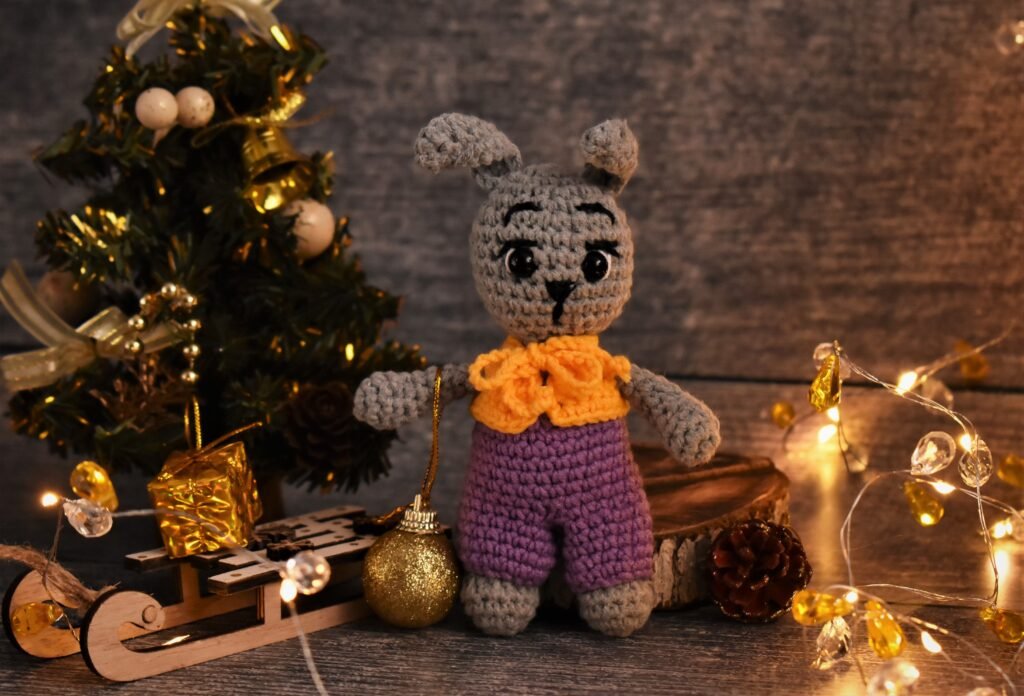
Amigurumi Advent Calendar
- Each “pocket” is an individual crocheted miniature (toy, ornament, or motif), typically worked in the round from a magic ring with increases and invisible decreases.
- Requires comfort with stuffing, closing, and finishing details (like faces or trims).
- Pieces are either attached to backing or presented as a group, often with drawstring bags, baskets, or trees.
- Display: Flexible; can be laid out, pinned, or hung.
Gift Bags, Stockings, and Booties
- Each calendar day is represented by a mini bag or stocking, crocheted singly (often in the round or as flat rectangles folded and seamed), then hung on dowels, ribbons, or trees.
- Closures can include drawstrings, buttons, or simple folds at the top.
- Display: Garland or grouped; modular for varying numbers of days.
Most pocket and bag designs focus on simple shapes and repeated parts, which makes them approachable for beginners. Amigurumi usually requires more skill with rounding, shaping, and finishing.
What beginner stitches and skills to master before trying an easy crochet advent calendar
If you’re making your first calendar, having a confident grasp of the following will set you up for success:
- Essential stitches: chain (ch), single crochet (sc), slip stitch (sl st), half-double crochet (hdc), double crochet (dc), treble crochet (tr).
- Pattern reading basics: Understand abbreviations, size brackets, and turning chains. Always read the pattern’s “Notes” section for specifics before starting (source).
- Counting rows & stitches: Especially for pocket panels, consistency is key. Practice counting your stitches and rows as you work.
- Working in rows vs. rounds: Pocket panels are rows; amigurumi and some bags require rounds and the magic ring technique.
- Magic ring: For amigurumi calendars, you must be comfortable starting with (and tightening) a magic ring to avoid a hole in the center.
Common beginner pitfalls:
- Skipping the gauge swatch or not checking your tension
- Misreading size brackets in patterns
- Confusing whether the turning chain counts as a stitch
- Choosing yarn that is too dark, textured, or fuzzy (hard to see stitches)
- Selecting the wrong hook size for the yarn
For more help, see this crochet stitch guide for beginners.
Recommended yarns, weights and hook choices for durable, reusable pockets
The right yarn and hook set your project up for crisp edges, even stitches, and long-term use. Here’s what is recommended for making reusable crochet advent calendar pockets:
- Cotton DK: Holds a crisp edge, resists stretching under weight—ideal for pockets and numbers.
- Aran or worsted acrylic: Washable, soft, speedy to work up, and perfect for using leftover yarn in many colors for a stash-busting project (source).
- Light, smooth yarn: Beginners should pick solid, lighter colors (like white, cream, pastel, or clear red/green) to make stitches easy to see. Avoid fuzzy, textured, or very dark yarns—they hide “V”-shaped stitches and make mistakes harder to spot (source).
- Hook size: Most beginner projects recommend worsted-weight (#4) yarn and a 5.0 mm (H-8) hook. For amigurumi, use a hook one size smaller than the yarn label suggests to prevent stuffing from showing through (source).
Always check your chosen crochet pattern’s Yarn and Notes section for the recommended hook size, yarn weight, and gauge. Swatch and test tension before making all the pockets. For an in-depth look at basic stitches and beginner materials, visit this guide to beginner crochet patterns.
Sizing, spacing and practical pocket planning (without inventing measurements)
Unlike baking, there’s no “standard” measurement for crochet advent calendar pockets—they need to fit your treats. Here’s how to plan reusable crochet advent calendar pockets that work for your needs:
- Prototype first: Crochet a single pocket in your chosen stitch and basic shape. Test-fill with an item you plan to use (like a wrapped chocolate, small toy, or note).
- Check fit and ease: Make sure the pocket is wide and deep enough to comfortably hold the contents without gaping. Adjust pattern stitch/row counts as needed.
- Consistent construction: Stick to the same stitch count and number of rows/rounds for all pockets for a polished look. Note these down before making multiples.
- Test attachment: Decide how to attach pockets (sewn vs. crocheted onto backing) and mark their positions on the backing—do a dry layout before the final sew-on to ensure even spacing.
- Backing stability: If pockets will be filled with heavier treats, choose a firmer backing and reinforce hanging points so the finished calendar hangs flat and doesn’t sag.
Tip: Avoid relying solely on pattern dimensions—customize your pocket size based on your chosen treats, or allow for variation if everyone’s stash is different.
Finishing and assembly best practices
The durability and look of your crochet advent calendar depend heavily on the final steps:
- Attaching pockets: Sew or crochet pockets onto the backing panel using matching yarn for a seamless look. Keep seam tension even, and line up stitches to the same row if possible.
- Closures: For extra security, consider adding buttons, snaps, Velcro, or flap tops. This helps keep larger treats or toys inside.
- Numbering: Add numbers 1–24 (or your chosen range) using embroidery, crochet numerals, or pre-made tags. High-contrast numbers are easier to read and add a festive touch.
- Hanging method: Use sturdy dowels, rods, or curtain rings sewn into the top corners or a reinforced top edge for wall display. Test the loaded calendar before hanging long-term.
- Edge finishing: Add a simple border, fringe, or surface slip stitch for a tidy finish or decorative impact.
Take the time to reinforce hanging points and check every pocket for secure attachment before you fill the calendar each year.
Free crochet advent calendar patterns roundup and how to compare them
There are many free crochet advent calendar patterns available online, but not all are equally clear or well-formatted. Here’s how to find and judge truly useful options:
- First, check reliable pattern libraries:
- Key criteria when comparing free patterns:
- Skill Level: Does it say “Easy,” “Beginner,” or “Intermediate”?
- Construction Method: Pocket panel, 3D miniatures (amigurumi), gift bags, or motif garland?
- Materials Required: What yarn and hook are specified? Are your own supplies compatible?
- Number of Pieces: Is it one panel or 24+ motifs?
- PDF Download: Does the pattern offer a printable/downloadable version?
- Always read the Notes and Materials sections at the top of the pattern. This will tell you about sizing, yarn weight, and whether the pattern uses US or UK crochet terms (source).
- Filter or sort by skill level to find patterns that genuinely fit your experience. Search “easy crochet advent calendar for beginners” for extra support if you’re learning.
Some curated free pattern examples include:
- Gift Bags: Little Doolally’s Christmas Gift Bags (see LoveCrafts roundup)
- Motif Booties: Kippers Ning’s Christmas Booties Garland (source)
- Mini Amigurumi: Advent Mini-Makes (various beginner amigurumi, LoveCrafts)
Check that the pattern’s assembly and finish details are complete before you begin, and test one motif or pocket first to confirm fit and comfort.
Challenges with reusable calendars and practical solutions
Even the best reusable crochet advent calendar patterns can face real-world challenges. Here are the most common—and solutions that makers have tested in practice:
- Pocket sagging or stretching:
- Use firmer fibers (cotton DK or tightly worked acrylic) for structural pockets.
- Reinforce backing with an extra crochet or fabric layer, or add lightweight interfacing, especially if heavier treats will be stored.
- Pockets not secure for heavier items:
- Add closures (buttons, snaps, or flaps), or line pocket backs with fabric for extra hold.
- Always test with sample items before finishing all pockets.
- Calendar sags, leans, or warps when hung:
- Reinforce top edge with tighter stitches or a dowel/rod inserted into a sewn channel.
- Test the calendar with all pockets filled before permanent wall mounting.
- Cleaning and maintenance:
- Choose washable yarns if you plan to wash the calendar between seasons.
- Check closure durability, especially if the calendar will be used by children year after year.
Personalization and theme ideas (holiday and beyond)
Your crochet advent calendar doesn’t have to be red and green—nor just for Christmas! Here are a few personalization and customization tips:
- Color themes: Try Nordic/Scandi neutrals, frosty blues and whites, or fun pastel palettes for children.
- Additions: Stitch on amigurumi ornaments, snowflakes, or themed appliqués for each pocket/day.
- Alternative uses: Make it a birthday countdown, “12 Days of [Event]” calendar, or an advent for another celebration.
- Numbers: Switch out traditional numbers for embroidered symbols, pre-made felt numbers, or crochet numerals in contrasting colors.
- Stash-busting: Mix many leftover yarns and add a metallic or glittery border for festive sparkle (source).
What most guides miss — storage, repair and upkeep between seasons
A truly sustainable crochet advent calendar should last for years with just a little seasonal care. Here’s what to plan for long-term upkeep:
- Safe storage: Make sure the calendar and all removable parts are completely dry and clean before storage. Use a breathable cotton bag or a lidded plastic box (with all numbers/charms stored in small, labeled bags).
- Repairs: Each year, check for loose pockets, unravelling seams, or worn closures. Reattach or reinforce as needed with matching yarn or sewing thread.
- Refresh embellishments: If numbers or trims fade or come loose, use the opportunity to update or replace them for a fresh look.
- Pre-season prep: Inspect hanging points, dowels, and seams before display. Test load capacity by partially filling several pockets.
Making care and repair part of your annual setup ensures your crochet advent calendar stays as beautiful and functional as the day you finished it.
Resources and next steps
Ready to start your calendar?
- Find a suitable pattern: Browse curated free crochet advent calendar pattern lists from LoveCrafts, Lion Brand, and Yarnspirations. Always read the Notes and check for US/UK terminology before you start.
- Practice with a swatch or single pocket: Before making all 24, crochet a test pocket or mini bag to confirm gauge, durability, and fit.
- Skill refreshers: Brush up on rows, rounds, or the magic ring with stitch guides like Crochet Stitches Step-by-Step and this amigurumi patterns guide if making 3D motifs.
If you’re looking for ready-made crochet patterns that cover pocket panels, mini bags, or amigurumi designs, explore crochet PDF patterns at TwirlBloom. Starting with one pattern and making a single test pocket is the best way to build confidence and ensure your finished calendar will suit your needs.
Frequently Asked Questions
What is the easiest type of crochet advent calendar for beginners?
Pocket-style panels and mini gift bags are usually the easiest, as they use basic stitches and flat construction. These designs avoid advanced shaping and can be assembled gradually.
How do I choose the right yarn for a reusable advent calendar with pockets?
Cotton DK yarn is great for crisp edges and durability, while worsted acrylic is ideal for easy washing and stash-busting. Avoid fuzzy or very dark yarns, which make stitches harder to see.
Should I use US or UK crochet terms when following a free pattern?
Most free online patterns use US terms, but always check the pattern header. If it says “UK terms used,” stitch names are shifted—double crochet in the UK is single crochet in the US.
How big should my advent calendar pockets be to fit common treats?
Test with a prototype pocket and your chosen treat. Adjust the size until it holds your item comfortably. There’s no universal measurement—customize based on your gifts.
How can I make a crochet advent calendar that will last multiple seasons?
Use sturdy yarn (like cotton DK), reinforce hang points, add closures to pockets, and store the calendar clean and dry during the off-season. Check for repairs before each reuse.
Can I use leftover yarn (scrap-busting) to make an advent calendar?
Yes—advent calendars are excellent for using up small amounts of leftover yarn, especially for pockets, motifs, or numbers. Combine different colors for a festive touch.