
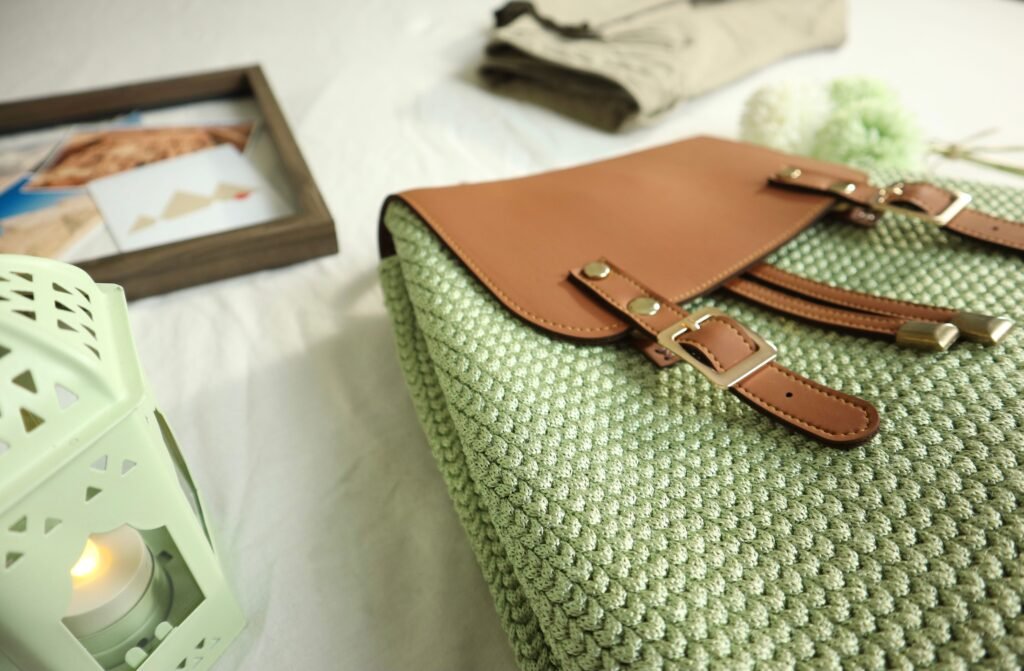
Learning to crochet your first bag is both exciting and practical—it’s a project where you’ll see your new skills add up to something you’ll actually want to use every day. This guide to crochet bag patterns for beginners will help you choose patterns that truly suit your current level, understand which skills to practice, and pick materials that set you up for success instead of frustration. Along the way, you’ll find troubleshooting tips, safe ideas for customizing your creations, and a checklist for choosing the right pattern—plus where to find reliable free beginner crochet bag patterns.
Key Takeaways
- Choose basic totes, mesh market bags, granny-square totes, or simple pouches as your first crochet bag projects—they use core stitches and teach practical skills.
- Prioritize smooth, medium-weight yarns (like cotton or blends), and make sure to master foundation chains, basic crochet stitches, and even tension before starting.
- Check that a pattern matches your current skills, includes clear step lists and photo support, and suggests practical reinforcement for handles and stress points.
- Which crochet bag types are best for beginners?
- Essential stitches and techniques to learn first
- Common beginner mistakes when making bags — and how to fix them
- Best yarns and fibers for beginner bags (durability, ease, availability)
- Construction methods: working in the round vs flat panels (what changes and why it matters)
- Free, high-quality beginner bag patterns and what makes them suitable
- How to personalize a simple beginner bag without making it harder
- Quick pattern selection checklist (printable/takeaway)
- Frequently Asked Questions
Which crochet bag types are best for beginners?
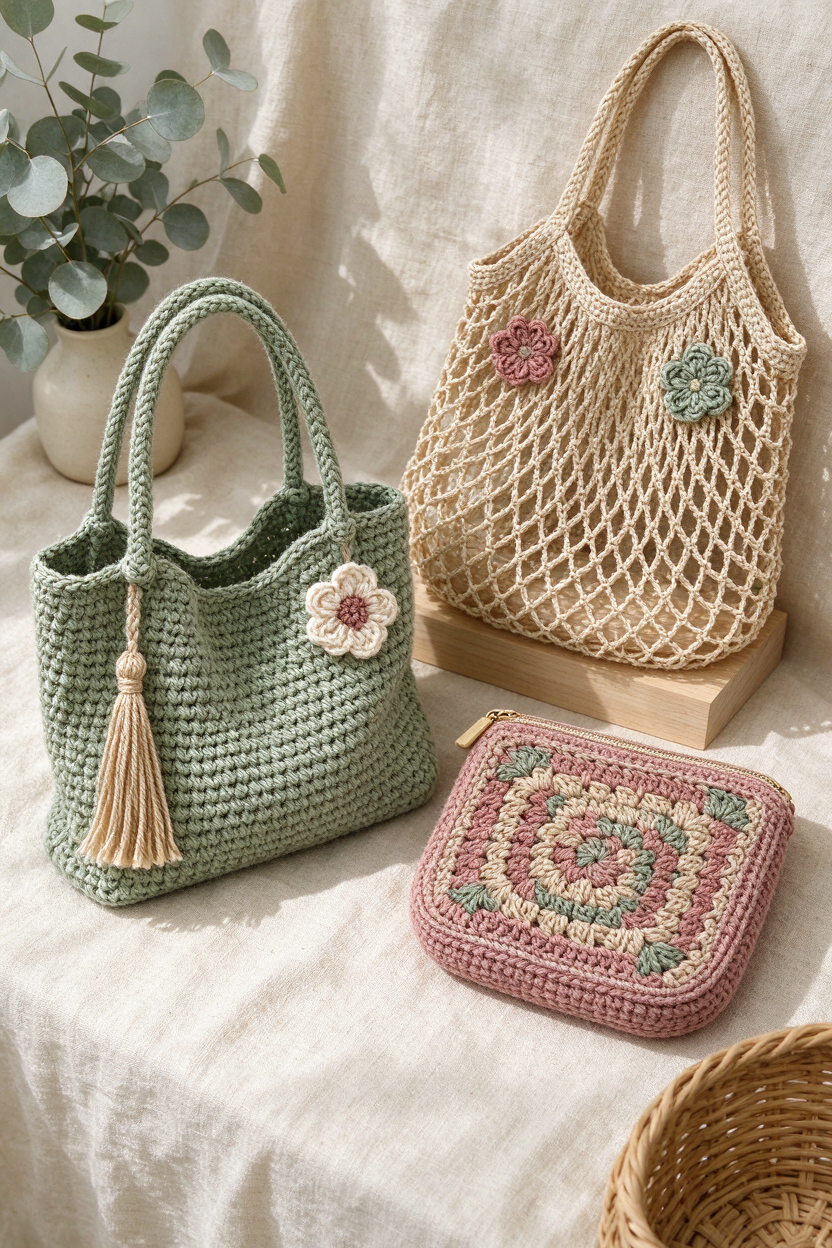
Your first bag should build fundamental skills and lead to a result that’s practical and encouraging. The top crochet bag patterns for beginners are:
- Basic tote bag: Simple rectangles or ovals worked in rows or rounds using basic stitches like single or double crochet. Great for everyday use and practicing flat or round construction.
- Mesh market bag: Uses chain and double crochet to create an airy, flexible fabric—portable and quickly builds confidence in pattern repeats.
- Granny-square tote: Made from individual granny squares joined together. Offers easy customization and teaches joining techniques without advanced shaping.
- Simple pouch or coin purse: Fast to finish, uses only basic stitches, and helps new crocheters master simple seaming and closures.
These types are beginner-friendly because they rely on core stitches, minimal shaping, and easily repeatable construction—reducing the likelihood of losing your place or getting stuck. You’ll find plenty of free crochet bag patterns for beginners in these styles, often downloadable as PDF files from reputable pattern sites (source).
Want more first project ideas? See our collection of beginner crochet projects for inspiration beyond bags.
Essential stitches and techniques to learn first
Every crochet bag pattern assumes you’re already comfortable with the basics. Build your toolkit with these core skills before starting bag projects:
- Chain stitch (ch): The starting point for almost all crochet work.
- Single crochet (sc): Makes a dense, durable fabric, ideal for bags.
- Slip stitch (sl st): Essential for joining rounds and seaming panels.
- Half double crochet (hdc): Faster to work, gives a slightly taller stitch than single crochet.
- Double crochet (dc): Good for creating open, lighter textures (as in mesh bags).
- Treble crochet (tr): Sometimes used for openwork or decorative rows in simple bags.
Get familiar with these foundational techniques:
- Making a consistent foundation chain.
- Counting stitches in rows and rounds.
- Marking the first stitch of each row/round with a removable marker.
- Maintaining even tension so the finished bag holds its shape.
For extra practice, try crocheting a small sampler swatch or repeat short rows of each stitch before starting your first bag. You’ll find detailed visual explanations in our crochet stitches guide and complete beginner’s crochet introduction.
Common beginner mistakes when making bags — and how to fix them
It’s normal to make a few missteps early on. Here are the most common beginner bag pitfalls (and how to avoid or fix them):
- Using fuzzy or novelty yarns: Mohair or fuzzy blends make it hard to see stitches and control tension. Stick with smooth, medium-weight plied yarns until you’re confident (source).
- Inconsistent tension: Loose tension creates saggy bags or gaps; tight tension leads to stiff fabric and hand fatigue. Aim for a fabric that’s a bit denser than a scarf or blanket—firm enough to hold shape, but still flexible.
- Poor hook and yarn match: If the hook is too large, stitches may gap; too small and the work becomes rigid. Follow the pattern’s guidance or the yarn label for a comfortable starting point, and adjust if stitches seem too tight or loose as you practice.
- Skipping reinforcement at stress points: Bag handles and joins are common failure areas. Add extra rows, stitches, or even sew the join securely to prevent stretching or breaking.
- Choosing patterns that are too big or too complicated: Large bags or intricate designs can overwhelm a beginner and lead to unfinished projects. Start small and build up to more complex bags later.
If you notice your bag fabric feels floppy or gaps appear, check your tension and switch to a firmer stitch type (like single crochet), or go down one hook size as a safe experiment. Take frequent breaks to check your work for accidental stitch increases or decreases.
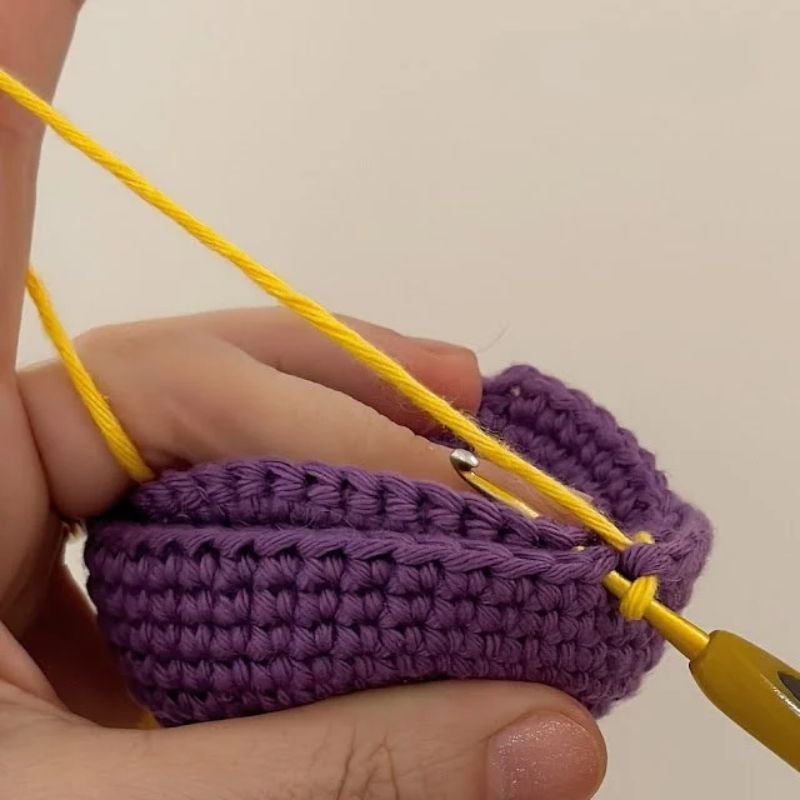
Best yarns and fibers for beginner bags (durability, ease, availability)
Material choice can make or break a first bag project. These simple guidelines help ensure your new bag holds up and feels satisfying to crochet:
- Smooth, medium-weight plied yarns: Preferably worsted or aran weight—these are widely available and let you see each stitch clearly, making counting and troubleshooting much easier (source).
- Cotton and cotton-blend yarns: Durable, easy to wash, and help bags maintain their shape. Especially suitable for totes and market bags (source).
- Acrylics: A practical, affordable choice for beginners—just ensure the yarn is smooth, not fluffy or fuzzy.
- Raffia and special fibers: Often used for summer-style bags, but their care requirements (usually spot-clean only) and structure can make them best left for later projects.
- Avoid novelty yarns (eyelash, mohair, heavily textured blends): These yarns hide stitches, make tension control very difficult, and are not suited to first-time bag makers.
A quick inspection: if you can clearly see each strand and hook placement in the yarn, it’s a good candidate for your first bag.
For fiber specifics and yarn choosing help, our resource on beginner crochet projects shares more about what makes a yarn truly “beginner-friendly.”
Construction methods: working in the round vs flat panels (what changes and why it matters)
How you build your bag shapes the final look and the techniques you’ll learn:
Working in the round (continuous rounds)
- How it works: Start with a flat base (rectangle, oval, or circle), then crochet upwards in a spiral or joined rounds to build the sides.
- Skills learned: Increases, joining rounds, and keeping an even edge.
- Benefits: Fewer seams, natural for market bags and basic totes, and creates a sturdier structure.
Working flat (panels to seam)
- How it works: Crochet two flat pieces (rectangles or squares), then seam together at the sides and base.
- Skills learned: Counting rows, seaming, and matching panel sizes.
- Benefits: Easier to keep track of stitch count per row; seams can be reinforced as you assemble the bag.
Motif-based bags (granny square)
- How it works: Make several identical motifs (like traditional granny squares), then join them to form the bag body and possibly the handles.
- Skills learned: Motif creation, joining techniques (seaming, whip stitch, slip stitch joins), layout planning.
- Benefits: Easy to adjust size by adding motifs, fun for playing with colors, and teaches another layer of crochet assembly skills.
Choose your construction method based on which technique you want to practice most: continuous rounds for smooth construction, flat panels if you prefer working back-and-forth, or granny motifs for small, quick pieces that come together like a puzzle. If you’re interested in motif methods, check out our guide to granny square crochet patterns.
Free, high-quality beginner bag patterns and what makes them suitable
There’s no shortage of “easy” bag patterns online, but not all are truly suited to beginners. Here’s how to spot a beginner-approved, free crochet bag pattern for beginners:
- Lists exactly which stitches and techniques are used
- Keeps the stitch pattern simple and repetitive
- Includes clear photos or diagrams (bonus for video links)
- Requires very few finishing steps—ideally just handle attachment or seaming
- Minimal shaping: most shaping is done by increasing rounds or adding/reducing rows
- States a beginner or easy skill level
Classic beginner-friendly pattern types you’ll find for free on reputable sites include:
- Mesh market bags using chain and double crochet (LoveCrafts—free bags collection)
- Granny-square totes assembled from easy motifs (see examples on Yarnspirations)
- Basic single crochet totes and coin pouches, often available as free PDF downloads
When browsing, always check that a pattern’s “free” status is current on the host site and that the techniques used match your skill level. For a broader selection of downloadable patterns, you can browse TwirlBloom’s collection of crochet PDF patterns—perfect for when you want a curated selection.
How to personalize a simple beginner bag without making it harder
Once you’ve mastered the basics, it’s natural to want your bag to feel uniquely yours. Fortunately, there are ways to personalize a simple crochet pattern for beginners without adding technical difficulty:
- Adjust size: Add or subtract rounds in the body or increase the count of motifs. Proceed in small increments so you don’t run out of yarn unexpectedly.
- Change colors: Use stripes, a color block, or join squares in contrasting shades for a playful effect. This is the lowest-risk way to make your bag stand out.
- Add basic surface decoration: Attach one or two small appliqués (like a single granny square), a tassel, fringe, or a sewn-in label.
- Add a simple lining: Hand-sew or machine-stitch a rectangle of fabric slightly larger than the bag’s dimensions, then slip it into the bag and neatly tack along the top edge. Choose lining fabric care based on your yarn—cotton for cotton, spot-clean for raffia or special fibers (source).
- Reinforce handles and stress points: Add extra rows of tight stitches, or reinforce by sewing with matching thread to keep handles secure (important for making your bag last).
Avoid experimental modifications if your pattern uses complex shaping or ultra-firm gauge—these can unravel hard-won confidence. Save advanced customizations for your second or third bag.
Quick pattern selection checklist (printable/takeaway)
Before committing to your first bag project, consult this easy checklist:
- Does the pattern use only the stitches you know (ch, sc, hdc, dc, sl st, tr)?
- Are photos, step-by-step lists, or even video tutorials included?
- How many separate panels, seams, or attachments are required? (Fewer parts usually means an easier time.)
- Do the suggested yarn and hook create stitches you can see and handle?
- Is the pattern labeled “beginner” or “easy”—and are the skill requirements a good match for you?
- Is reinforcement or handle attachment explained?
Keep this checklist handy so you can filter out complex or unclear patterns quickly—saving time and helping you finish your first bag with confidence. For a wide range of options, the TwirlBloom Pattern Shop offers a curated selection of downloadable crochet PDF patterns to explore next.
Frequently Asked Questions
What are the easiest crochet bag patterns for beginners?
Basic tote bags, mesh market bags, and simple granny-square totes are widely recommended as the easiest types for beginners, as they use simple stitches and repeatable construction methods.
Which stitches should I master before making my first crochet bag?
You should be comfortable with chain (ch), single crochet (sc), slip stitch (sl st), half double crochet (hdc), double crochet (dc), and treble crochet (tr), plus foundation chaining and working in the round or back-and-forth rows.
What yarn should I choose so my crochet bag holds its shape?
Smooth, medium-weight yarns (like cotton or cotton blends) are best for beginner bags because they create durable, shape-holding fabric and make it easier to see your stitches.
How can I stop my crochet bag from sagging with use?
Work at a slightly tighter tension, use denser stitches like single crochet, choose sturdy yarns, and reinforce handles or attachment points to prevent stretching and sagging.
Can beginners add a lining to their crochet bag, and what should they consider?
Yes—adding a simple fabric lining is possible even for beginners. Match the care requirements of your lining fabric to your yarn, and reinforce key areas for extra durability.
Where can I find free beginner-friendly crochet bag patterns online?
Sites like LoveCrafts, Lion Brand, and Yarnspirations regularly offer free, beginner-level crochet bag patterns as downloadable PDFs. Always verify the current free status on the pattern’s host site.
Ready to start your first project? Browse Crochet PDF Patterns to find inspiration for your next handmade crochet bag, pouch, or accessory.