If you’re searching for the right crochet pumpkin pattern, you’ll find plenty of free and paid choices—ranging from bite-sized table toppers to soft, oversized statement pumpkins. This guide compares the most popular pumpkin pattern types, explains essential beginner skills, highlights how yarn and hook choices change your results, and offers practical troubleshooting and finishing tips. Whether you want fast chunky pumpkins, classic autumn decor, or a small beginner-friendly make, this article will help you pick an approach that matches your goals, skills, and season.
Key Takeaways
- Choosing the right crochet pumpkin pattern depends on your skill level, available materials, and intended use (decor, gift, or pouf).
- Yarn weight and hook size have a big impact on size, speed, firmness, and finish—chunky pumpkins work up faster and larger, while lighter yarns create firmer, petite pieces.
- Downloadable PDF patterns are especially helpful for projects you’ll revisit, need offline, or want with clear photos and stitch glossaries.
- Key differences between free beginner patterns, small pumpkin patterns, and chunky-yarn pumpkin patterns
- Essential stitches and beginner skills for a successful pumpkin
- Common beginner mistakes and how to avoid them
- How yarn weight and hook size change size, texture, and appearance
- Recommended finishing techniques for a professional look
- Choosing a pattern by size, skill level, time commitment, and intended use
- Helpful tips, troubleshooting, and pattern modifications often missing from pattern articles
- When and why a downloadable crochet PDF pattern helps
- Quick reference checklist and pattern-selection cheat sheet
- Frequently Asked Questions
Key differences between free beginner patterns, small pumpkin patterns, and chunky-yarn pumpkin patterns
Most crochet pumpkin patterns use a similar construction—starting with a magic circle, working in rounds, then stuffing and cinching to create the ribbed shape. The pattern’s size, texture, appearance, and speed of completion are mostly determined by the type of yarn, hook size, and level of detail in the instructions. Here’s how the main pattern families differ:
| Pattern Type | Typical Materials | Construction Highlights | Finished Look & Best Uses | Time & Speed |
|---|---|---|---|---|
| Free crochet pumpkin pattern for beginners | Lighter yarns (often DK or similar); smaller hooks (usually recommended below yarn label for tightness) | Worked in rounds from a magic circle; stuffed and cinched tightly for neat ribs | Firm, palm-sized pumpkins; ideal for table decor, small gifts, and garlands | Compact and denser; takes a bit longer per piece but easy to control shape |
| Small crochet pumpkin pattern | Light to medium yarns (DK, aran, sometimes cotton); hooks matched for tighter stitch definition | Similar to above, sometimes with more shaping for mini pumpkins or coasters | Petite, firm pumpkins for clustered displays, garlands, applique, or accent pieces | Quick to crochet; perfect for batch making or adding to seasonal bunting |
| Chunky yarn crochet pumpkin pattern | Bulky, chunky, or super-chunky yarns; large hooks (often sized below yarn label to avoid gaps) | Same base process but works up much faster due to thick yarn Cinch for dramatic ribs and soft squish |
Softer, large pumpkins (even up to floor-pouf size); great as statement decor or cozy accents | Very fast; ideal as last-minute decor, oversized display, or soft child-safe toys |
In short, the crochet patterns suited for absolute beginners often focus on tight, small forms and familiar, basic stitches, while chunky patterns deliver fast gratification with soft sculpting and bold size. If your goal is a neat table pumpkin, start with lighter yarn and check for a free crochet pumpkin pattern for beginners. For playful, oversized pumpkins or pouffes, look for a chunky yarn crochet pumpkin pattern and be ready for a speedy make.
Essential stitches and beginner skills for a successful pumpkin
Most beginner-friendly pumpkin patterns rely on a short set of stitches and basic construction techniques that confident beginners can build on quickly. Here’s what you’ll typically need to know:
- Foundation chain: The launching stitch for any project.
- Slip stitch (sl st): Used to join rounds or add stability.
- Single crochet (sc)/double crochet (dc): The most common stitches for dense, non-loopy fabric (check if your pattern uses UK or US terms!).
- Magic circle (adjustable ring): Often used to create a hole-free pumpkin top—many free video tutorials are available.
- Working in rounds: Crochet continuously without turning the fabric, essential for shaping pumpkins.
- Counting stitches: Crucial for maintaining even sides and consistent shape.
Optional, but sometimes helpful:
- Back loop only (BLO): Some patterns use this for subtle ribbing effect.
- Half-treble and treble crochet (or half-double, double in US terms): For decorative ridges or textural variations.
Getting comfortable reading pattern abbreviations and checking whether your pattern uses UK versus US crochet terms is important. Many users find it helpful to follow a step-by-step video or download a crochet pattern PDF with a glossary—see resources at LoveCrafts Beginner Crochet Patterns or refer to our crochet stitches guide for stitched explanations.
Common beginner mistakes and how to avoid them
Even simple pumpkin projects have a few classic stumbling blocks. Here’s what goes wrong—and what you can do:
- Stitch count drift: Accidentally adding or losing stitches each round. Tip: Count stitches at the end of every round and use stitch markers if you’re prone to losing track.
- Gaps that leak stuffing: Too-loose stitches or using a hook/yarn combo that makes a loose mesh can allow fiberfill or yarn ends to show. Tip: Opt for a tighter tension than normal—going slightly smaller than the yarn’s label suggestion is common for closed shapes.
- Uneven shaping or ribs: Inconsistent tension or uneven cinching passes can create a lopsided look. Tip: Adjust stuffing evenly (not too lumpy), and cinch with even pressure as you finish. Practice helps here.
- Messy finishing: Loose ends, visible joins, or off-center stems can affect the look. Tip: Weave in ends securely using a tapestry needle and take your time positioning embellishments like stems and leaves.
For a more in-depth look at fixing these issues, consider checking out our pattern troubleshooting guide.

How yarn weight and hook size change size, texture, and appearance
Many crocheters are surprised by how dramatically swaps in yarn or hook size affect the finished pumpkin. Here’s what changes—and why:
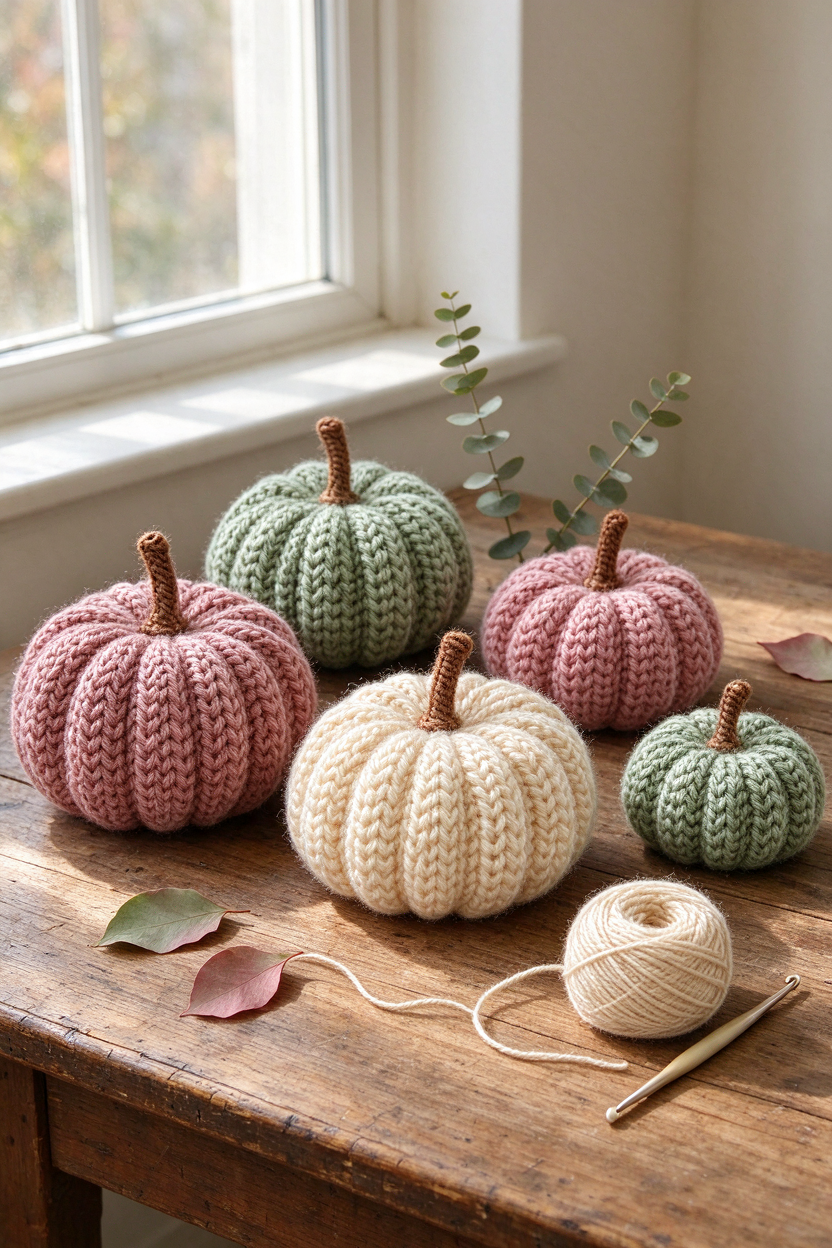
- Lighter yarns & small hooks: Result in firmer, smaller pumpkins with crisp stitch definition. These are ideal for table settings or fall garlands where you want compact, neat pieces.
- Heavier/chunky yarns & large hooks: Make it possible to produce soft, oversized pumpkins—great for centerpiece decor or even as floor pouffes. Chunky makes also work up much faster thanks to the bigger stitches, though the fabric may be more open and fluffy.
- Tighter vs. looser tension: Using a hook size smaller than the yarn label suggests (which is common in free pumpkin patterns) creates a tighter, denser fabric that holds stuffing well. Going with the recommended hook (or a size larger) will make for a softer, squishier pumpkin and can be a way to save time, but increases the chance of stuffing showing through.
Always check your pattern’s recommendations, and don’t be afraid to experiment—just note that changing yarn or hook might also mean you need more or less stuffing, and your pumpkin may turn out a different size than pictured.
For an in-depth yarn and hook matching guide, see our beginner crochet guide or visit the LoveCrafts Pumpkin Pattern Collection.
Recommended finishing techniques for a professional look
What makes a crocheted pumpkin look “store bought” instead of homemade? Usually, it’s thoughtful finishing. Here’s how to get there:
- Stuffing: Use small handfuls and distribute stuffing gradually for an even, smooth fill. Firmer pumpkins hold their shape for longer, but squishier ones can be cosier to touch—find the balance that fits your decor.
- Cinching for ribs: After closing the top and bottom, thread yarn on a tapestry needle and pass it through the pumpkin to create ribs—pulling consistently tight for definition. Some crafters like to do this in six or eight even “wedges,” but the actual technique varies by pattern style.
- Stems and embellishments: You can crochet a small tube/stem, wrap twine for a rustic look, or use natural wooden sticks for a farmhouse vibe. Adding crocheted leaves or curly vines offers color and whimsy—attach them securely to avoid shifting.
- Hiding ends and joins: Weave in yarn tails with a tapestry needle and hide them within the pumpkin body whenever possible for a polished finish. If your yarn is prone to fuzzing, consider a gentle steam block before final assembly.
For more on woven-in ends, see our step-by-step finishing guide.
Choosing a pattern by size, skill level, time commitment, and intended use
With so many free and paid crochet pumpkin patterns available, narrowing down your selection can save you both time and effort. Here’s a decision framework to help:
- Intended use:
- Garlands, bunting, and coasters: Look for small crochet pumpkin patterns with simple construction and lightweight yarns.
- Tabletop decor or clustered displays: Classic, palm-sized pumpkin patterns in DK or aran weight yarns work best.
- Statement decor (e.g., floor pouffes): Choose a chunky yarn crochet pumpkin pattern for speed and oversized results.
- Skill level:
- Absolute beginners benefit from patterns labeled as “free crochet pumpkin pattern for beginners” or those with links to step-by-step tutorials.
- If you want to practice texture or new stitches, some intermediate pumpkin designs add extra shaping or decorative stitches—check pattern skill notes first.
- Time and commitment:
- Smaller, tighter pumpkins take a little longer but can be made in multiples for gifts.
- Chunky yarn projects work up quickly; ideal for last-minute decor or cozy, plush pumpkins.
- Material and pattern checklist:
- Does the pattern list finished size, skill level, yarn weight, and hook size? (If not, check reviews or look for a PDF download).
- Are there clear photos and, ideally, step-by-step images for assembly and finishing?
Preview pattern pages carefully and don’t be afraid to compare several options before beginning. The right materials and pattern choice make a huge difference for beginners.
Helpful tips, troubleshooting, and pattern modifications often missing from pattern articles
Most pattern roundups spotlight the finished result, but not all cover how to safely tweak a project or what to do if things go wrong. Here’s a practical set of modifications, tools, and quick fixes often missing from standard posts:
- Swap yarn weights: If the pattern is for DK but you want a larger pumpkin, you can usually substitute a thicker yarn and a matching larger hook. The shape will change a bit—don’t expect the exact same look—but the technique remains.
- Stuffing adjustment: You control the firmness—denser fill stays perky; softer fill yields a squishier finish. Try gently “kneading” the pumpkin before closing to distribute evenly.
- Grouping: Cluster multiple small pumpkins together for a striking display, or string them into garlands for autumn bunting. Single large pumpkins can double as a pouf or soft prop.
- Tools that help: Stitch markers for round starts, tapestry needles for finishing, a small wooden stick for stem or shaping, and a darning tool for patching accidental holes are all handy to have nearby.
- Mid-project fixes: If you spot a stitch count issue or a visible gap, you can often correct it in the next round or discreetly patch after stuffing by whipstitching the hole closed from the inside out.
- What patterns often omit: Many free crochet pumpkin pattern for beginners pages don’t list actual amounts of yarn required per finished size, show close-up photos of shaping/closing, or provide printable versions with full stitch glossaries. If you value these details, look for patterns with downloadable PDF options or photo tutorials.
Want more support? Browse our beginner crochet patterns guide for extra beginner-friendly resources.
When and why a downloadable crochet PDF pattern helps
While web-based patterns are convenient for browsing, there are genuine benefits to using a PDF version—especially for multi-step or seasonal projects like crochet pumpkins:
- Best times to use a PDF:
- When you want offline access (no internet required while making).
- If you need printable images, stitch charts, or material lists easy to check mid-project.
- For referencing multi-size or multi-style versions across multiple sessions (great for batch making or teaching a group).
- Advantages:
- Consistent formatting across devices and easier navigation—no scrolling past ads or popups.
- Often includes photo checklists, printable stitch abbreviations, and detailed technique close-ups.
- Convenient to archive for future makes, gifting, or sharing within a craft group.
- When to download: Before you start (for prep), or if you find yourself regularly referencing the same pattern or needing visual step guidance.
Many crocheters build up a “pattern library” of PDFs for annual autumn making—consider browsing TwirlBloom’s PDF pattern section for ready-to-print pumpkin ideas.
Quick reference checklist and pattern-selection cheat sheet
Use this scannable checklist when previewing a new crochet pumpkin pattern or comparing your options:
- Pattern states skill level clearly (beginner/intermediate).
- Yarn weight and suggested hook size are listed. (Do not assume—always verify.)
- Finished size is explained or illustrated with photos.
- A materials list (bonus: specific amount per pumpkin) is included.
- Photos show all sides—especially finishing/closing/stems.
- Instructions mention finishing steps and shaping.
- Downloadable PDF offered for offline use (if you prefer print or want to archive notes).
Quick “best for” guide:
- Teeny pumpkins: garlands, coasters, applique
- Palm-sized: tabletop clusters, quick gifts
- Large/Chunky: floor poufs, statement decor, child-friendly play
Want more beginner resources and inspiration? Browse Crochet PDF Patterns for downloadable pumpkin projects, step-by-step PDFs, and more for every season.
Frequently Asked Questions
What is the easiest crochet pumpkin pattern for absolute beginners?
Look for patterns labeled as “free crochet pumpkin pattern for beginners,” which typically use basic stitches (chain, single crochet) and provide step-by-step instructions or clear video guides. Patterns that recommend DK or lightweight yarn with minimal shaping work well for first-time projects.
How does yarn weight affect the size and feel of a crocheted pumpkin?
Lighter yarns with smaller hooks produce smaller, firmer pumpkins with defined stitches. Chunky or super-chunky yarns with large hooks create softer, larger pumpkins that are worked up quickly and feel plush.
Can I use chunky yarn to make a small pumpkin intended for a table display?
You can, but the pumpkin will likely turn out larger and more open-textured than one made with lighter yarn. If you want a petite pumpkin but like the chunky yarn look, use a smaller hook, but expect a different firmness or stitch look than the original pattern intends.
What basic stitches do I need to learn before attempting a crochet pumpkin pattern?
Most patterns use the chain, slip stitch, single crochet (or UK double crochet), and the magic circle technique. These are the foundation for shaping pumpkins in the round.
How do I prevent stuffing from showing through my pumpkin?
Work with a tight tension and consider using a hook slightly smaller than the yarn label suggests. This creates a denser fabric that better hides stuffing. Choose non-slippery stuffing and fill in small increments for the most even coverage.
When should I download a PDF pattern instead of using the web page?
Download a PDF when you want offline access, printable instructions, or a version with easy-to-follow step photos and consolidated stitch glossaries. PDFs are also helpful if you plan to make the project more than once or teach others.
Ready to make your own? Explore Crochet PDF Patterns for printable pumpkin instructions and inspiration for every season.